Preparing for AI-Enabled Bioweapons: From Warning to Action
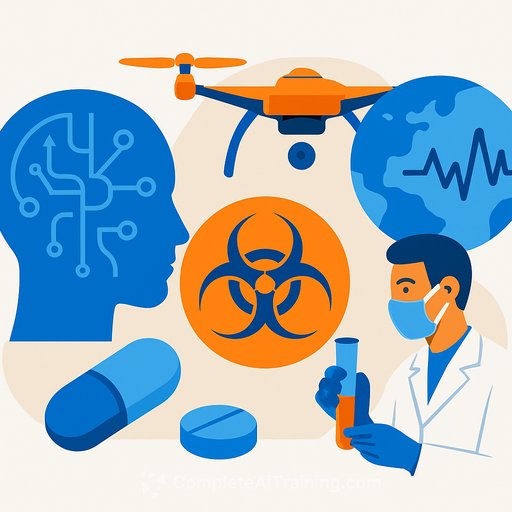
The next epidemic could start anywhere. What's changed is the likelihood that a dangerous pathogen could be engineered and released by a non-state actor using AI-enabled gene editing. That risk lowers the barrier to entry and blurs the line between natural and man-made outbreaks. Uncertainty is the new constant.
This reality pushed global health security into the spotlight at the Munich Security Conference. The core question was simple: Do we have the capacities to detect and respond fast enough-and what's missing?
Focus on outcomes, not origin
From a public-health perspective, the origin of a pathogen matters less than the speed and scale of the response. Lives are saved when detection, data sharing, regulatory decisions, manufacturing, and distribution move in sync. That's the bar.
What's improved since COVID-19
There is progress to build on. World Health Organization member states voted to adopt the WHO Pandemic Agreement, signaling continued demand for multilateral cooperation, even as details are finalized. Key partners have also evolved: CEPI scans future risks and catalyzes vaccines and therapeutics, while Gavi improves access, manages emergency stockpiles, provides surge financing, and invests in regional manufacturing.
These functions are global public goods. They're essential to containing outbreaks before they become systemic shocks.
The funding cliff we can't ignore
Just as threats grow, donor funding for official development assistance is being cut and redirected to traditional defense. That erosion undermines the very systems built to stop emergent and engineered pathogens. If anything, financing should increase-targeted at capacities we can stand up now and scale under pressure.
Operational priorities for the next 12 months
- Run and repeat whole-of-system simulations. Stress-test coordination across health, finance, interior, defense, and trade. Include emergency supply chains, stockpile logistics, regulatory fast-tracks, and border/trade protocols. Recent Mpox response lessons showed that multi-stakeholder mobilization only works if it's been practiced.
- Stand up a joint planning mechanism for countermeasures. Link researchers, funders, regulators, and manufacturers before a crisis. Pre-agree data standards, trial designs, expedited review pathways, access terms, and surge manufacturing triggers. Pair this with dedicated financing so low-probability, high-impact threats get investment at the needed scale.
- Build AI bio-resilience inside health systems. Use AI for earlier detection and prediction, with clear governance, auditability, and privacy safeguards. Upskill surveillance teams, establish red-team/blue-team testing, and prevent institutional downsizing from stripping out these new competencies.
- Secure surge financing with predictable follow-on liquidity. First-loss, rapid-disbursing funds can kickstart response, but large-scale deployment of vaccines and other countermeasures needs deeper liquidity. Multilateral development banks should anchor this capacity for fast, repeatable draws tied to pre-defined triggers.
What's at stake for governments
Pandemic prevention is national security. Relying on ad hoc donations during a crisis is a gamble that fails under time pressure. Treat preparedness as a standing capability-budgeted, measured, and audited like any other critical system.
Funding reset: Treat health security as a global public good
ODA must serve two missions at once: reduce poverty and finance public goods that shield everyone from cross-border threats. That means a predictable, sustainable model for pandemic readiness-not one-off appeals. Contributions should be multi-year, formula-based, and coordinated across health, finance, and development institutions.
- Predictability: Multi-year pledges with agreed trigger rules for rapid release.
- Coordination: Clear roles for WHO, CEPI, Gavi, regulators, and MDBs-tested through regular drills.
- Access: Terms that ensure timely availability and equitable distribution when scale-up begins.
- Accountability: Independent oversight and transparent reporting on readiness metrics and disbursements.
Immediate actions for leaders
- Government: Mandate quarterly interagency tabletop exercises; pre-approve emergency procurement and regulatory flexibilities; codify data-sharing agreements with neighbors and regional blocs.
- Science and industry: Align on standard protocols for trials, biosurveillance data, and quality; keep warm capacity in manufacturing with standby contracts.
- Finance and development partners: Establish rapid-disbursing facilities and contingent credit lines sized for worst-case deployment needs.
Collective health defense requires collective responsibility. Build the mechanisms now, fund them predictably, and test them often. Anything less invites the very crisis we say we want to avoid.
For public-sector teams planning AI governance and preparedness, see AI for Government.
Your membership also unlocks: