
AI news ·
Asia's AI-native creatives on using emerging technology without losing the human touch
Creative directors across Asia are using AI to speed up research, revisions, and production-while keeping cultural judgment and creative instinct firmly human. The pattern: AI handles execution, people decide what matters.
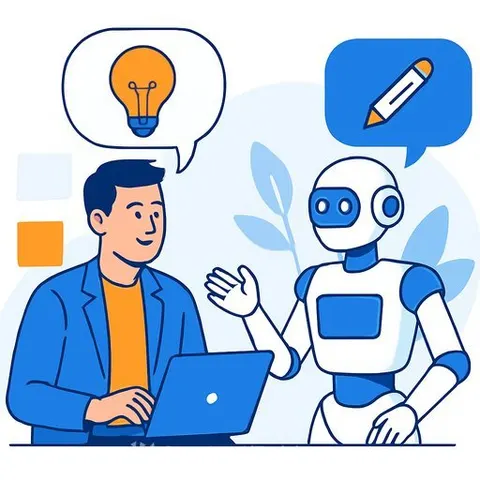
Asia's Creative Directors Are Using AI as a Thinking Partner, Not a Replacement
A generation of creatives across Asia is embedding AI into their workflows-not to sidestep the hard work, but to compress the time spent on research, revisions, and production logistics. The pattern is consistent: they use AI to move faster on execution, but guard the parts of their work that require judgment, cultural knowledge, and human instinct.
Jian Yi Lay, group creative director at VaynerMedia APAC, built custom AI research agents to speed up campaign ideation. These tools scan trends, pull social media examples, and surface what's happening in specific cultural contexts. But Lay uses AI as a sparring partner, not a decision-maker. He stress-tests ideas by asking AI to role-play as the target audience, then relies on personal experience to decide which concepts deserve development.
"We shouldn't be using AI as a shortcut, but rather as a multiplier for creativity," Lay said. "Our humanity is what sparks tension and creativity in every campaign."
For proof of concepts and visualizations, AI has collapsed timelines. Work that once required booking resources, scouting photo libraries, and recording voiceover guides now takes hours. On a recent campaign with tight deadlines and limited budget, Lay's team used AI tools to produce dozens of social media ads in a month.
Sixin Wu, senior art director at GUT Asia, initially feared AI would replace her. Instead, it changed what she spends time on. Photoshoots, voiceover sessions, and director hires-all traditionally time-consuming-now have AI alternatives. GUT Asia has used AI-generated visuals and voiceovers in final campaign outputs across recent work.
But Wu draws a clear line. "For projects that rely on deep human emotions, real storytelling, or genuine handcrafted authenticity, true humanity is what really matters," she said. "Those raw moments are the most touching elements, hard to replicate with AI."
Yan He, creative technologist at UltraSuperNew in Tokyo, describes AI as a co-thinker during concepting. Working across interactive installations, live performances, and real-time systems, He uses AI to move fluidly between languages, business culture, and experimental art scenes. The friction dropped. Her ambition grew.
"What AI actually unlocked for me isn't generating things-it's thinking across boundaries faster than I could alone," He said. Her creative voice lives in calibration: tuning the space between technology and human experience.
Satoshi Otsuka, group creative director at Droga5 Tokyo, applied AI to a project protecting heirloom vegetables threatened by climate change. AI scanned agricultural data to identify at-risk crops. It reconstructed rare vegetables from limited photographs for an archive. It analyzed satellite soil and climate data to find new growing locations. The entire project launched in three months.
"Technology is becoming a partner that helps ideas move faster, go deeper, and reach further," Otsuka said.
Clive Sin, senior content creator at VIRTUE Asia, uses AI to test visual directions and sonic identities within minutes instead of days. For luxury beauty brand Clé de Peau Beauté, AI allowed rapid iteration on multiple visual solutions. But Sin emphasizes that AI generates options-it doesn't know what matters.
"The role of the creative becomes even more critical," Sin said. "AI can generate almost anything, but it doesn't understand nuance, context or cultural tension. That still comes from human judgment."
Uyen Tran, content provider at Happiness Saigon, initially avoided AI, worried it would hollow out her thinking. She now uses it to map content angles and formats, freeing mental space for the work AI can't do: mind-wandering, daydreaming, letting ideas get weird.
Alex Morris, senior creative at R/GA APAC, starts every brief with pen and paper. Only after exhausting gut reactions does she introduce AI to push thinking to extremes. She hyper-jumps between mediums-taking a headline straight into image generation-to reveal new dimensions of an idea.
Morris made "The Cat God Helpline" for PONOS. The team tested an AI chat function internally, but the final execution used a voice actor. "Don't underestimate your audience's AI spidey sense," Morris said. "If they think they're being duped, and you're using AI for reasons of efficiency, they won't listen to what your comms are saying."
Barry Greaves, executive creative director at Heckler Shanghai, treats AI as a starting point he can pull apart and rebuild. But he knows when to leave it out. Product and beauty work demands precision and authenticity. Some clients simply don't want their brand associated with synthesized results.
The consistent thread across these creatives: AI is a tool that accelerates the parts of work that are time-consuming but not strategic. It compresses research, production, and iteration. But it doesn't replace the parts that require taste, cultural fluency, or the ability to know what an audience will actually feel.
One practical note: several creatives emphasized checking with clients and legal teams before using AI. Some brands have strict policies against it. Some are built on representing authenticity and real humans. Make sure AI use is covered in contracts before you start experimenting.
Consider exploring AI Design Courses or Generative Art Training to develop skills in these tools if you're building your practice.