5 questions to ask about AI for healthcare at HIMSS 2026
Health | March 5, 2026
AI is moving from buzz to bedside. It's speeding up search, reducing clicks, and supporting decisions - but it also brings risk. A recent poll shows many people turn to free AI tools for health information each month, and in one industry survey, 17% of clinicians reported using unauthorized AI at work to save time.
That's why the right questions matter. If you're meeting vendors at HIMSS 2026 or evaluating solutions back home, use this guide to pressure-test claims and focus on clinical impact, safety, and trust.
1) How is the AI validated for clinical use?
Ask for clear, reproducible evidence that the model and its content hold up in real workflows - not just in demos. You want to see methods, metrics, and limits in plain sight.
- Study design: retrospective and prospective testing, with external validation across diverse sites and populations.
- Clinical outcomes: impact on time to answer, diagnostic accuracy, adherence to guidelines, or patient outcomes - not just model accuracy.
- Benchmarking: comparisons to standard references, clinician performance, and prior versions of the tool.
- Error profiling: known failure modes, hallucination rates, and how the system flags uncertainty.
- Equity checks: performance by age, sex, language, race/ethnicity, and comorbidities.
2) What safeguards are in place to support patient safety?
Great AI is safe by design and safe in practice. Look for layered protections that catch risky outputs before they reach the clinician or patient.
- Guardrails: contraindication checks, dose and interaction checks, reasoning transparency, and refusal modes when data is insufficient.
- Human-in-the-loop: workflows that keep clinicians in control, with easy override and documented rationale.
- Monitoring and rollback: real-time monitoring for drift, incident reporting, kill switch, and version rollback plans.
- Auditability: full audit trails, prompt/output logs, and PHI handling that supports compliance.
3) How does the AI incorporate trusted, evidence-based content?
The source of truth matters as much as the model. Tools grounded in peer-reviewed, expert-authored content are more likely to produce clinically sound guidance.
- Provenance: citations, last-updated dates, and links to underlying evidence in plain view.
- Editorial oversight: expert authors, reviewers, and conflict-of-interest disclosures.
- Content lifecycle: version control, retired guidance clearly labeled, and rapid updates when recommendations change.
- Consistency: outputs that reflect established practice and recognized guidelines.
4) What role do clinicians play in development and validation?
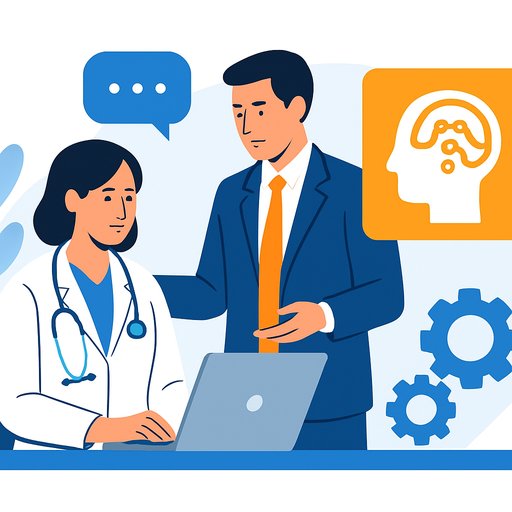
If a tool is meant to support clinicians, it should be shaped by them. Direct input reduces friction and closes the gap between "cool demo" and daily use.
- Clinical governance: multidisciplinary advisory boards with authority to approve or block releases.
- Co-design and testing: usability studies with physicians, nurses, pharmacists, and informatics teams.
- Real-world pilots: measured improvements in efficiency, quality measures, or safety signals prior to scale-up.
- Feedback loops: fast paths for clinicians to flag errors, with visible turnaround on fixes.
5) How does the AI stay current with evolving evidence and innovation?
Medicine changes fast. Your AI should keep pace without destabilizing your workflows.
- Update cadence: clear schedule for data, models, and content - plus emergency updates for safety-critical changes.
- Release notes: transparent change logs so clinicians know what changed and why.
- Post-deployment validation: re-validation after each major update, including equity and safety checks.
- Outcome tracking: ongoing measurement against key clinical metrics, not just technical ones.
Quick checklist for your vendor meetings
- Show me validation in settings like mine, with metrics that matter to care.
- Walk me through your safety guardrails and how they're tested before and after release.
- Prove your content is expert-authored, cited, and current - with dates and version history.
- Who are your clinician advisors, and how do they shape updates?
- How often do you update the model and content, and how do you prevent harmful drift?
- How do you handle PHI, access controls, and audit logging?
- What happens when the AI is uncertain or wrong - and how will I know?
- What outcomes have you improved in real deployments, and at what cost to implement?
Powering the future of healthcare with trusted AI at HIMSS
Visit with teams at HIMSS 2026 to see how trusted, evidence-based AI can help you reach concrete goals in quality, safety, and efficiency. If you'd like to connect with solution specialists, stop by the HIMSS Info Center during the conference.
For a deeper look at clinical AI at the point of care, download The UpToDate Point of Care Report, "Building the bridge-Generative AI and the future of clinical knowledge."
Want more practical guides and case studies? Explore AI for Healthcare.
Your membership also unlocks: