Asking AI for medical advice? The right and wrong way - and how clinicians can respond
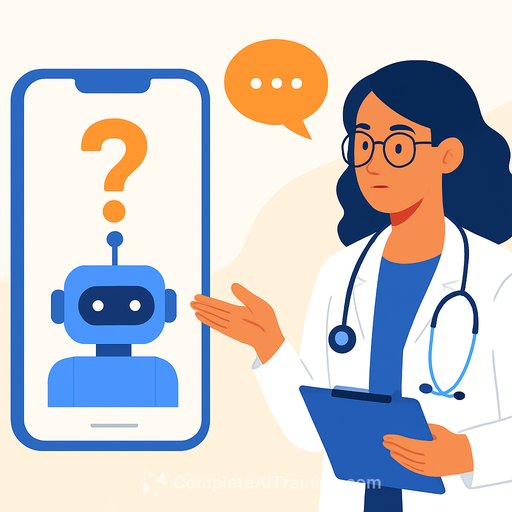
Patients are asking AI before they ask us. It's fast, free, and always on - and many people now trust it. That shift is colliding with declining trust in health institutions, which pushes more health questions into chatbots instead of clinics.
As health professionals, we can either fight it or set guardrails. The pragmatic move is to define where AI helps, where it harms, and how to fold it into care without losing clinical judgment.
Why patients are turning to AI
Public trust in major health agencies has slipped in the past year, and a large share of people say AI-generated health information seems reliable. That combination makes chatbots feel like a shortcut to certainty. The problem: confidence doesn't equal correctness.
Patients arrive more convinced about their self-diagnoses, yet less open about where they got them. That certainty can delay care or anchor them to the wrong conclusion.
What AI can do well for clinicians
- Inbox triage and message summarization to cut response time.
- Visit prep: anticipatory guidance, education handouts, and care reminders.
- Documentation support: note drafts, coding suggestions, and after-visit summaries.
- Operational tasks: scheduling prompts, coverage instructions, and follow-up nudges.
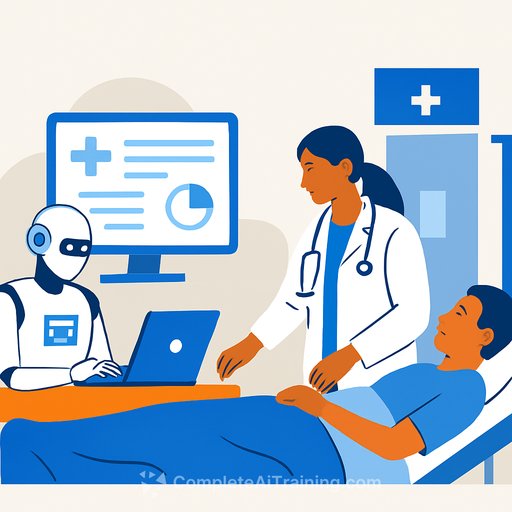
Major vendors are rolling out health-focused tools, from clinician-facing LLMs to integrated assistants that pull from records and wearables. These are useful accelerators - not replacements for clinical reasoning.
Where AI goes wrong for patients
AI can sound sure while being wrong. It misses context patients don't think to share. It also tends to under-triage, giving false reassurance when urgency is needed. That's where harm hides.
Bottom line: diagnosis and treatment decisions don't belong to a chatbot. They belong in a clinical conversation with a full history, exam, and data.
How to coach patients to use AI (without derailing care)
- Use AI as a springboard, not a verdict. It's for questions and options, not diagnoses.
- Ask patients to bring AI outputs to the visit. Review them together and correct gaps.
- Teach better prompts: include age, key symptoms, duration, meds, and relevant history.
- Watch for overconfidence. Reinforce that "good-sounding" isn't the same as "clinically sound."
- Set clear triage rules: red-flag symptoms mean urgent in-person care, regardless of what a chatbot says.
Safe, patient-friendly use cases
- Lifestyle and wellness: meal planning, sleep hygiene, habit tracking, stress reduction.
- Condition education: plain-language overviews patients can understand and discuss with you.
- Behavior change support: creating routines, reminders, and step-by-step action plans.
- Diet examples for specific needs (e.g., celiac) that you then verify and personalize.
These are low-risk, high-utility tasks where AI can keep patients engaged between visits - under your guidance.
Clinic playbook: make AI work for you
- Publish house rules: "AI can help with education and planning; it cannot diagnose or replace care."
- Add AI disclaimers to portals and after-visit summaries, including red-flag symptom lists.
- Standardize review: if a patient used AI, scan for missing history, risky advice, and triage errors.
- Build templates: approved prompts for education, lifestyle plans, and admin tasks to reduce variance.
- Track outcomes: note when AI use delayed care or improved adherence; refine your guidance over time.
- Train the team: front desk, nurses, and MAs should know how to respond to "AI told me…" moments.
A note from the exam room
As one family physician puts it, AI can streamline the day - triage inboxes, prep materials, speed admin - but it has hard limits. "Responses are only as good as the questions we ask," and most patients don't know what they're omitting. That's our opening: turn AI into a conversation starter, not a substitute for care.
What to say to patients, verbatim
- "Use AI to learn and plan. Bring what you get, and we'll sanity-check it together."
- "If you have chest pain, trouble breathing, severe headache, weakness, or high fever, go in now - don't ask a chatbot."
- "AI can help with meals, workouts, and questions to ask me. It can't confirm a diagnosis."
For your continued learning
The takeaway: keep AI in the wellness lane, keep diagnostics in the clinic, and keep patients close. Guide how they use these tools, and you protect safety while saving time.
Your membership also unlocks: