Assaia closes $26.6M Series B to scale AI for airport turnaround operations
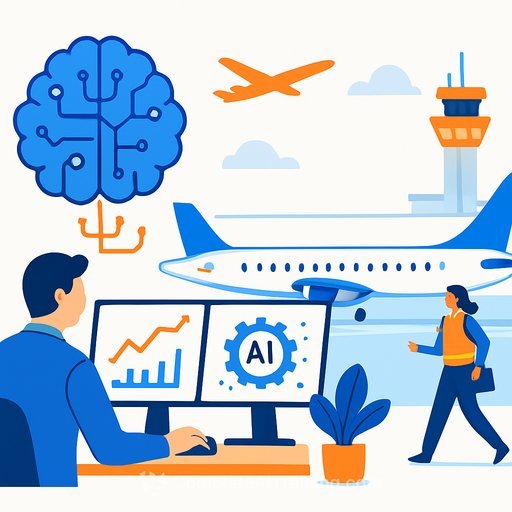
Assaia, the Zurich-based aviation tech company, secured $26.6 million in an oversubscribed Series B led by Armira Growth with participation from existing investors. The funding goes straight into scaling its AI platform and launching new tools that target the hardest parts of airside operations: predictability, throughput, and staffing efficiency.
The platform is already live at major hubs including New York JFK, London Heathrow, Dubai International, and Toronto Pearson. Results focus on reducing delays, improving on-time performance, and increasing gate utilization-core KPIs for any airport or airline operations team.
Why this matters for operations
Traffic is up, staffing is tight, and margins are getting squeezed. That combination pushes ops leaders to do more with less, without eroding safety or service levels.
Assaia positions itself as the operational layer across the apron: real-time visibility, automated alerts, and better planning upstream so turnarounds aren't a guessing game. If you own OTP, departure delay minutes, or gate occupancy, this is squarely in your lane.
What Assaia's platform does
- Real-time apron monitoring and automation to flag delays before they spread.
- Standardized data for turnarounds to reduce variance between stands, shifts, and handlers.
- Operational insights that feed into dispatch, stand allocation, and crew coordination.
The company's tech aims to reduce turnaround friction across airlines, airports, and ground handlers-so each party sees the same picture and acts faster.
What the new funding enables
A key focus is the rollout of StandManager, a next-generation planning module that applies AI to gate and stand assignments before aircraft land. The goal: better predictability, fewer gate conflicts, and tighter use of constrained capacity in peak periods.
- Pre-landing stand allocation based on real-time conditions and historical patterns.
- Improved gate efficiency in congested, high-volume environments.
- Stronger inputs for day-of-operations decisions and A-CDM processes.
Investor support and go-to-market
Armira Growth invests in technology companies with durable models and clear differentiation. Beyond capital, Armira brings operational expertise and access to a network of 100+ industry advisors, with prior experience scaling companies such as osapiens and Wemolo.
Quotes from leadership
Christiaan Hen, CEO of Assaia: "This investment signals a new phase of growth for Assaia, as airports and airlines increasingly looks to AI for solutions to mounting operational challenges. With Armira's backing, we are accelerating the rollout of new technologies and expanding our footprint to deliver measurable value in some of the world's most complex airport environments."
"Armira's expertise supporting high-growth technology businesses will be a major asset as we continue to advance, ensuring that we are well positioned to take the next step forward. With Armira's support, we can now strengthen existing results, accelerate adoption in key markets such as the U.S., and continue developing the tools the industry needs to improve performance while also reducing operational risk."
Christian Figge, Managing Partner at Armira Growth: "We focus on investing in resilient business models that demonstrate a distinct technological advantage, and Assaia exemplifies that. We are excited to support Assaia's next phase of growth and to help them scale a product that is truly resonating with a wide range of customers worldwide."
What to watch (for ops leaders)
- Integration: How cleanly the platform fits with AODB, RMS, A-CDM, and airline OCC systems.
- Data coverage: Camera, sensor, and data feed availability across all stands and conditions (night, ramp congestion, weather).
- KPIs: Impact on OTP, average delay minutes per departure, gate conflicts, gate idle time, and turnaround variance.
- Playbook: Clear incident workflows and alerting to avoid alarm fatigue across handlers and dispatch.
- Change management: Training for ramp, gate, and control center teams so new insights translate into action.
- Resilience and safety: How the system supports irregular ops without adding noise.
Practical next steps
- Run a contained pilot across a subset of stands and flights; baseline OTP, delay minutes, and block time adherence.
- Map integration points early (A-CDM, stand/gate allocation, turnaround milestones) and agree on data owners.
- Define alert thresholds and who acts on each one to speed decisions during peak banks.
- Expand based on hard results: fewer last-minute swaps, tighter gate turns, and more predictable pushbacks.
Helpful resources
Upskilling your ops team on AI
If you're building AI fluency across operations, consider structured training for planners, OCC, and ramp leadership.
Your membership also unlocks: