Theatre ranks among the "safest" arts as AI grows - what creatives should do now
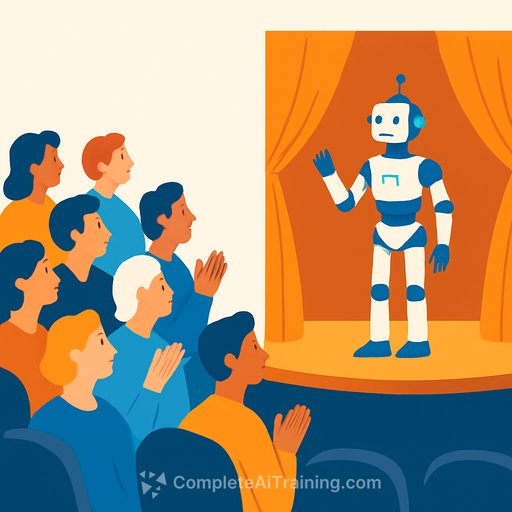
A new public poll suggests most people don't expect AI to replace humans in theatre within the next 25 years. That's a clear vote of confidence in live, co-present performance.
Good news: your craft isn't going obsolete. Real talk: your workflow will shift. The winners will combine human presence with smart tools, not fight them.
Why audiences think theatre is different
- It's live and embodied - timing, breath, and risk in the same room.
- It's social - audience feedback shapes rhythm, stakes, and choices.
- It's multi-sensory - voice, movement, eye contact, and space land in ways screens can't match.
What this means for your practice
- Double down on what only you can do: presence, interpretation, direction, and ensemble chemistry.
- Use AI as backstage support - not as the lead - to free up time for the room.
- Design experiences that reward "being there": interaction, improvisation, and moments that can't be replicated online.
Where AI can help (without taking your job)
- Script and story work: beat sheets, alt lines, character backstory options, and quick synopsis drafts.
- Dramaturgy and research: timelines, definitions, and reference summaries to speed prep.
- Design prep: moodboards, projection ideas, and set/lighting concept sketches for early conversation.
- Scheduling and admin: rehearsal rundowns, prop lists, call sheets, emails, grant and press drafts.
- Marketing: copy variations, audience segment notes, social post calendars, and show program blurbs.
- Accessibility: draft captions, alt text, and initial plain-language versions for audience materials.
What AI won't replace anytime soon
- Acting choices grounded in lived experience, timing, and the room's energy.
- Direction that balances text, bodies, pace, and silence in real time.
- Backstage communication, crisis handling, and cue calling under pressure.
- Authentic audience rapport: entrances, laughs, gasps, and pin-drop quiet.
Guardrails to protect your work and your ensemble
- Consent first: get written approval before training on rehearsal footage, voices, or likenesses.
- Contract it: add clauses on synthetic replicas, data use, and credit for any AI-assisted elements.
- Protect drafts: don't paste confidential scripts or personal notes into public models.
- Credit honestly: label AI-assisted visuals, text, or sound so collaborators and audiences aren't misled.
- Bias check: pressure-test AI suggestions that affect casting, characterization, or community stories.
The next 25 years: where to invest
- Human skills: voice, movement, stagecraft, collaboration, and audience engagement.
- Formats with presence: immersive, site-specific, small-room intimacy, and post-show dialogue.
- Community: build a mailing list, partner with local groups, and turn audiences into advocates.
- AI literacy: know what to automate, what to keep human, and how to set boundaries.
Quick start plan
- Pick one bottleneck this month (e.g., rehearsal schedules or grant drafts). Test one AI tool only.
- Write a one-page "AI in the room" policy: consent, privacy, credits, and off-limits material.
- Audit deliverables: label AI-assisted assets and keep source files for provenance.
- Reinvest saved time into table work, beats, and audience experience.
If you want practical, creative-safe workflows, explore AI for Creatives. Playwrights and devisers can go deeper with the AI Learning Path for Scriptwriters.
Further reading
The takeaway: theatre stays human. Let AI carry the boxes so you can carry the room.
Get Daily AI News
Your membership also unlocks:
700+ AI Courses
700+ Certifications
Personalized AI Learning Plan
6500+ AI Tools (no Ads)
Daily AI News by job industry (no Ads)