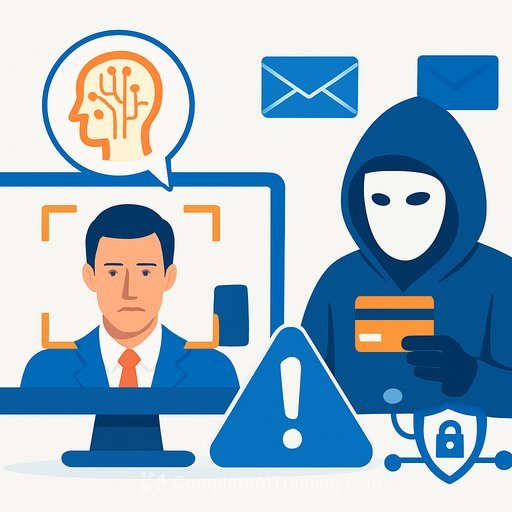
Australia and New Zealand warn of AI-powered investment scams targeting billions
Financial regulators in Australia and New Zealand issued coordinated warnings this week about investment scams using artificial intelligence to fabricate endorsements from politicians and business executives. Both countries are reporting billions in losses as deepfake videos and fake news articles become harder to distinguish from legitimate content.
Australia's Securities and Investments Commission (ASIC) removed 11,964 phishing and investment scam websites between January and December 2025-a 90% increase from 6,270 sites in the prior year. That's roughly 32 sites per day.
New Zealand's Financial Markets Authority (FMA) issued a parallel warning about scams using fake news articles and deepfake videos featuring local politicians and banking executives, including Deputy Prime Minister Winston Peters and Kiwibank CEO Steve Jurkovich.
How the scams work
Fraudsters use AI to generate polished videos, fabricated celebrity endorsements, and targeted social media ads directing victims to fake investment platforms. The scammers hide content that violates platform rules using "cloaking"-a technique that displays different content depending on the user's device or location.
The typical sequence is straightforward. Victims encounter ads or fake news articles on social media featuring AI-generated images or videos of public figures. Clicking leads to websites asking for contact details. Scammers then call posing as investment brokers.
In New Zealand, victims are typically encouraged to deposit around $250. The fake platform displays fabricated profits to pressure victims into transferring more funds. When victims attempt to withdraw, they're told to pay additional fees-but no money is ever returned.
The fake articles use logos from real news outlets including RNZ, TVNZ, and the NZ Herald but link to fraudulent content. They employ clickbait headlines claiming to reveal information authorities are trying to suppress.
The financial toll
Australians lost $2.18 billion to scams in 2025, with investment scams alone accounting for $837.7 million, according to the National Anti-Scam Centre. That represents a 7.8% increase from 2024.
ASIC said scammers exploit public interest in AI by making unrealistic promises about quick returns. "Scammers offer guaranteed, quick and easy investment returns, often claiming to leverage the latest AI technology to make money with minimal effort," ASIC Commissioner Alan Kirkland said. "With these AI videos, the only thing that is real is the amount of money you risk losing."
The pattern mirrors global trends. A January 2026 report from analytics firm Chainalysis found that trading platform impersonation scams grew more than 1,400% year-over-year, with AI-enabled operations extracting 4.5 times more money per victim than traditional fraud methods.
What regulators recommend
ASIC said consumers should not provide contact details or personal information to anyone promoting an investment opportunity unless they can verify the person holds an Australian Financial Services licence.
The FMA's guidance was direct: "Do not click on these ads or links, and do not enter your personal information into these websites."
For those who have already provided personal information, both regulators advise contacting your bank immediately to ask whether transactions can be reversed. If you downloaded remote access software at a scammer's instruction, contact an IT professional to check your device for malware.
The scale of the takedown operations has grown rapidly. ASIC reported removing 6,900 scam sites in the year ended June 2025 and flagged more than 330 fake celebrity endorsement sites in the first half of that year alone. But the 90% year-over-year increase in takedowns also suggests the volume of fraudulent sites is growing faster than regulators can remove them.
For finance professionals, understanding AI for Finance includes recognizing how these technologies enable fraud. The use of generative video in scams demonstrates why verification protocols and skepticism toward unsolicited investment pitches remain essential safeguards.
Your membership also unlocks: