
AI news ·
Australia announces AI regulations to protect creative works and cap data centre resource use
Australia will require AI firms to pay creators for using copyrighted training data. The new licensing framework aims to protect A$500 million in music revenues.
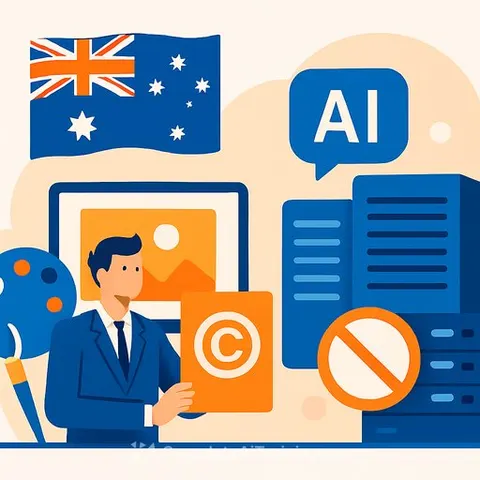
Prime Minister Anthony Albanese announced yesterday that Australia will not permit the unbounded use of creative works to train artificial intelligence, declaring that artists, writers, musicians and journalists must retain control over their work - including the price and value of its use. The speech, delivered at the University of Sydney, signals a direct challenge to AI companies that scrape copyrighted material without consent.
Copyright, licensing, and the new Office of AI
"Not everything produced in Australia is up for grabs," Albanese said. "Australian writers, musicians, artists and journalists must retain ownership and control of their work. Our laws will spell that out, plain as day. No company should use Australian books, music, art or news to build or train AI without the artist's control. That includes the artist's control of the price and value of their work. Anything less, is theft."
The government also plans to create a new Office of AI to design regulation and establish a licensing framework for artist compensation and rights. The framework would give creators a mechanism to negotiate payment when their work is used for AI training. For a growing number of professionals working in creative fields, the rise of AI for Creatives has made such protections increasingly urgent.
Data centre sustainability and industry revenue risks
Albanese said new rules will require data centres to underwrite their power supply, abide by location restrictions, and meet caps on power and water usage. While the exact caps are not yet set, he said Australia-based AI companies will be expected "to put at least as much energy into our grid as they take out of it."
Australia is the driest inhabited continent, and The Guardian has reported on a "horrible future" of bushfires, drought, coastal flooding and extreme heat without urgent climate action. Data centres in New South Wales already use about 4% of the grid's electricity - a figure that could climb to 11% by 2030, according to the Global Government Forum. In Sydney, water consumption by data centres could jump from almost 2% by 2030 to 15-20% by 2035.
The proposed licensing framework comes as music rights organisation Apra Amcos warned in its 2024 AI and Music Report that without such a system, Australian and New Zealand songwriters and composers could lose 23% of their revenues - over A$500 million. In October 2025, Apra Amcos also pushed back against a legal exemption that would have let tech companies train AI on copyrighted material without permission.
Australia's proactive regulatory stance
Australia was among the first countries to consider AI guardrails that address economic and cultural impacts, including on Indigenous communities. It was also the first to propose youth social media bans. "When I announced that our government would be implementing a social media ban for Australians under the age of 16, that was seen as radical," Albanese said. "We were told it was too late to act and too hard to implement."
He added that by the time he attended the United Nations in September, more than 20 nations had sought advice on Australia's approach, and many are now implementing similar age restrictions. The government's position also signals that journalists and writers are not a free data source for tech companies - a development closely watched by those following AI for Writers.
Why this matters for creatives
Albanese's explicit language - using the word "theft" - signals a shift in how governments frame AI training's relationship with creative work. For artists, musicians, writers and journalists, the announcement means copyright law will likely be updated to give them bargaining power over their work's value. The licensing framework and Office of AI could create a model for other countries to follow, turning a current grey area into a system where creators are paid when their work is ingested by AI. If the regulations on data centres also force the tech industry to account for its environmental footprint, creative professionals may find more public support for the idea that AI development should not come at the expense of cultural and natural resources.