Australia Establishes AI Safety Institute to Combat Emerging Threats from Frontier AI Systems
December 2, 2025
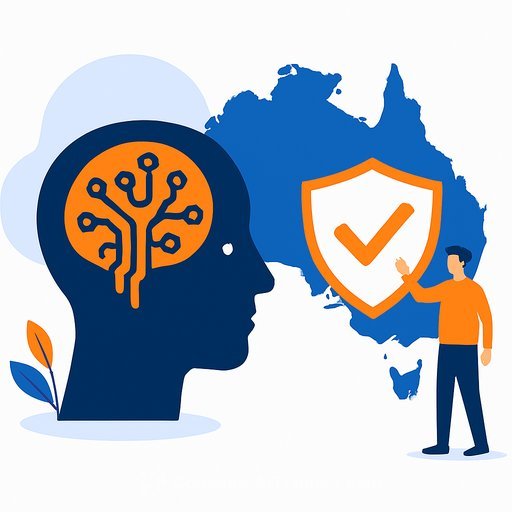
Australia is standing up an AI Safety Institute to reduce risks from frontier AI models. For government teams, this means firmer standards, shared testing, and clearer rules for deploying high-capability systems across public services.
Why it matters for government
Frontier models can accelerate analysis and decision support, but they also introduce failure modes that standard IT controls don't catch. Centralized evaluation, policy guidance, and incident coordination will help agencies use AI with confidence while keeping public trust intact.
What the Institute is likely to focus on
- Model evaluations and red-teaming for safety, security, and misuse risks.
- Minimum standards for high-risk use cases (verification, audit logs, human oversight).
- Incident reporting and a cross-government registry for AI-related failures.
- Guidance for safe data use, privacy, and secure model integration.
- Procurement language, assurance requirements, and vendor attestations.
- Coordination with international standards bodies and peer institutes.
Immediate steps for agencies (next 90 days)
- Appoint a senior accountable owner for AI risk across your portfolio.
- Inventory all AI systems and pilots; label frontier-model usage and map dependencies.
- Classify use cases by impact (low/medium/high) and apply matching controls.
- Set baseline safeguards: human review for high-impact outputs, content filtering, rate limits, and full logging.
- Add AI safety clauses to procurements: eval results, red-team evidence, and incident response terms.
- Stand up a lightweight evaluation pipeline before production release.
- Define rules for tool use and data handling (no sensitive data in external models without approval).
- Create a simple incident playbook: who to notify, evidence to capture, and how to roll back.
- Train key staff in AI risk, procurement, and oversight; brief executives on decision points.
Key risks from frontier AI to plan for
- Security: model-assisted intrusion, prompt injection, data exfiltration, supply chain exposure.
- Safety: persuasive misinformation, harmful content, and over-reliance on unverified outputs.
- Privacy: unintended collection, retention, or exposure of personal or sensitive data.
- Operational: tool access that triggers unintended actions; opaque model changes from vendors.
- Fairness: biased decisions in eligibility, benefits, compliance, or enforcement contexts.
How coordination could work
The Institute can publish test suites, risk thresholds, and a common control baseline that agencies adopt. Agencies provide incident data and deployment feedback; the Institute updates tests and guidance. Aligning with established frameworks will reduce duplication and speed adoption.
For reference, see the NIST AI Risk Management Framework here and the UK's AI Safety Institute here.
What success looks like in year one
- Time to assess a new model measured in days, not months.
- High-risk use cases gated behind documented evaluations and approvals.
- Shared evaluation sets published for common public-sector tasks.
- Procurement language adopted across major agencies and vendors.
- Clear incident taxonomy and monthly reporting across government.
- Staff trained in oversight, testing, and secure deployment.
Upskill your team
If your agency needs structured, practical training for policy, procurement, and technical teams, explore role-based programs at Complete AI Training.
Your membership also unlocks: