Aussie Creative Guilds Demand Action Against AI IP Theft
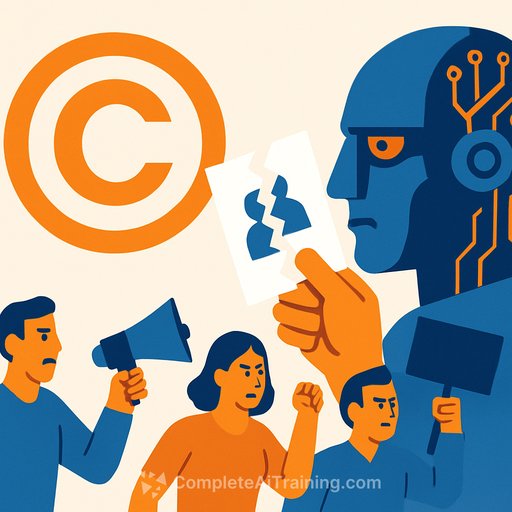
Australia’s leading creative guilds have united to urge the government to enforce penalties and compensation from AI companies that infringe on screen creatives’ intellectual property (IP). Their call comes in response to the Productivity Commission’s consultation on policy reform.
The submission includes voices from the Australian Writers’ Guild (AWG), Australian Writers’ Guild Authorship Collecting Society (AWGACS), Australian Cinematographers Society, Australian Directors’ Guild, Australian Screen Directors Authorship Collection Society, Australian Guild of Screen Composers, Australian Production Design Guild, and Australian Screen Editors.
Protecting Creative Work in the Age of AI
Claire Pullen, chief of AWG and AWGACS, emphasized that Australia has a solid copyright framework that must now adapt to address AI-related theft. She stated, “We’re not asking for unreasonable concessions, just that the government ensure our existing laws are applied to this blatant theft of work, now and into the future.”
Allowing foreign companies or local exploiters to steal creative work undermines Australia's economic and cultural interests. The guilds’ submission highlights the need for the law to reflect this new threat clearly and fairly.
Key Proposals from the Guilds
- Fair remuneration for creative workers whose work has been stolen by AI.
- Notification to creatives when their IP has been used without permission.
- Implementation of consent mechanisms before creative works are used to train AI datasets.
- A compensation model and process to address past infringements, including the removal of unlawfully used content from AI models.
The guilds are also pushing for the creation of a dedicated royalty collection agency. This body would manage payments to creators who consent to their work being used by generative AI platforms. Royalties would apply both when the work is initially inputted into AI systems and every time AI-generated content based on that work is accessed online.
Building Transparency and Fairness for Creators
“Before we can begin to assess the impact of AI, we have to settle the fundamental issue that it has been built on the back of stolen intellectual property,” Pullen said. She stressed that economic, cultural, or scientific benefits can’t be realized until transparent consent and ongoing compensation are ensured for the creative workers behind AI’s development.
This stance highlights the urgent need to protect creatives’ rights as AI integration accelerates in the screen and creative industries.
For creatives looking to understand how AI impacts their work and rights, exploring courses on AI ethics and copyright can be valuable. Resources like Complete AI Training’s latest AI courses offer practical insights tailored for creative professionals.
Your membership also unlocks: