
AI news ·
Australian government considers opt-out system for AI training on copyrighted works
Australia may shift to an opt-out copyright system for AI training, forcing creators to actively shield their work from companies like OpenAI.
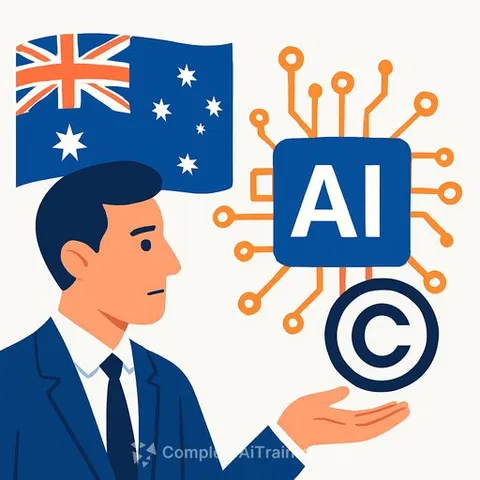
A leaked government proposal suggests Australia may allow AI companies to train on copyrighted creative works under an opt-out system, a move that shifts the burden onto writers, artists, and other creators to protect their own intellectual property.
The proposal, seen by the ABC, indicates the government wants to attract major AI firms like OpenAI and Anthropic to invest in Australian data centre development. Deputy Prime Minister Richard Marles said, "The opportunity for Australia economically is enormous in collaborating with frontier companies."
An opt-out framework would reverse the current principle under the Copyright Act. Right now, the owner of copyright in a piece of writing or photo controls how those rights are used. AI companies must seek permission. Under the proposed change, creators would have to take action to exclude their work from training datasets.
The problem with opting out after the fact
The timing issue is central to the dispute. By the time a creator discovers their work has been used and files an opt-out request, the material has already been absorbed into the neural network. AI systems cannot unlearn data once it is part of the model.
Industry and Innovation Minister Tim Ayres has denied any reduction in copyright protection. Still, the direction of the proposal marks a departure from the Albanese government's earlier commitment that there would be no text and data mining exception for AI companies - an exception that would have required compensation for copyright holders.
Displacement, not just unpaid use
Payment for training data may miss the larger threat. The core issue is displacement. Studies already show readers prefer AI-generated writing over human work. Another study found law professors rated AI answers higher than those from human colleagues. Widening the pool of training data accelerates the capability of these systems to produce quality output that competes directly with human creators.
Visual artists, graphic designers, and illustrators report declining wages and lost work as generative AI encroaches on their field. A short film featuring AI-generated actor Tilly Norwood was released last year. Spotify has been removing millions of AI-generated tracks from its platform. In the translation industry, human workers have been pushed from primary translation into secondary verification roles - a downgrading of their core tasks.
The pattern extends to law, where AI threatens graduate employability and shifts junior lawyers onto accuracy-checking work. A recent government report noted that occupations at risk of AI replacement, including advertising and marketing professionals, experienced slower employment growth than those less exposed.
For creatives working with generative art tools or navigating AI for creatives, these trends are not abstract. They are visible in project pipelines and pay rates right now.
Why this matters for creatives
An opt-out system places the administrative and legal burden on individual creators to monitor and defend their copyright across multiple AI training pipelines. The practical reality is that most independent writers, illustrators, and designers lack the resources to track where their work ends up or to pursue removal requests at scale.
The government has not released full details of the plan. No firm decision has been made. But the direction of the proposal signals that attracting AI infrastructure investment may be prioritised over the existing rights framework that protects creative work.