Australia's National AI Plan: What Government Teams Need To Know Now
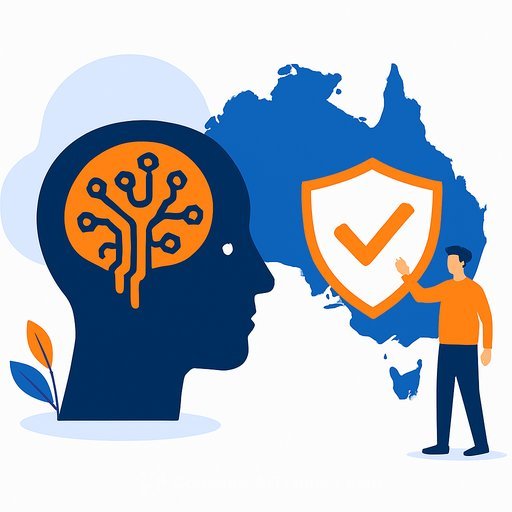
Australia has released its National AI Plan with a clear promise: use AI to serve the public, keep people safe, and spread the economic upside beyond the CBD. The message from the Minister for Industry, Innovation and Science, Tim Ayres, is direct-human accountability first, measured regulation, and practical guardrails that work with current laws.
Below is a concise brief for public sector leaders, policy makers, and program managers who need to translate this plan into day-to-day decisions.
The Policy Stance: Human-led, risk-aware, economically grounded
- No omnibus AI Act (for now): Australia is not copying the EU model. The government will lean on existing laws and regulators, then add authority where gaps are proven.
- AI Safety Institute (advisory first): Launching in early 2026 to scan risks, test systems, and advise. Regulators remain responsible for action; if they need more legal authority, the government will provide it.
- Human accountability: Government plans and major policy work are to be authored by people who take responsibility. Use AI to assist, not to outsource judgment.
Key Risks Called Out
- Deepfake abuse and harmful content: A priority area with existing laws already applying across communications, criminal, and consumer domains. The eSafety Commissioner is central to the response.
- Financial scams and misinformation: Current legal frameworks apply. Expect more guidance and, where needed, tighter rules based on evidence from the new institute.
For practical guidance on online harms, see the eSafety Commissioner's resources: esafety.gov.au.
Data Centres: Energy, Water, and Grid Planning
- More electricity will be needed: Digital infrastructure and advanced manufacturing will lift demand. The plan expects careful sequencing with the energy transition.
- Bring-your-own-energy principle: Large data centre investors may be expected to fund new generation and related infrastructure. A recent example cited: investment linked to large-scale solar near Albury.
- Joint principles with states and territories coming: Energy security, water use, and grid stability will sit at the centre of approvals and procurement choices.
Copyright: No Broad Exemptions
- No weakening of copyright law: The government has rejected broad exemptions sought by parts of the tech sector.
- Work with creatives continues: Expect targeted improvements that fit Australia's system (including collection agencies) without eroding rights.
For baseline references, see the Attorney-General's copyright guidance: AGD - Copyright.
What This Means For Government Teams
Policy and Governance
- Adopt a "human-in-the-loop" standard for policy drafts, briefings, and public communications. Staff remain responsible for accuracy and judgment.
- Update internal policies to cover AI use: acceptable tools, prohibited uses, fact-checking requirements, and audit trails.
- Map existing laws to AI use cases in your agency (privacy, security, records, discrimination, consumer protection). Document where you rely on current law and where advice from the AI Safety Institute will be needed.
Procurement and Vendor Management
- Require clear documentation from vendors (model behavior, testing results, data handling, incident response, and human oversight points).
- For data centre or model hosting deals, include electricity and water impact assessments, plus a plan for additional generation and grid support-not just offsets.
- Prioritise solutions that improve system reliability and reduce public costs over time.
Operations and Risk
- Stand up protocols to detect and respond to deepfakes and synthetic media-especially for crises, elections, and high-sensitivity programs.
- Introduce red-teaming for high-risk AI deployments. Track failure modes such as hallucinations, biased outputs, and data leakage.
- Maintain logs for AI-assisted decisions. For citizen-facing services, consider "AI use" notices where appropriate.
People and Capability
- Train staff on effective AI use, fact-checking, and accountability. Start with roles that draft, summarise, or analyse.
- Build a small internal group that can evaluate models, review vendor claims, and translate AI risk into policy and technical controls.
- Pilot AI in low-risk workflows, measure results, and scale only where value and safety are proven.
Action Checklist (Next 90 Days)
- Nominate an accountable executive for AI and establish a cross-functional working group (policy, legal, security, data, procurement).
- Inventory current AI uses. Create a risk register tied to existing laws and guidance.
- Publish or refresh your agency's AI use policy, including human sign-off requirements and recordkeeping standards.
- Define procurement asks for AI systems: documentation, testing evidence, data residency, logging, and electricity/water plans for hosted solutions.
- Run two to three targeted pilots with clear success metrics and red lines. Share learnings across the portfolio.
- Set up a monitoring cadence to incorporate advice from the AI Safety Institute once operational.
Upskilling Your Team
If you are building baseline AI literacy across policy, operations, or IT, you can browse curated options by role here: Complete AI Training - Courses by Job.
The signal from government is clear: use AI where it helps, keep people accountable, and build capability step by step. Focus on safe adoption that delivers citizen value, and be ready to tighten controls as evidence emerges.
Your membership also unlocks: