Watchdog backs licensing as the path for AI training in Australia
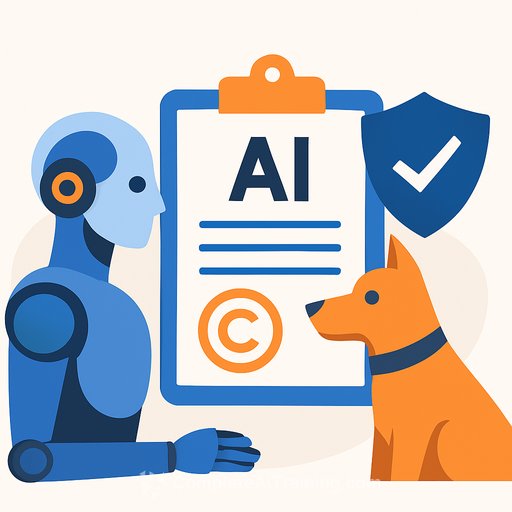
Australia's Productivity Commission has backed licensing as the main way AI developers should access copyright-protected creative works. No new text and data mining exception. No fast legislative fixes. The Commission says it's "premature to make changes to Australia's copyright laws."
For creators, that means you have leverage. If AI companies want to use your work, the expectation is clear: negotiate a licence and pay for it.
Productivity Commission | APRA AMCOS
The decision in plain terms
The Commission's final report on data and digital technology supports licensing over a blanket exception for text and data mining. Rather than rewrite copyright law, it recommends the Government monitor how AI licensing markets evolve over the next three years.
APRA AMCOS welcomed the call. "The Commission has recognised what the creative sector has argued for over two years, that licensing of creative copyright content provides the pathway for AI development while ensuring creators are fairly compensated," said CEO Dean Ormston.
Why this matters to creatives
- Licensing, not free-for-all: Developers are expected to secure permission and pay for training inputs.
- Market momentum: The Commission noted licensing is emerging across multiple jurisdictions, and APRA AMCOS expects deals to expand across music, writing, visual arts and more.
- No shortcut via "non-expressive use": Proposals to reframe training data as harmless are still attempts to use creative work without payment, APRA AMCOS argues.
As Ormston put it: "Licensing markets are developing across multiple sectors, demonstrating that innovation and creator rights can coexist when there is consent, credit and compensation."
Indigenous Cultural and Intellectual Property
The report flags the impact of AI on Indigenous Cultural and Intellectual Property (ICIP). It points back to the Commission's 2022 recommendations to strengthen legal protections for Aboriginal and Torres Strait Islander cultural assets.
"We welcome this acknowledgment and continue to call for urgent government attention to the digital dimensions of ICIP protection," said Ormston. APRA AMCOS says Indigenous creators and communities face distinct risks that require targeted policy and legislative responses.
Transparency fight: who has to reveal training data?
The Commission raised concerns about rules that would force AI developers to disclose training datasets. APRA AMCOS disagrees, warning that without transparency, creators can't even tell if their work has been used.
"It's past time for AI developers to take responsibility for the intellectual property they are copying and ingesting," said Ormston. "Without transparency, copyright holders cannot determine if their works have been used without permission, cannot enforce their rights and cannot negotiate licences. You cannot have a functioning licensing market when one party deliberately obscures what they've taken."
Negotiation stance: the door is open - who's walking through it?
APRA AMCOS says some tech and business groups are still resisting licensing talks and lobbying for legal changes. "Licensing creative works is a simple cost of doing business," said Ormston. "Both the government and now the Productivity Commission have made clear that licensing is the appropriate pathway."
The message to developers is simple: come to the table. The message to creators: be ready with your rights, your catalogue and your terms.
Follow the money: infrastructure vs content
APRA AMCOS points to the billions flowing into AI infrastructure. Australia reportedly has the second-highest concentration of data centre investment after the United States.
"AI companies understand the need to pay for physical infrastructure including construction, electricity and water," said Ormston. "Creative content is equally essential infrastructure for AI systems… If it's appropriate to pay for one type of essential input, it's appropriate to pay for the other."
What you can do now
- Get your house in order: Register works with your collecting societies. Clean up metadata, ISRC/ISWC/ISBN identifiers and credits.
- Define your licensing terms: Decide what training uses you'll allow, pricing bands, attribution expectations and audit rights.
- Use representation: If you're part of a guild, label, publisher or collective, talk to them about AI-specific licensing and enforcement.
- Prepare evidence: Keep dated masters, drafts and proofs of creation. That strengthens negotiation and any enforcement.
- Segment your catalogue: Consider which works can be licensed for model training and which are off-limits.
- Track your footprint: Set up alerts and use monitoring tools where possible. Push vendors for dataset disclosure in any agreement.
- Negotiate transparency: Ask for dataset logs, model cards and rights audit clauses in contracts.
- Stay informed: Follow developments in the EU, US and UK courts; they will influence Australian practice.
The next three years: what to watch
The Commission recommends a three-year monitoring period. Expect focus on how licensing markets mature, the impact on royalty incomes and how overseas courts interpret AI-related copyright exceptions.
APRA AMCOS wants that window to catalyse real deals. It also suggests the Government consider tax rebates or incentives for startups that license copyrighted materials - carrots to go with the stick.
Bottom line
Licensing is now the starting point in Australia. If you create music, words or images, you've got standing and time to prepare. If you build AI, you've got a clear signal: pay for the creative inputs your products rely on.
Keep your skills sharp
If you're a creative building AI fluency the right way, explore practical learning paths and tools:
- AI Learning Path for Technology Managers
- AI Learning Path for Data Scientists
- AI Learning Path for CIOs
Your membership also unlocks: