
AI news ·
Authors Guild releases model AI contract clauses that African authors publishing in the US should know about
AI rights clauses are showing up in publishing contracts now. African authors signing with international publishers should know that any AI use of their work must be explicitly granted - silence in a contract can be exploited.
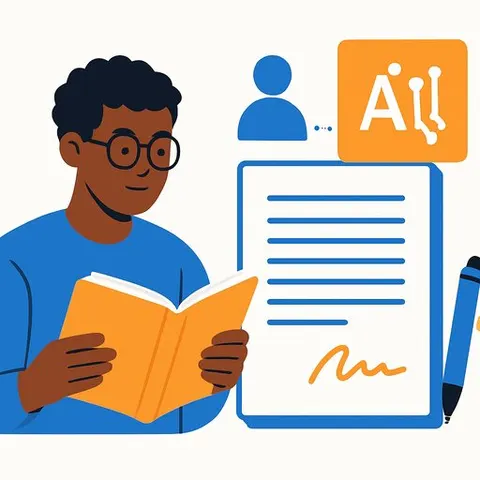
What African Authors Need to Know About AI in Publishing Contracts
AI rights are already appearing in publishing contracts signed today. Authors who don't understand what to look for risk signing away rights they don't know they possess. The Authors Guild, the largest professional organization for writers in the United States, has published model contract clauses specifically addressing AI use, and African authors publishing with American and international publishers should understand them before signing.
The Four Core Areas of AI Rights
The model clauses cover four major areas: prohibiting AI use of an author's work without consent; licensing specific AI uses as subsidiary rights with fair compensation; protecting audiobook and translation rights from AI uses; and governing both the author's and publisher's permissible use of AI.
The most foundational clause states the publisher has no AI rights unless expressly granted. If your contract does not say the publisher can use your work to train AI systems, they cannot. But silence in a contract may be exploited.
The takeaway: any grant of AI rights to publishers should be expressly negotiated, not assumed.
Audiobooks and Translations: A Particular Risk for African Authors
African authors whose works are translated into other languages or adapted into audiobooks face specific exposure. Without protective clauses, a publisher could produce an AI-narrated audiobook or an AI-generated translation without asking.
The Authors Guild's model audiobook clause requires publishers to obtain prior written consent before using AI narration. The translation clause similarly requires written consent before AI translation is produced, while allowing human translators to use AI as an assistive tool if the translation remains substantially human-created and the translator reviews and approves each word.
Manuscript Upload and Editorial Control
Some publishers are uploading manuscripts and author information into public AI systems to generate summaries, assessments, and marketing copy without author permission or adequate safeguards against training use. The Authors Guild's model clause requires written permission before uploading to any such system and mandates opting out of training use.
A separate clause prohibits publishers from using AI to substantially edit a manuscript, protecting the integrity of the author's voice at the sentence level.
Revenue Splits for Licensed AI Uses
For authors willing to license their work for AI uses, the Guild proposes a revenue-sharing framework. Training rights-licensing a book to train machine learning or large language models-should return 80 to 90 percent of revenues to the author, with the publisher receiving 10 to 20 percent.
For uses such as RAG (Retrieval-Augmented Generation) or "chat with a book" functions, a 50/50 split is suggested. These splits are not binding but serve as a negotiating starting point for defining equitable compensation in an emerging market.
What to Do Before Signing
Ask your agent and publisher about these provisions before signing any contract. The full set of model clauses and guidance is available at authorsguild.org.
Publishing law in this area is moving quickly. These clauses represent the clearest framework currently available for protecting your work.