Authors file lawsuit against AI giants over unlicensed book training
A new lawsuit in the United States targets several leading AI companies over the use of copyrighted books in model training. Journalist and author John Carreyrou, along with five other writers, filed the claim in federal court. This was reported by Reuters. For background on the legal issues at stake, see AI for Legal.
Defendants named in the suit include OpenAI, Google, xAI, Meta, Anthropic, and Perplexity. The authors allege their works were used without permission or payment to train Generative AI and LLM that power chatbots and other tools.
The filing is intentionally not a class action. The writers argue that class actions often end in settlements that favor corporations and dilute compensation for individual rights holders. They want direct legal accountability instead.
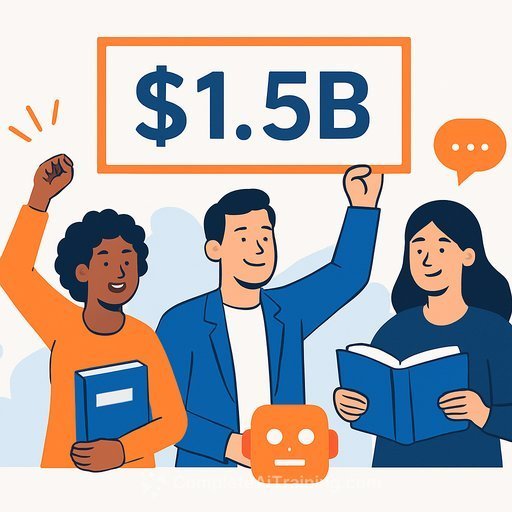
The complaint also points to Anthropic's reported licensing deal worth about $1.5 billion with some rights holders. According to the plaintiffs, deals like this don't address the broader practice of ingesting books at scale without licenses.
The names of the five other authors have not been disclosed. Analysts consider the case a potential precedent that could reshape how AI training data is sourced and licensed. A ruling for the authors could influence future regulations and compensation models across the creative industry.
Why this matters to working writers
- Your books may already live in datasets used to train AI systems-without your consent.
- This case could set payment expectations and define what "fair use" looks like for large-scale training.
- Licensing could become the norm, creating new revenue streams-or it could entrench the status quo, depending on the ruling.
What to do now
- Register your works if you haven't already. It strengthens enforcement and damages. Start here: U.S. Copyright Office.
- Update your contracts and website terms to explicitly address AI training, data scraping, and derivative uses.
- Add clear copyright notices and machine-readable metadata to your ebooks and site to help signal rights restrictions.
- Track where your text appears online. Keep records of unauthorized copies, dataset references, or AI outputs that closely mirror your work.
- Consider joining a professional group that's active on AI/IP issues to stay informed and pool resources.
- Document potential harm: lost licensing deals, market substitution, or confusion caused by AI outputs that imitate your style.
- Be careful with "opt-in" data shares. Read the fine print on any platform that requests your content for training.
- If needed, talk to an attorney about takedowns, licensing options, or joining similar actions.
The bottom line
This case is a stress test for how AI companies source training data and how writers get paid. If the court backs the authors, expect a push toward licensing and clearer pathways to compensation. If not, expect more fragmented, do-it-yourself enforcement-and more pressure on lawmakers to step in.
Want practical ways to work with AI tools-without giving up your rights? See resources for writers here: AI for Creatives.
Your membership also unlocks: