
AI news ·
Autodesk brings Claude into Fusion via MCP to support natural-language design actions
Claude is now built directly into Autodesk Fusion via a Model Context Protocol, letting designers modify geometry using plain language without leaving the software. The integration replaces the copy-paste workflow between AI tools and CAD.
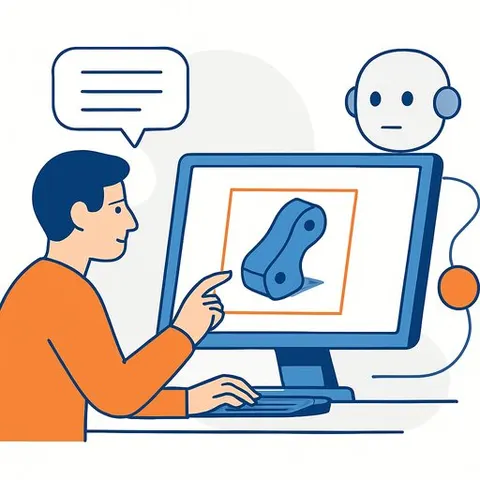
Claude Now Works Directly Inside Fusion Design Software
Anthropic and Autodesk have integrated Claude into Fusion through a Model Context Protocol (MCP), allowing designers to use natural language prompts to modify geometry and workflows without leaving the design environment. The integration marks a shift from AI tools that sit outside professional software to assistants that operate within the constraints and data structures of the actual design tool.
With the new Fusion MCP, Claude can read design context, translate natural language into supported modeling actions, assist with geometry refinement, and automate setup and repetitive workflows. Users remain in control-Claude responds to intent while respecting the technical boundaries of the model.
How it works in practice
Most AI tools require designers to explain an idea, copy the output, and manually recreate the work in CAD. The Fusion MCP collapses that workflow. Instead of bouncing between applications, designers describe what they're trying to accomplish and Claude executes the change directly in Fusion, informed by actual design data rather than a disconnected text prompt.
The assistant can help with exploring model variations, refining concepts without starting over, and reducing time spent on setup steps that demand focus and precision. It operates as a collaborative partner, not an autonomous agent making independent decisions.
Practical applications
The integration targets friction points in daily design work:
- Repetitive setup and modeling steps
- Navigating unfamiliar or complex workflows
- Translating rough concepts into actionable changes
By offloading mechanical and cognitive overhead, design teams may spend more time evaluating ideas and refining outcomes rather than executing routine tasks.
Data access remains user-controlled
Claude's access to Fusion context is governed by Fusion's product settings and permissions. Users decide what information is shared, and AI interactions operate within the same access controls that apply to other Fusion workflows. No data is shared without explicit user direction.
Broader strategy from Autodesk
This integration is part of Autodesk's focus on applied AI designed for real design and manufacturing workflows. The company is expanding contextual AI across its Design & Manufacturing portfolio through tools like Autodesk Assistant, bringing intelligence directly into software professionals already use.
Autodesk emphasizes AI that understands design intent and respects data integrity in professional environments-not experimental demos disconnected from how products are made. By supporting open standards like MCP, the company is also building a more connected ecosystem where AI tools interact with professional design software without locking teams into closed systems.
For designers working in Fusion, the change is straightforward: AI assistance now happens inside the tool where decisions become physical products, not in a separate chatbot window.