
AI news ·
Automakers test AI tools to speed vehicle design and cut development time
Automakers are testing AI tools to compress vehicle design timelines, focusing on digital modeling and wind-tunnel simulation. Repetitive tasks get automated; safety and compliance decisions stay with engineers.
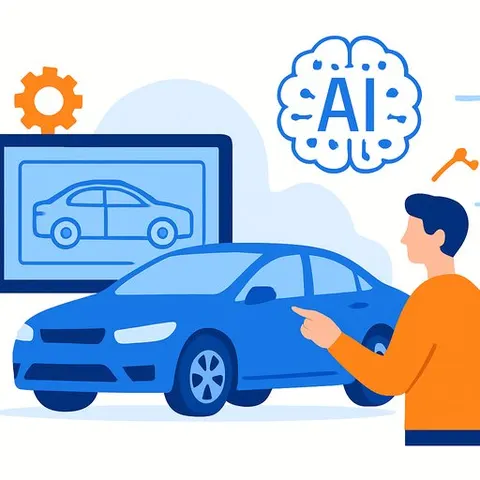
Automakers Test AI to Speed Vehicle Design Cycles
Large language models are accelerating parts of automobile development, with manufacturers testing AI tools to compress design timelines that typically span multiple years. The applications focus on specific, repeatable tasks: digital model-making and wind-tunnel simulation.
This shift concentrates engineering effort differently rather than eliminating core validation work. Teams typically automate repetitive geometry and scripting tasks first, while keeping human oversight on safety-critical decisions and regulatory compliance.
What's changing in design workflows
Generative design combines parameterized CAD, differentiable simulation, and machine learning optimization to explore broader design spaces faster than manual iteration. The result: more design iterations per cycle, but with greater emphasis on simulation accuracy and model validation.
For practitioners, this means new requirements around reproducibility, explainability, and dataset provenance-especially for simulation-trained models used in safety-sensitive contexts.
The tooling that connects language models to CAD and CAE assets is becoming central to the workflow. ML plugins for mainstream CAD packages are starting to appear, though adoption remains early.
What to monitor
Key indicators of broader adoption include:
- Published benchmarks for ML-accelerated computational fluid dynamics or structural simulation
- Regulatory guidance on how AI-influenced safety decisions should be documented and validated
- Partnerships between automakers and machine learning vendors
- Open-source toolchains connecting language models to engineering file formats
- Reproducible case studies showing end-to-end benefits across design cycles
Manufacturers have not yet published detailed internal plans explaining how they're deploying these tools or what labor transitions they expect.
Why this matters for product teams
AI for Product Development is moving beyond prototyping into applied workflows. Automotive design represents a heavy-industry domain where ML integration requires clear validation standards and regulatory alignment-constraints that apply to other complex product categories as well.
Teams building or adopting these tools need to understand simulation fidelity requirements and how to maintain human decision-making authority over safety tradeoffs. The technical patterns emerging in automotive design will likely inform how other industries integrate language models into engineering work.
For product development professionals, the practical takeaway is straightforward: automation handles iteration speed, but validation and compliance remain human responsibilities.