AWS Chief Medical Officer on AI Agents in Healthcare: Keep Humans in the Loop
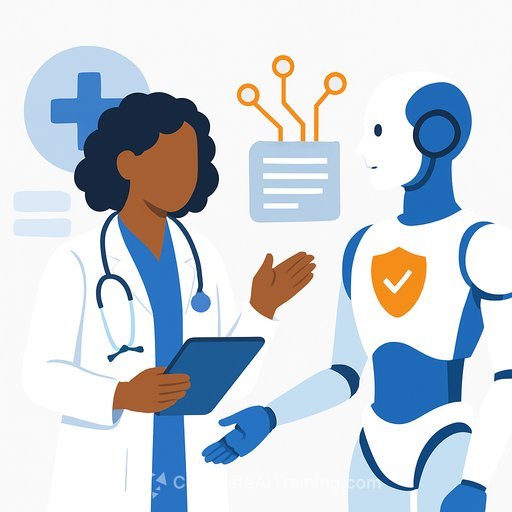
Dr. Rowland Illing, chief medical officer at Amazon Web Services, said the company is building AI agents to handle repetitive work in healthcare, not to replace doctors. Speaking at the 2026 HIMSS Global Health Conference in Las Vegas, Illing outlined AWS's strategy for deploying artificial intelligence across patient care pathways.
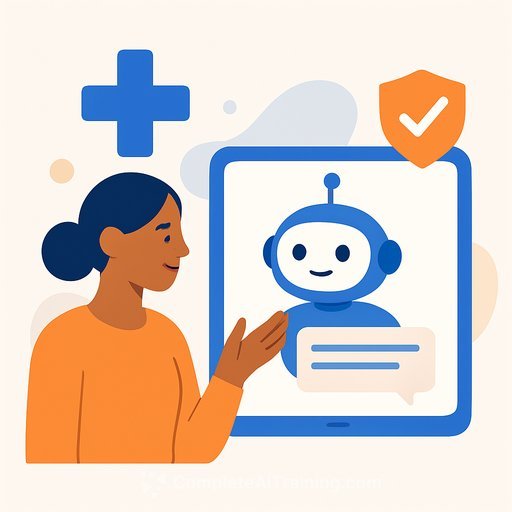
AWS launched five agents as part of Amazon Connect Health, designed to solve specific problems in clinical workflows. One agent handles patient recognition when they call their provider-eliminating the need to repeat personal information multiple times. Another helps patients understand medical results and reports.
"Our view is always that there be a human in the loop," Illing said. "The aim of all of these agents is to take lower order work away from humans, so that human connection can be maintained."
Illing, a physician trained in surgery who previously worked on image-guided cancer therapy and studied national health systems across Europe, joined AWS in 2020. He said the current wave of agentic generative AI and LLM development represents a genuine shift for the entire healthcare ecosystem.
Data as Infrastructure
AWS is approaching interoperability as an infrastructure problem, not just a technical one. The company built separate services for different data types: HealthLake for text records, HealthImaging for radiology and pathology scans, and HealthOmics for genetic and biological data.
A transformation agent within HealthLake converts legacy medical records into FHIR format, the standard required for data exchange. Illing said this separation between the data layer and solutions layer allows organizations to build different applications on top of the same data foundation.
The U.S. federal government is pushing healthcare organizations toward FHIR APIs, Illing noted. "The importance of FHIR can't be understated because everything is going to be in FHIR format."
Quantum Computing's Role in Drug Discovery
Illing said quantum computing will have a different impact than AI for Healthcare, though the two technologies are often conflated. Quantum computing is still in early stages but will eventually enable massive computational power for drug discovery.
Nineteen of the top 20 global biopharmaceutical companies run on AWS infrastructure. Illing's team is working with these partners on biological foundation models and drug discovery platforms.
"The ability to do massive compute at scale to answer questions around drug discovery and new molecules" is where quantum will first make an impact, Illing said. He added that once the technology matures, it will likely enable uses that don't yet exist.
AWS operates a quantum computing group in partnership with Caltech, though Illing said the technology remains too early for production use.
Your membership also unlocks: