
AI news ·
Bain expands enterprise technology practice to advise on AI and CIO strategy
Bain now has over 300 tech partners and has done 2,000 due diligences in five years. The shift reflects the CIO's move from operational reliability to strategic leadership for AI.
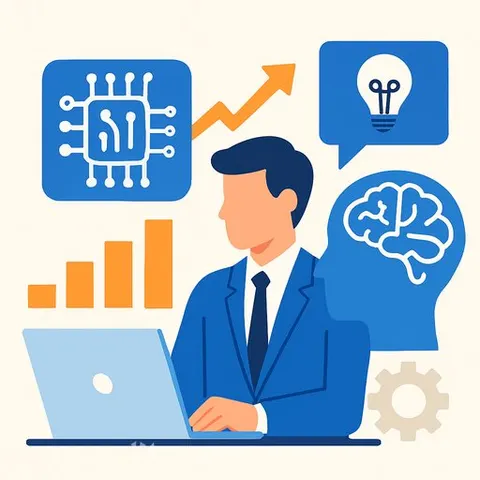
Bain & Company has expanded its enterprise technology practice to more than 300 dedicated technology partners, many former chief information officers, and has completed roughly 2,000 technology due diligence assessments over the past five years. The expansion reflects a structural shift in corporate strategy: enterprise technology decisions are no longer back-office concerns but prerequisites for scaling AI, and the CIO role has moved from operational reliability to strategic leadership.
The CIO's expanding mandate
For most of the past two decades, the CIO role was defined by keeping systems running, managing vendors, and containing costs. Bain's framing in 2026 is different. The firm describes today's CIO as a strategic partner and catalyst for change, one who must align technology investments directly with business ambition rather than simply maintaining existing infrastructure. This reorientation carries real organizational weight. Bain's practice covers technology strategy and transformation, systems and architecture modernization, operating model redesign, technology cost management, cybersecurity, delivery assurance for large-scale IT programs, and technology integration in mergers and acquisitions. Each service line reflects a pressure point that CIOs are increasingly asked to manage at the executive level, not delegate.
Cost pressure sharpens the challenge. Digitalization is pushing technology budgets higher both in absolute terms and as a share of operating expenses. That dynamic forces CIOs to spend more while demonstrating clearer returns. For those navigating this shift, the AI Learning Path for CIOs provides structured guidance on building AI-ready technology strategies and leading enterprise-wide transformation.
AI is restructuring the technology stack
Bain's position is that AI and enterprise technology are inseparable. Leading technology teams are not bolting AI onto existing systems but re-architecting their stacks entirely and adopting what Bain calls an "AI everywhere" approach. The firm identifies seven areas where enterprise technology functions are actively embedding AI: software development lifecycles, IT service desk operations, infrastructure automation, IT project management, knowledge management and documentation, security and risk management, and data quality and analysis. Across each, the common thread is reducing manual effort while improving accuracy or response time.
For technology leaders, the challenge is sequencing. Forbes reported in late June 2026 on a thesis gaining traction among practitioners: the most durable AI advantage comes not from generating immediate value but from designing learning into the architecture so that AI systems compound their own capabilities over time. That framing aligns with Bain's argument that companies must upgrade data engineering maturity and consolidate unstructured knowledge assets before AI models can perform reliably at scale.
New partnerships target AI deployment and quantum risk
Two announcements in 2026 define where Bain is placing its bets on enterprise technology's near-term trajectory. On June 24, the firm announced a partnership with Google Cloud designed to accelerate and secure enterprise-scale AI deployments. The collaboration combines Google Cloud's AI infrastructure with Bain's strategy and implementation capabilities, targeting companies that have AI ambitions but lack the integration expertise to execute them safely at scale.
The second announcement addresses a longer time horizon. Bain and IBM have launched a collaboration focused on post-quantum cryptography, helping private equity and corporate clients assess their current encryption posture and build quantum-safe roadmaps. Quantum computing is not yet capable of breaking today's encryption standards, but the timeline for that risk is shortening. Bain's insight brief on the topic notes the acceleration is expected to intensify through 2030, making early assessment work relevant now rather than speculative.
The pairing of those two partnerships is instructive. One is about moving fast on AI adoption; the other is about building the security foundations that make that speed sustainable. Together they reflect a practice philosophy that positions technology transformation as requiring both offense and defense simultaneously.
ERP migration as a test case
Bain has also applied its own methodology internally, completing a cloud ERP migration intended to simplify operations and support future growth. The firm uses that experience as a reference point when advising clients, particularly in the consumer packaged goods sector where ERP programs have historically been defined by technical outputs rather than business outcomes. The firm's argument is that ERP migrations, when scoped correctly, become business redesign exercises rather than IT projects. For a global port authority, Bain helped implement a single-window digital system to streamline maritime operations, a case that demonstrates the practice's reach across industries well beyond traditional commercial enterprise clients.
Why this matters for Executives and Strategy
The expansion of Bain's enterprise technology practice signals that CIOs are now central to corporate strategy, and technology architecture decisions have direct P&L implications. Executives cannot afford to treat IT as a cost center-they must engage with the design of technology stacks, the sequencing of AI adoption, and the emerging security risks that quantum computing will bring. The dual focus on accelerating AI deployment while preparing for post-quantum cryptography shows that speed and resilience must advance together. For leaders shaping these agendas, the AI for Executives & Strategy resource hub offers ongoing analysis of the strategic decisions that define AI-driven organizations.