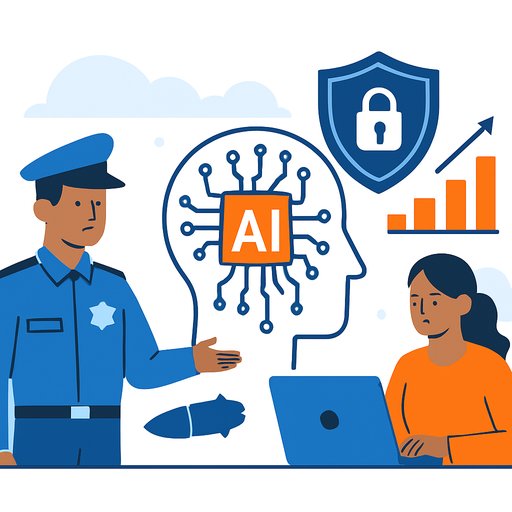
Balochistan sets up first AI cell to strengthen security and speed up decision-making
December 23, 2025 - The Government of Balochistan has launched its first Artificial Intelligence cell inside the Department of Home and Tribal Affairs. The goal is straightforward: improve law and order with faster analysis, clearer visibility, and earlier intervention.
The cell will draw on data from the Balochistan Integrated Security Architecture (BISA) to study crime patterns, assess threats, and flag high-risk areas. Leadership under CM Sarfaraz Bugti has framed this move as a shift toward data-backed governance across the province.
What the AI cell will do
- Identify crime trends and hotspots using BISA data.
- Predict potential risks in high-threat areas to guide preemptive action.
- Analyze security dynamics to inform both policy and operations.
- Produce regular analytical reports for decision-makers.
- Protect sensitive information while promoting evidence-based choices.
- Collaborate with universities and institutions in Quetta for research and technology development.
- Support forecasting to surface future threats earlier.
Why this matters for managers
This is a clear template for moving from reactive to proactive operations. When data flows into a single analysis layer, response times shrink, resourcing gets smarter, and leadership has a real-time picture of risk.
- Build a central data pipeline before tooling up models. No data, no insight.
- Define a tight KPI set: time-to-insight, response time to flagged risks, false-positive rate, prevention rate, and cost per prevented incident.
- Create a governance loop: access controls, audit trails, model documentation, and bias checks.
- Make it cross-functional. Analysts, operations, and policy must share the same dashboards and language.
- Close the skill gap with targeted training and clear playbooks for field teams.
How it's being implemented
The department will issue regular analytical reports to guide both policy and on-ground planning. Partnerships with universities in Quetta are planned to keep research and capability development moving forward.
Risk, privacy, and trust
The government has emphasized confidentiality for sensitive security data. For any similar initiative, that means strict data segmentation, role-based access, encryption in transit and at rest, and continuous monitoring for misuse or drift in model outputs.
What to watch next
- Quality and cadence of the AI cell's reports-and whether they lead to quicker, measurable interventions.
- Integration depth with BISA and other data sources.
- Results in prevention and threat forecasting over the next 6-12 months.
- Scope and outcomes of university partnerships in Quetta.
For background on responsible AI adoption in security contexts, see the Government of Balochistan's portal here.
If you're leading a similar build, you can explore practical AI upskilling paths for managers here.
Your membership also unlocks: