
AI news ·
Bangladesh enacts data protection law but lacks enforcement mechanisms for AI privacy
Bangladesh's 2026 data law fails to protect millions from corporate AI profiling. Unregulated harvesting drives dynamic pricing and targeted misinformation.
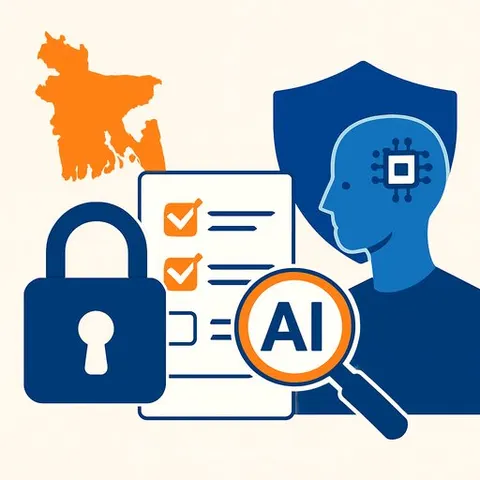
Bangladesh's massive digital transformation has opened a quiet crisis: the systematic harvesting of citizens' personal data to feed AI-driven profiling, even as the country's new privacy law struggles to bridge the gap between legal text and enforcement. The Personal Data Protection Act 2026 finally recognizes personal data as individual property, but millions of smartphone users remain exposed to opaque data collection that fuels algorithmic manipulation and a new form of digital exploitation.
Legal framework and enforcement gaps
The Personal Data Protection Act 2026, which evolved from a 2025 ordinance, imposes financial penalties on non-compliant corporations rather than issuing toothless regulatory warnings. Yet the mechanisms to monitor predictive profiling are vastly underdeveloped. No fully functional, independent data protection authority exists to audit how corporate algorithms use harvested data to manipulate market prices or control consumer access.
Every day, users in both cities and villages click "accept" on lengthy, English-language terms-of-service agreements they cannot understand. They inadvertently hand over browsing history, real-time location, financial transactions, and communication logs to global tech conglomerates and domestic apps. Understanding these legal instruments is essential for practitioners in the field - specialized training in AI for Legal can help lawyers and compliance officers navigate the intersection of artificial intelligence and data protection law.
Ethical and moral dilemmas
Algorithmic profiling reduces human beings with free will to predictable, commodity-driven entities. In local e-commerce, ride-sharing, and mobile financial services, dynamic pricing quietly charges different rates to different individuals based on their deduced economic vulnerability. This compromises the principle of fairness and erodes trust in digital markets.
Microtargeting of misinformation poses an even deeper threat. If profiling identifies people experiencing financial anxiety or social isolation, malicious actors can feed them customized, inflammatory content designed to exploit those exact fears. The result is a fragmented social reality that turns neighbour against neighbour through invisible, automated manipulation - a direct risk to national stability.
Religious values and the betrayal of trust
Data-harvesting practices conflict with the Islamic values held by the majority of the population. Concepts of Amanah (trust) and Haya (modesty and privacy) are sacred. Collecting a person's private habits, preferences, and movements without explicit, informed consent violates the prohibition against spying and unauthorized intrusion. Religious ethics demand transparent, mutually agreed transactions without deception.
The hidden corporate profiling that knows more about an individual's private anxieties than their own family does represents a profound betrayal of trust. It treats human behaviour as raw material for financial gain - an ideology at odds with religious stewardship and communal harmony.
Digital colonialism and the fight for sovereignty
Bangladesh, as a consumer nation rather than a major technology producer, faces a stark power imbalance. Western tech giants hold a monopoly on advanced generative models and massive data repositories. As the analysis warns, "This creates a form of digital colonialism, whereby the intimate habits and cultural nuances of the people are exported to train foreign models over which local authorities have no jurisdictional control."
Efforts to build localized linguistic datasets, such as advanced Bengali natural language processing tools, offer a step toward digital sovereignty. But without rigorous enforcement of local data residency requirements, the intellectual and personal capital of the nation's youth will continue to be exploited for foreign corporate profit.
Why this matters for legal professionals
The legal community must confront the reality that technology is not a neutral force. As the article states, "If left unregulated, it becomes a weapon of behavioural control that undermines the rule of law, mocks religious morality, and threatens society's collective future." Lawyers, judges, and policymakers need to move beyond surface-level compliance and push for mandatory algorithmic audits, absolute transparency from technology providers, and aggressive enforcement of data protection laws. The gap between statutory language and lived reality will only widen unless legal expertise drives the creation of independent oversight bodies and data residency standards that can withstand the pressures of digital colonialism.