Banks are deploying AI fast - but often in low-value lanes
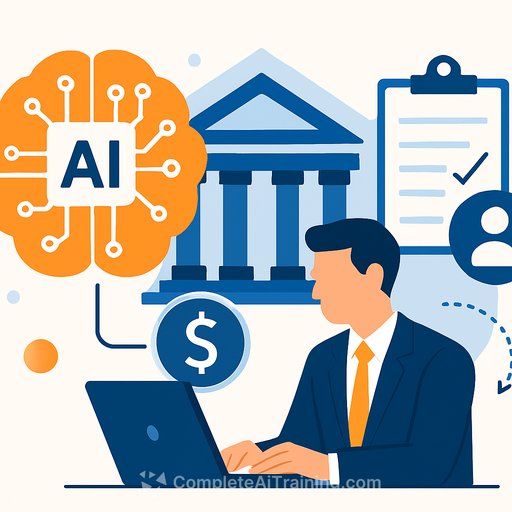
AI has moved beyond CRM add-ons in many banks. The most common deployments today are research assistants, advisor sidekicks, and financial calculators. Useful, yes - but they rarely hit the biggest profit levers.
One of the highest-impact uses of agentic AI is lead nurturing: replying to inquiries instantly, sending personalised content, and scheduling meetings. That workflow touches revenue directly and compounds over time.
Where AI is actually helping right now
- Research AI assistant: Summarises filings and earnings calls, drafts briefs, and flags anomalies so analysts and advisors can move faster.
- Intelligent advisor assistant: Surfaces relevant holdings, product notes, and next-best actions during client prep and calls.
- AI financial calculators: Runs quick scenario checks for tax, yield, or liquidity questions without tying up a specialist.
- Agentic lead workflows: Triage inbound, personalise replies, book meetings, and log everything back to the system of record.
What leading banks are doing
Large institutions are using AI to deliver hyper-personalised services and compress cycle times.
Citi Wealth uses Advisor Insights to suggest engagement opportunities and AskWealth to automate research for advisors - a direct lift to advisor productivity and coverage.
Standard Chartered cut memo underwriting time in Hong Kong from days to minutes. That frees capacity and shortens time-to-yes without sacrificing controls.
Prioritise use cases by value, not novelty
- Tie to a P&L lever: Revenue (conversion, share of wallet), cost (hours saved), risk (loss/variance), capital, or customer experience.
- Start where data and workflow already live: Wealth desks, SME lending, cards, and servicing queues.
- Build a two-track backlog: Quick wins (research assistant, call summaries) and strategic bets (agentic lead engine, underwriting memo agent).
Architecture and guardrails that pass audit
- Data controls: Retrieval with access checks, PII redaction, prompt/response logging, and retention aligned to recordkeeping rules.
- Model strategy: Evaluate per task, set fallbacks, cap token spend, and monitor drift with offline/online tests.
- Agent boundaries: Clear scopes, approval steps for outreach or credit actions, and auto-logging to CRM/core systems.
- Compliance by design: Suitability, fair lending, and marketing rules embedded; human-in-the-loop on sensitive steps.
- Model risk management: Follow established guidance for validation, governance, and change control. See supervisory expectations like SR 11-7 for context (link).
Metrics that matter
- Research cycle time, coverage per analyst, and rework rate
- Advisor prep time, AUM per advisor, and next-best-action adoption
- Lead response SLA, conversion rate lift, and cost per acquisition
- Underwriting memo turnaround and approval accuracy
- Customer satisfaction and compliance exceptions avoided
90-day rollout plan (practical and measurable)
- Weeks 1-2: Pick two use cases: research assistant for coverage and an agentic lead workflow for revenue. Define success metrics and guardrails.
- Weeks 2-4: Wire up secure data retrieval, prompts, and audit trails. Red-team for hallucinations, bias, and leakage.
- Weeks 4-8: Pilot with 20 users. Baseline cycle times and conversion. Capture feedback daily.
- Weeks 8-12: Integrate with CRM and comms tools. Enable auto-logging. Expand to 100 users and publish a scorecard.
Vendor and build notes
- Check for SOC 2/ISO, SSO, on-prem or VPC options, granular permissioning, and full audit logs.
- Favour platforms with retrieval APIs, evaluation tools, and safe agent frameworks over one-off widgets.
Helpful resources
- Recent analysis on banking AI adoption and value pools (read more).
- Curated tools for finance teams to test and compare (Complete AI Training: AI Tools for Finance).
Bottom line
Banks are spending time on helpful assistants while high-value agent workflows sit underused. Shift more effort to lead nurturing and decision support that touch revenue and cycle time, lock down controls, and hold the rollout to a scorecard. That's how AI moves from nice-to-have to material impact.
Your membership also unlocks: