
AI news ·
Bay Area woman loses $5,400 to scammers who use AI to clone her daughter's voice in fake kidnapping scheme
A Martinez woman wired $5,400 to scammers who used AI to clone her daughter's voice in a fake kidnapping call. Experts say establish a family code word to verify urgent calls.
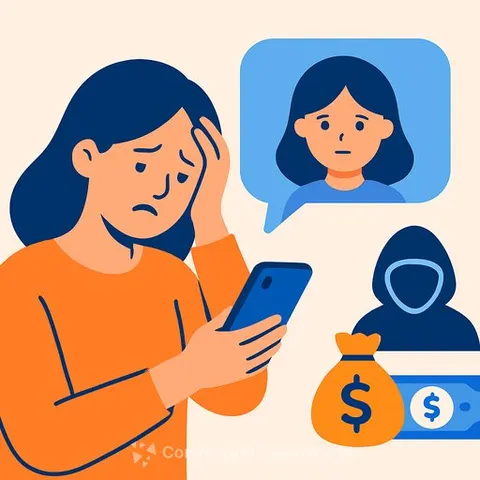
Bay Area Woman Loses $5,400 in AI Voice Cloning Scam
A Martinez resident wired thousands of dollars to scammers who used artificial intelligence to impersonate her daughter's voice in a fake kidnapping scheme. The May incident marks a growing category of fraud that law enforcement and security experts say will accelerate as voice-cloning technology becomes more accessible.
Deborah Del Mastro received a call from an unknown number claiming her 37-year-old daughter Sarah had been kidnapped by a Mexican drug cartel. The caller played an audio clip that sounded like Sarah in distress, begging her mother for help.
"It was my daughter's voice having an absolute panic attack, scared, telling me 'I love you, mom, I'm so sorry, I'm so scared,'" Del Mastro said.
The scammer issued urgent commands over five hours, instructing Del Mastro not to speak to anyone and to move money immediately. She wired $5,400 to Mexico from multiple locations before calling her daughter directly. Sarah answered from work. Del Mastro realized she had been defrauded.
How Voice Cloning Works
Scammers need only seconds of audio to clone a voice using AI tools, according to Erin West of Operation Shamrock, a fraud prevention organization. They typically extract audio from social media posts, videos, or recorded phone calls.
"What they can do with just a few seconds of your voice, they can clone it. And they can essentially produce sound that sounds exactly like you," West said.
West describes the trend as a "scamdemic" that will worsen as deepfake technology improves. She identified a common pattern: scammers pair urgent emotional appeals with immediate financial requests.
"When we get something that raises our anxiety and requires immediate action, and that immediate action requires the movement of money, we need to know, red flag, this is a scam," West said.
Protecting Against Voice Cloning Fraud
West recommends establishing a family code word that only close relatives know. When someone calls with an urgent request, ask for the code word before taking action.
Del Mastro's family now shares phone locations with each other. She avoids answering calls from unknown numbers and warns others not to assume urgency equals authenticity.
"Let our horrible experience be a warning to all of you, you know, so that you will question this because I didn't question it at all," she said.
Martinez police are investigating the case, but Del Mastro does not expect to recover the money.