AI in Healthcare Poses Patient Risks Without Legal Safeguards, Council Warns
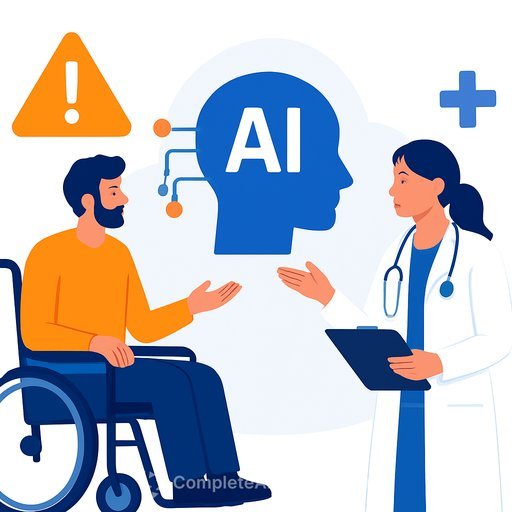
The National High Council for Persons with Disabilities (CSNPH) published a report Thursday flagging significant patient risks from artificial intelligence in healthcare due to inadequate legal protections. The council said the doctor-patient relationship must remain human-to-human.
Physicians currently oversee AI decisions in clinical settings. But the CSNPH cautioned that routine reliance on these systems could erode that oversight over time, creating gaps in accountability.
What the Council Recommends
The report calls for centralized validation systems for medical AI and mandatory bias testing to prevent discrimination against specific patient groups. Developers must use diverse training data and maintain transparency in how these systems are built.
Healthcare providers need proper training to use these technologies effectively, the council said. An ethical charter governing AI in medicine should be established.
The CSNPH concluded that the European Union's AI Act requires health-specific regulations to address these challenges adequately. General AI rules won't protect patients in clinical contexts.
What This Means for Healthcare Professionals
If you work in healthcare, this report signals where regulatory pressure is building. Patient safety concerns around bias and validation are now on the radar of disability rights bodies and policymakers across the EU.
For more on AI for Healthcare and the technical standards being discussed, see our coverage of how AI Research Courses address validation and bias testing methodologies.
Your membership also unlocks: