Bengaluru rolls out AI-based attendance for School Education Department staff
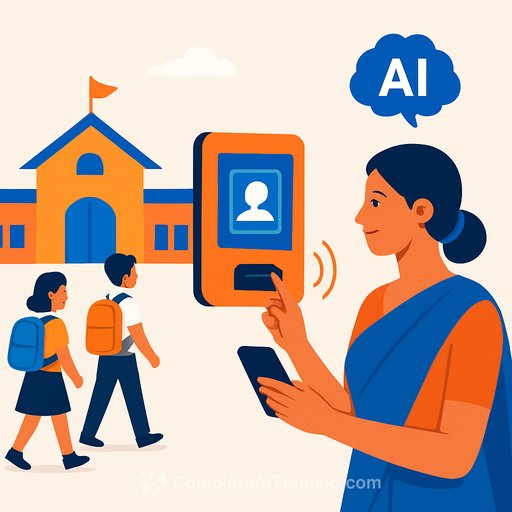
Bengaluru has introduced an AI-driven attendance system for School Education Department employees. The key shift: verification without physical touch or manual punch-in. The goal is simple-faster check-ins, fewer bottlenecks, cleaner records.
What changes on the ground
- No physical intervention. Check-ins happen via AI-typically face recognition at entry points or secure mobile-based verification.
- Real-time dashboards for heads of institutions and block officers to see who's in, who's late, and who's on leave.
- Automatic logs reduce duplicate entries, proxy attendance, and end-of-month reconciliation headaches.
How AI attendance usually works
- Fixed camera at the gate for face verification, or a geofenced mobile check-in for field staff.
- Secure time stamps with location/network validation to prevent spoofing.
- Integration with HRMS/payroll for leave, overtime, and shift data.
- Audit trail of every attempt-accepted or rejected-for transparency.
Why this helps schools and offices
- Less time spent in queues and manual registers.
- Cleaner data for inspections, audits, and compliance.
- Quicker exception handling-medical leave, duty outside campus, training days.
- Predictable reports for staffing, substitutions, and school opening/closing trends.
Implementation checklist for heads, administrators, and BEOs
- Policy and consent: Inform all staff, document lawful use, and obtain consent where required under data protection rules.
- Accessibility: Provide alternatives for people with disabilities or those facing verification issues.
- Fallbacks: Keep a manual register and OTP-based backup for outages or mismatches.
- Network readiness: Stable internet at entry points; offline capture with later sync if connectivity is weak.
- Data controls: Define who can view logs, how long data is kept, and how it's deleted.
- Training: Short onboarding for staff and a clear SOP for exceptions.
- Vendor due diligence: Check security certifications, uptime SLAs, and support response times.
Privacy, consent, and compliance
Biometric or camera-based systems handle sensitive personal information. Treat it with care. Set clear purposes, get explicit consent where needed, and limit access to authorized admins only.
- Map data flows (capture, storage, access, retention, deletion).
- Encrypt data in transit and at rest; log every admin action.
- Publish a simple privacy notice for staff.
- Review compliance under India's data protection framework. See MeitY resources on the Digital Personal Data Protection Act, 2023 here.
Accuracy and fairness
- Track false rejections and set a quick override path (OTP + supervisor approval).
- Test performance across different lighting conditions and demographics.
- Use liveness checks to prevent photo or video spoofing.
- Review monthly: mismatch rates by location and time of day.
What to monitor in the first 90 days
- Average check-in time per person.
- System uptime and sync delays.
- Mismatch/exception percentage and resolution time.
- Staff feedback and accessibility issues.
- Data access logs-who viewed or exported what.
Practical rollout tips
- Start with a pilot in 2-3 schools or one block office. Fix issues, then scale.
- Place clear signboards where to stand and how to check in.
- Assign one "attendance champion" per site for the first month.
- Keep a daily exception sheet to spot patterns early.
For educators who want to stay ahead
If you're building AI literacy for your team-policy, ethics, and simple automation-browse curated learning paths for education roles here or explore the latest AI course updates here.
The takeaway: AI-based attendance, done right, reduces friction without adding risk. Keep it simple, protect staff data, and review the numbers every month. That's how this upgrade pays off for schools.
Your membership also unlocks: