Will AI Help or Hinder Scientific Publishing?
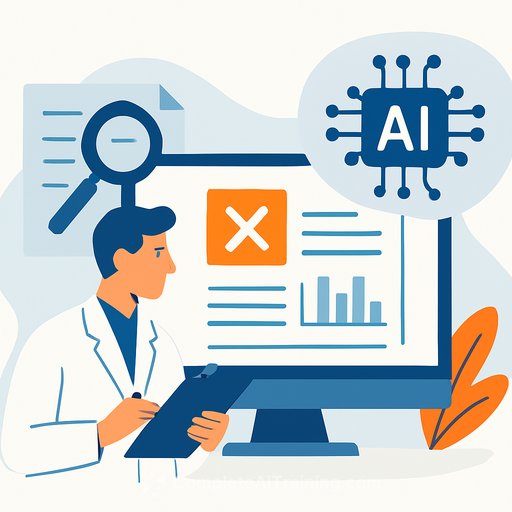
AI is already threaded through manuscript writing and peer review. Editors report a growing trickle of submissions that read synthetic: repetitive phrasing, abrupt logic jumps, and oddly disjointed sections. The tools are improving fast, and usage is rising, which forces a simple question: how do we keep the benefits while protecting research integrity?
Across surveys, researchers say AI speeds literature review, translation, and editing-especially for non-native English speakers. But the same tools make it easier to produce plausible fakes, flood preprint servers, and blur authorship accountability. The system needs guardrails that respect confidentiality, demand disclosure, and keep humans in charge of judgment.
How Scientists Are Using AI Today
- Drafting, translating, and summarizing sections of manuscripts (reported by ~8% in a Nature survey of 5,000 academics).
- Editing for clarity and grammar (reported by ~28% in the same survey).
- Scanning the literature to catch relevant papers that might have been missed; translating drafts; tightening prose (reported in Oxford University Press surveys).
One large-scale analysis of 15 million biomedical abstracts estimated at least 13.5% of 2024 abstracts were likely processed with language models. The direction is clear: AI-assisted text is becoming common.
Where It Breaks
- Hallucinations and misrepresentation: Models can invent citations or distort findings. Some outputs echo source text too closely, risking plagiarism.
- Fabrication at scale: Paper mills can spin up fake articles, datasets, and reviews faster than ever, overloading editors and preprint moderators.
- Incoherence tells: Overuse of em dashes, abrupt transitions, and stitched-together sections often signal synthetic drafts-though these cues are fading as models improve.
AI in Peer Review: Help and Hazard
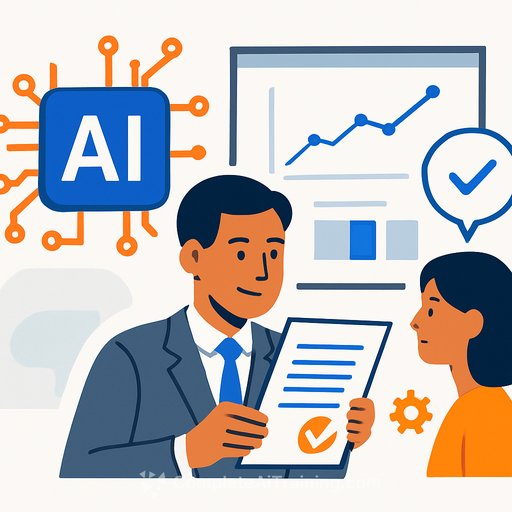
Reviewer fatigue has grown since the pandemic. Used well, AI can help reviewers structure feedback, check references, or surface conflicting literature-expanding who can contribute. But two lines must hold firm:
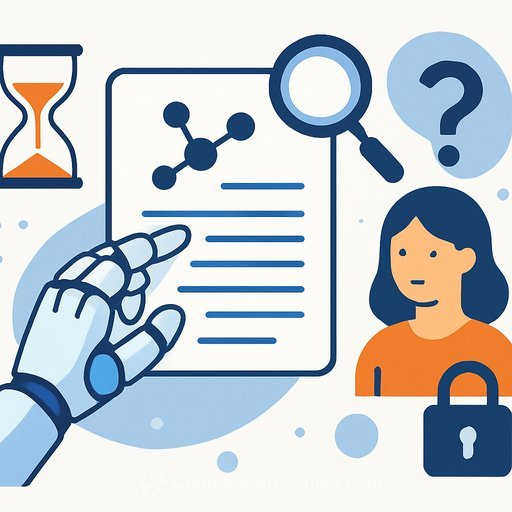
- Confidentiality: Do not paste unpublished manuscripts or reviewer reports into public AI tools. Many publishers (e.g., those behind major medical and science journals) explicitly prohibit this.
- Accountability: Reviewers are responsible for all comments and judgments. AI should not be credited as an author, and it must not generate or alter figures.
Bias: What the Early Evidence Says
- Preprint studies testing multiple large language models as "reviewers" found consistent bias favoring well-known authors and researchers from prominent institutions.
- Prompting can help: When models were instructed to consider gender and geographical diversity while identifying expert reviewers, bias was reduced.
- Training on broader, more diverse corpora may further blunt prestige effects, but independent validation is needed.
Policy Snapshot: Where Journals Are Landing
Among the top 100 journals, 87% provide guidance on generative AI use. Across publishers, themes are converging:
- Allowed with disclosure: Language editing and certain data analyses, with a clear description of which tools were used, how outputs were validated, and which parts of the work were affected.
- Not allowed: Fabrication of content or data; uploading confidential manuscripts to public tools; citing AI as an author; creating or altering images with generative tools.
- PLOS example: Authors must list tool names, explain usage and validation, and specify exactly which sections or files were influenced.
Community organizations are publishing practical guidance, including the Committee on Publication Ethics (COPE) guidance and the ICMJE recommendations.
What Editors Can Do Right Now
- Require explicit AI-use disclosures at submission and in peer review forms.
- Block uploads of confidential content to public tools; provide approved, audited tools if possible.
- Ask reviewers to confirm human oversight and accept responsibility for all statements.
- Strengthen screening for paper-mill patterns (reused structures, improbable methods, citation anomalies), not just "AI writing style."
- Use AI detection cautiously; treat flags as prompts for human checks, not final judgments.
What Authors Should Do
- Disclose tools, versions, prompts (when material), and specific sections influenced.
- Independently verify all content created or edited with AI; check citations and quotes line by line.
- Keep your source notes: maintain a transparent trail from claim to reference.
- Use AI to clarify, not to invent: summarize your own reading, draft in your own voice, and validate any generated text.
- For non-native English speakers, use AI for readability but lock down accuracy, terminology, and domain nuance with human review.
What Reviewers Should Do
- Don't paste confidential text into public tools. If your institution provides secure, vetted models, follow those policies.
- Focus on novelty, methodological rigor, and contribution-judgments that models tend to miss.
- If AI assisted your review (e.g., structuring comments, spotting missing citations), disclose that use to the editor.
On Detection and Enforcement
AI detectors remain unreliable and can mislabel fluent human writing or lightly edited text. Use them as triage, not verdicts. Editorial decisions should rest on transparent criteria: traceable methods, reproducible analyses, consistent data, and coherent argumentation.
Practical Resources
- AI for Science & Research - tools and workflows for literature review, analysis, and research communication.
- Generative AI and LLM - methods, limitations, and policies relevant to manuscript drafting and peer review.
The Bottom Line
AI can make research communication faster and more inclusive. It can also accelerate fraud and import bias. The path forward is straightforward: disclose use, preserve confidentiality, validate outputs, and keep humans accountable for every word, number, and judgment. Do that, and we get the upside without compromising the literature we depend on.
Your membership also unlocks: