AI in Education: Move Past the Hype and Build What Students Need
AI is already changing how we work, communicate and create. In schools, the public debate is stuck between extremes: magical time-saver or cheating machine. Meanwhile, leaders write policies, vendors pitch tools and teachers are left to guess what actually helps students.
The question that matters isn't "Should AI be in schools?" It's "What should learning look like in an AI-everywhere world?" A cross-sector forum of educators, researchers, parents, funders and technologists recently dug into that question and surfaced where the field is stuck - and how to move forward with a human-centered approach.
Myth 1: AI's main value is saving teachers time
Yes, planning, grading and feedback can be faster with AI. But efficiency alone won't fix systems built for a different era. If we only chase time savings, we keep the same structures and expectations that aren't preparing students for the lives they're stepping into.
The shift: Stop asking what AI can automate. Start defining the learning experiences students deserve - inquiry, collaboration, real-world problem solving - and use AI to make those experiences possible at scale.
Myth 2: The big challenge is finding the right tools
The market is noisy. Teachers juggle curricula, supplements, tutoring and now AI add-ons. Better tools won't help if they sit on top of incoherent models of teaching and learning.
The shift: Define clear learning models first. Choose AI tools only if they reinforce shared goals, fit your instructional rhythms and work together to support consistent practices - not because they're new or flashy.
Myth 3: Leaders must pick between improving current schools or building new models
This is a false choice. Students need better experiences today, and we also need to test fundamentally different models for tomorrow. You can do both with intent.
The shift: Take an ambidextrous approach. Run near-term pilots that improve teaching now and, at the same time, generate evidence and capacity for broader redesign.
Myth 4: AI strategy is mostly a technical or regulatory task
Policies and guardrails matter. But if compliance overshadows learning and iteration, educators won't feel safe to try what could actually help students. Risk management without learning creates paralysis.
The shift: Write policy that protects students and creates space for responsible experimentation. Build feedback loops so classrooms inform policy - not the other way around.
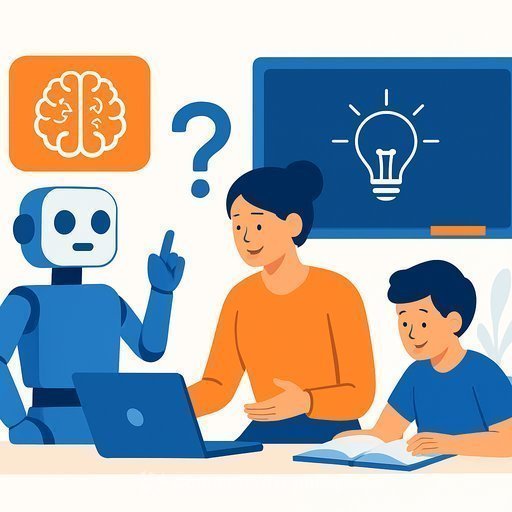
Myth 5: AI threatens the human core of education
The real risk isn't that AI replaces teachers. It's that we fail to define, measure and protect what is most human: belonging, purpose, creativity, critical thinking and meaningful connection. Those outcomes won't happen by accident.
The shift: Use AI only when it strengthens relationships and relevance. If a use case doesn't deepen students' connection between their learning, their lives and their futures, it's a distraction.
What leaders can do in the next 90 days
- Clarify a learner profile: the knowledge, skills and habits your graduates need in an AI-saturated economy. Keep it short and public.
- Map your core learning model: how time, roles, assessment and student work operate today. Identify where AI could expand feedback, agency and authentic tasks.
- Pick two to three high-impact pilots: for example, AI-supported tutoring tied to classwork, student drafting and revision with AI feedback, or teacher planning with shared prompts and rubrics.
- Set guardrails that enable learning: clear data privacy rules, transparency with families, bias checks and educator-facing guidance on acceptable use.
- Invest in people, not just software: create collaborative planning time, coaching cycles and teacher-led showcases of what works (and what doesn't).
- Collect evidence that matters: student work quality, engagement, feedback cycles, belonging and teacher workload - not just usage stats.
Signals you're on the right track
- Students spend more time on authentic tasks (projects, critiques, real audiences) and less on worksheets.
- Teachers report higher-quality feedback with fewer bottlenecks.
- Assessment includes process, reflection and transfer - not only right answers.
- Policies adapt based on classroom insights, not fear of headlines.
Helpful resources
- U.S. Department of Education: AI and the Future of Teaching and Learning
- UNESCO guidance on AI in education
Professional learning for educators
If you're building practical skills with AI aligned to your role, explore curated options by job category - for example, see the AI Learning Path for Teachers.
Leaders and senior strategists should also pursue role-specific professional learning to guide policy and implementation. See AI for Executives & Strategy and the AI Learning Path for VPs of Strategy for focused pathways on governance and strategic rollout.
The question isn't whether AI will affect education. It's whether we will set its role so it serves students - with clarity, coherence and a commitment to what makes learning deeply human.
Your membership also unlocks: