The Viewpoint: Beyond Generic AI-Tools Built for the Law
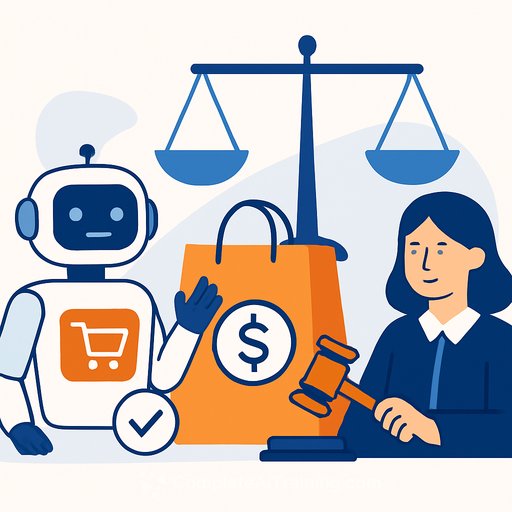
Public AI tools are now everywhere. For legal work, they come with more risk than reward. Data can leak, outcomes can mislead, and compliance can fail-quietly and expensively. Not everything shiny helps your practice; prefer tools purpose-built for legal workflows and content (AI for Legal).
In India, legal teams are adopting AI to speed up research and drafting. That's smart. But the wrong tool can create more work, not less.
Why public AI is risky for legal work
Most public AI systems store prompts and use them to train models. That alone can expose sensitive inputs. Under India's Digital Personal Data Protection Act, processing personal data requires a lawful basis and, in many cases, explicit consent-hard to square with platforms trained on vast, mixed datasets. For practical guidance on compliance, monitoring, and policy automation, see the AI Learning Path for Regulatory Affairs Specialists.
Compliance aside, there are practical threats: data security gaps, hallucinated answers, and stale or unreliable information. For legal research, that's a non-starter.
Read the Digital Personal Data Protection Act, 2023
Hallucinations aren't harmless
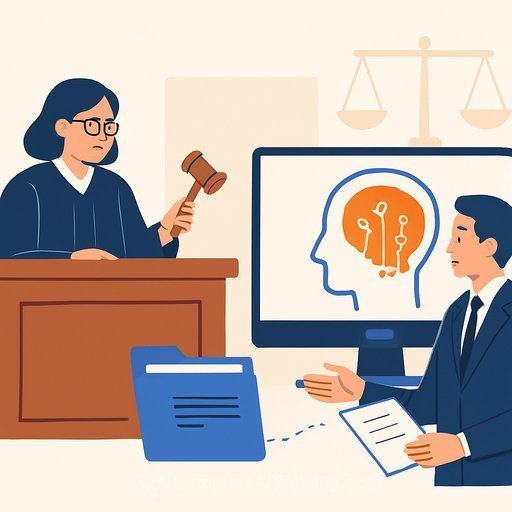
AI hallucinations are confident yet wrong outputs. They often stem from biased or incomplete training data. In law, a convincing wrong answer can slip past even careful review.
Consider Buckeye Trust v. Principal Commissioner of Income Tax (ITA No.1051/Bang/2024). The bench cited four judgments; two had fabricated case names and citations, and another pushed an irrelevant proposition. In a separate instance, a senior lawyer apologized in the Apex Court after a rejoinder included fake cases and misinterpreted questions of law.
Relying on unchecked AI can corrode research quality and trust-inside the courtroom and out.
Vigilance-and systems built for legal work
Justice H. R. Khanna put it simply: "Eternal vigilance is the price of liberty and in the final analysis, its only keepers are the people." That principle applies to AI. You need tools that make verification easy, not optional.
Manupatra has taken that stance. Manupatra AI Search and Manuworks.ai are built to meet legal and ethical standards, provide traceable outputs, and keep research environments secure. They sit on top of Manupatra's trusted legal content, so you're not guessing whether the source is solid.
AI Search: think like a lawyer, not a machine
- Goes beyond keywords to understand legal concepts and retrieve judgments that actually matter.
- Cuts hours of manual filtering so you can build sharper, well-reasoned arguments with speed.
- Guided by fairness, reliability, and data privacy-built to reduce blind spots and provide faster clarity.
- Workflows that fit legal research: ask questions within a judgment, compare two judgments side-by-side with AI insights, and scan AI Gists or full AI Summaries covering facts, issues, reasoning, and decisions.
Manuworks.ai: one workspace for legal drafting and review
- Draft professional, specialized documents with structure and precision.
- Translate and compare documents to spot differences quickly.
- Generate case timelines, summarize long content, and run OCR on scanned copies.
General AI tools often miss legal context. These workflows are built for legal teams and draw on domain-specific data to produce reliable outputs you can stand behind.
Security, governance, and compliance
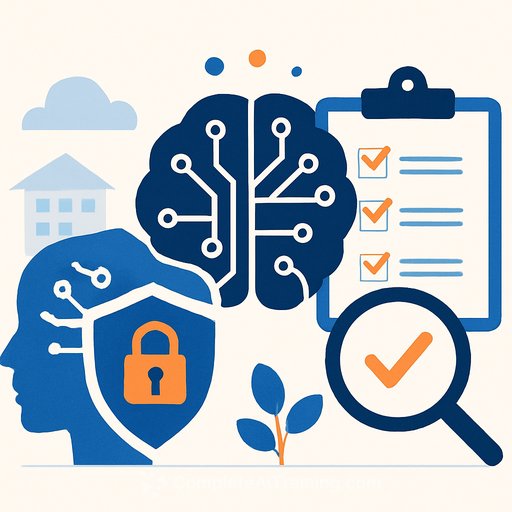
- SOC 2 Type II controls, AES-256 encryption, and zero retention policies create an audited, defensible setup for AI governance.
- Clear operational processes balance responsible AI deployment with internal and external rules.
For guidance on aligning governance, security strategy, and control frameworks around AI deployments, see the AI Learning Path for CIOs.
Learn what SOC 2 means in practice
"Context engineering" is the real advantage
Data is a strategic asset, but it has to be brought to AI with context. That's the difference between noise and insight. AI Search connects your query to the right legal concepts, so results are relevant, traceable, and ready to use.
Adopt AI without disrupting your practice
Roll it out in phases. Train teams on core workflows. Set verification steps for critical outputs. Keep what works in your current process, and use AI to remove drag-not judgment.
The goal is simple: better accuracy and higher throughput without sacrificing the integrity of the work.
Conclusion
For legal professionals, generic AI is a gamble. Tools built for law-supported by trusted content, strong controls, and clear auditability-let you move faster while staying precise. Research, drafting, and summarizing get done in less time, so you can focus on strategy, client advisory, and professional judgment.
Disclosure: This is a sponsored article from Manupatra.
Your membership also unlocks: