Former White House Official Warns Against Nvidia Deal, Cuts to Research Funding
Kei Koizumi, who helped architect the 2022 Chips and Science Act as principal deputy director of the White House Office of Science and Technology Policy, says the Trump administration has undermined the legislation's core objectives and made unprecedented moves toward state ownership of private companies.
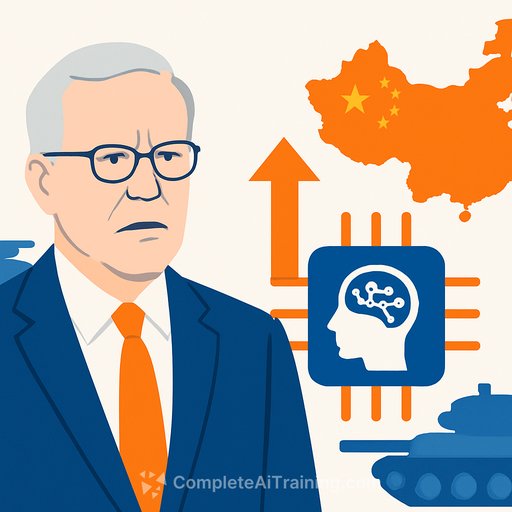
In particular, Koizumi criticized the administration's decision to allow Nvidia to export advanced H200 AI chips to China in exchange for a 25 percent revenue share. He called the move "an abdication of responsibility for national security" and warned of the military implications.
The CHIPS Act Under Pressure
The Biden administration implemented the CHIPS Act rapidly, establishing new funding structures, creating the National Semiconductor Technology Center for semiconductor research, and launching workforce training programs. The legislation also created a new directorate at the National Science Foundation focused on technology innovation and partnerships.
The Trump administration has not repealed the law but has proposed substantial cuts to research funding and modified or canceled key programs. Koizumi said he did not anticipate such reversals. "This administration has definitely undercut a lot of its promise," he said.
Implementation challenges remain real. Taiwan Semiconductor Manufacturing Company's Arizona facility has faced talent shortages, permitting delays, and ecosystem gaps. Koizumi stressed that having legislation is only the starting point. "The real impact of that legislation is going to be in the ongoing flexible implementation," he said.
State Ownership and National Security
The Trump administration has taken an equity stake in Intel, a move Koizumi called "highly unusual" and "un-American." The U.S. government rarely takes ownership of major companies except in extreme circumstances like the Chrysler bailout.
Koizumi opposed the approach. State-owned enterprises in China have lagged behind private sector competitors, he noted. The U.S. has historically maintained private defense contractors and companies, which has served national interests better than state ownership.
AI Chips and Military Risk
Allowing China access to advanced AI chips carries military consequences that the administration has not adequately assessed, Koizumi said. "Imagine a Chinese military with the world's leading AI capabilities in military and related technologies. They could outfight the U.S. military without firing a shot," he said.
Trump officials and Nvidia CEO Jensen Huang argue that Biden-era export controls failed to slow China's semiconductor advances and that keeping China dependent on the U.S. AI tech stack is the better strategy. Koizumi acknowledged this as a "legitimate alternate view" but said national security concerns about military applications require serious analysis the administration has not demonstrated.
He also raised the risk that Chinese companies with access to latest AI chips could develop superior generative AI systems that influence political behavior and children's development globally.
Corporate Influence and Policy
Huang met frequently with the White House this year and donated to White House events-a level of access Koizumi found striking. "That is money well spent. I think he correctly diagnosed the maximum influence that he could get with President Trump," Koizumi said.
During the Biden administration, guardrails existed to limit private firm influence on policy. "Those guardrails existed until last year," Koizumi said. "This is fairly unprecedented. It has become a crony capitalist economy in a very short amount of time."
The Research Investment Problem
The U.S. maintains advantages in AI: Silicon Valley's ecosystem, decades of government investment in fundamental research, and a thriving industrial sector. But China's unified government approach and dramatically increased AI investments have allowed it to catch up and lead in many research areas.
According to the Australian Strategic Policy Institute, China now leads in 66 of 74 critical technology categories while the U.S. leads in only eight. Proposed federal funding cuts to universities and research institutions threaten U.S. competitiveness, Koizumi warned.
The U.S. does not need to lead in every technology area but must remain among leaders in nearly all of them. "If our research strength is undermined or it disappears, then venture capital and the industrial ecosystem will not be able to carry U.S. leadership forward," he said.
The China Science Agreement
Koizumi negotiated renewal of the U.S.-China Science and Technology Agreement in the final days of the Biden administration. U.S. and Chinese researchers represent the world's top collaborative research pair across fields including health and agriculture.
He hopes the agreement's symbolic value endures despite the securitization of science policy on both sides. There may be areas where U.S.-China research collaboration is unwise, particularly in AI, but the presumption should favor collaboration with the world's best researchers, he said.
What Should Change
If advising the administration, Koizumi's top priorities would be maintaining research investment and reconsidering the approach to guardrails. "Guardrails is not a bad word. Guardrails enable a driver to go faster because they feel safer," he said.
He also drew a distinction between company dominance and national interest. "Dominance for the U.S. should not be the end goal of Science and Technology policy. Our end goal should be to make sure that U.S. interests are dominant. Company interests and U.S. interests are not the same thing," Koizumi said.
Your membership also unlocks: