
AI news ·
Big AI companies show 249 instances of regulatory capture across key policy events, Trinity research finds
Trinity College Dublin researchers found 249 instances of corporate capture across AI regulation, including lobbying, legal evasion, and narrative control. The study identified 27 patterns used by major AI firms to shape rules in their favor.
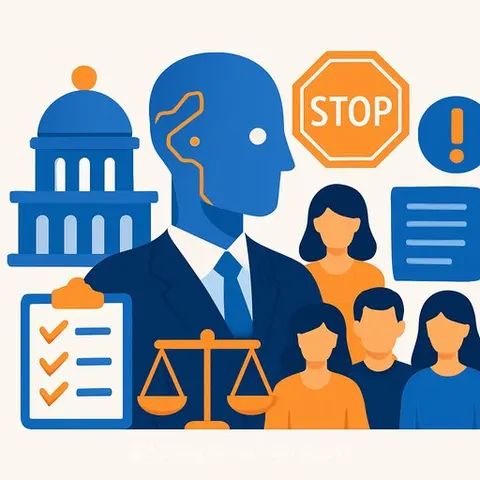
Research identifies 27 patterns of corporate capture in AI regulation
Major AI companies have systematically undermined rule of law through narrative control, regulatory evasion, and political influence, according to new research from Trinity College Dublin's AI Accountability Lab.
The international team analyzed 100 articles published around four critical regulatory events between 2023 and 2025, including EU AI Act negotiations and global AI summits. They identified 249 instances of "corporate capture"-a process where regulators and public bodies prioritize corporate interests over public welfare.
Two dominant patterns emerged
Narrative capture: AI companies frame regulation as innovation-killing "red tape" and unnecessary bureaucracy. This messaging dominated coverage of the EU AI Act trilogues and international summits.
Legal evasion: Big AI has violated or creatively reinterpreted antitrust, privacy, copyright, and labor laws while facing minimal enforcement consequences.
How the capture works in practice
The research documents specific mechanisms: aggressive lobbying campaigns, retaliation against whistleblowers and researchers, and the "revolving door" where former policymakers join AI companies as advisors or executives.
Political donations to parties and officials, equity ownership in regulated companies, and direct advocacy for deregulation complete the picture. EU Commission President Ursula Von der Leyen explicitly called for AI deregulation in October 2025, after previously supporting "simplification."
These patterns matter to legal professionals because they affect how rules governing AI are written, enforced, and ultimately applied in practice. Understand the dynamics of corporate capture and learn how to identify it in your work with AI for Legal resources.
Why this matters for regulation
The integrity of oversight structures determines public trust in AI systems, credibility of scientific research, and the stability of democratic processes. When regulatory capture occurs, those protections erode.
Zeerak Talat, co-author from the University of Edinburgh, said the regulatory frameworks "deeply impact everything from fostering public trust in systems marketed as AI to the credibility of scientific knowledge, and from educational and healthcare services to information ecosystems, the environment, rule of law and even the integrity of democratic processes."
Legal professionals navigating AI compliance and regulatory requirements should understand these capture mechanisms. Consider exploring AI Learning Path for Paralegals to build practical skills for identifying and addressing regulatory gaps.