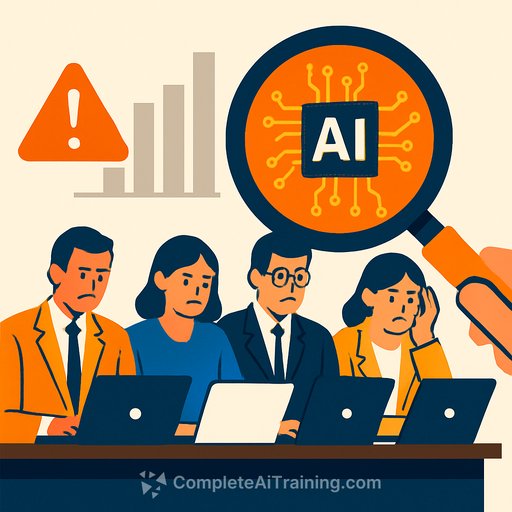
FRC Finds Major Accounting Firms Use AI Without Monitoring Audit Quality
The Financial Reporting Council (FRC) has revealed that the UK’s largest accounting firms lack formal oversight on how artificial intelligence impacts the quality of their audits. In a recent review, the watchdog highlighted that while firms like Deloitte, EY, KPMG, PwC, BDO, and Forvis Mazars increasingly rely on AI-driven tools for risk assessment and evidence collection, they do not track how these tools affect audit outcomes.
The FRC pointed out that “no formal monitoring performed by the firms to quantify the audit quality impact” exists. Instead, usage monitoring focuses mostly on licensing compliance rather than on evaluating audit effectiveness.
AI Use in Big Accounting Firms
Firms are heavily investing in AI to improve efficiency. For example, Deloitte uses AI to summarise board minutes and complex contracts, while KPMG scans millions of transactions to detect risks—tasks that traditional methods could not handle effectively.
Despite this adoption, the FRC’s audit quality team found that all but one firm have no key performance indicators (KPIs) to measure the effectiveness of AI tools in audits. This gap raises concerns about how AI-driven procedures influence audit quality.
Risks and Challenges of AI in Auditing
The FRC recognises AI’s potential to enhance audit work but also warns about risks such as ethical issues and potential bias in AI outputs. Mark Babington, FRC executive director of regulatory standards, stressed the need for firms to establish clear metrics to evaluate AI’s impact.
He said: “AI tools are now moving beyond experimentation to becoming a reality in certain audit scenarios. When deployed responsibly, they have significant potential to improve audit quality, support market confidence, drive innovation and ultimately contribute to UK economic growth.”
FRC’s New Guidance on AI Use in Audit
The FRC published its first-ever guidance to clarify expectations around the use of AI in audit work. The guidance encourages proportionate and appropriate documentation of AI tools and aims to support innovation while maintaining audit standards.
- Two-part structure: Includes an illustrative example of AI in audit and principles for documenting AI tools proportionately and robustly.
- Broad AI definition: Covers machine learning, deep learning, and generative AI models.
- Balanced documentation: Avoids over-documentation while ensuring transparency.
- Contextual explainability: Recognises that the level of explainability depends on how AI tools are used.
- Versatile principles: Offers guidance applicable to various AI implementations in audit.
- Alignment with UK government AI principles: Documentation reflects the government’s five key AI principles.
- Market relevance: Clarifies expectations for both in-house and third-party AI tools.
The FRC intends to continue engaging with the accounting profession in the UK and internationally to ensure AI is used responsibly and effectively in audits.
For finance professionals interested in upskilling with AI tools relevant to auditing and risk assessment, exploring specialised courses can provide practical knowledge on AI applications in finance. Resources like Complete AI Training’s AI tools for finance offer targeted learning paths.
Your membership also unlocks: