Apple's executive exits signal an AI strategy reset - not a crisis
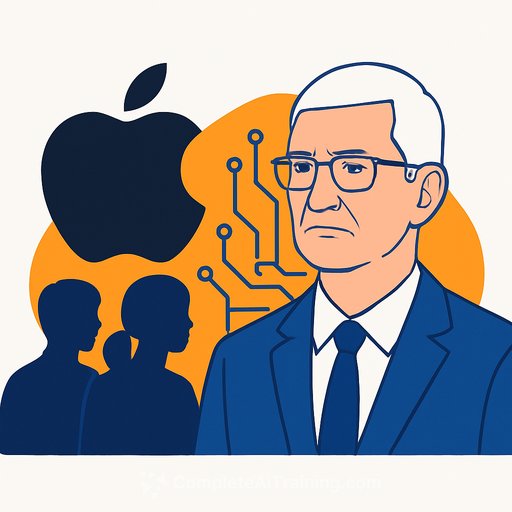
Apple is seeing a fast series of high-level departures: longtime COO Jeff Williams, AI chief John Giannandrea, governmental affairs head Lisa Jackson, design VP Alan Dye (moving to Meta), and general counsel Kate Adams. In isolation, each move is normal. Stacked together, they read like a deliberate pivot.
This isn't a fundamentals problem. Apple's stock is near all-time highs, its market cap is above $4 trillion, iPhone sales just posted records with bigger numbers expected in Q1, and Services revenue keeps climbing. TF International Securities' Ming-Chi Kuo also expects a low-cost MacBook push to capture schools and price-sensitive buyers.
What's really changing: AI leadership and timelines
The pressure point is AI. Apple has trailed Google and Microsoft in shipping consumer-facing AI that feels indispensable. Next-gen Siri, initially teased in 2024, has slipped to 2026, and-according to Bloomberg reporting-Apple is expected to lean on Google's Gemini models as a bridge until its own are ready.
Two moves hint at a sharper AI strategy. AI researcher Amar Subramanya replaces Giannandrea and will report to Craig Federighi, consolidating AI under software leadership. And Alan Dye, a key interface design leader, is heading to Meta to lead design at Reality Labs, a signal that AI-first hardware design is now an open, high-stakes race.
Analysts see intent, not chaos. Gene Munster says Tim Cook wants to stop following and start leading in AI. Zeus Kerravala points to a renewed push after criticism of Siri's lag.
How to read the signal like an operator
- Build, buy, partner: Short term, Apple appears willing to pay for external models to hit user-facing milestones. Long term, it will still want proprietary models for control, margin, and differentiation.
- Org design shift: Moving AI under Federighi tightens the build loop between models, OS frameworks, and shipping features. Expect fewer labs projects and more productized releases tied to iOS and macOS cycles.
- Design implications: Losing Dye raises the bar for integrating AI into interface patterns. Expect Apple to standardize AI interactions across apps to reduce cognitive load and support reliability.
- Capital allocation: A billion-dollar annual model license is easier than two years of missed product cycles. Speed to value beats purity-especially with a sticky ecosystem to defend.
- Risk framing: Privacy posture, regulatory scrutiny, and model reliability will shape rollout pacing. Apple will trade breadth for trust in high-stakes features.
Customer risk: low now, real later
Churn risk today is limited. The iPhone and Mac ecosystems create high switching costs that keep users in place even with an underwhelming Siri. But if AI-native experiences on Android or Windows feel materially smarter for long enough, share can slip-first in the high end, then down-market.
Execution priorities Apple must hit in 2026
- Siri relaunch that sets a reliability floor (context retention, on-device performance, privacy-preserving personalization).
- Clear model strategy: when Gemini is used, when Apple's in-house models take over, and where on-device vs. cloud inference applies.
- AI in Services: tighter integration in Photos, Messages, Notes, Mail, Search, and developer APIs that create third-party pull.
- Hardware alignment: AI features that justify iPhone and Mac upgrade cycles, including edge accelerators and battery life claims tied to AI usage.
- Talent backfill and velocity: visible hires and ship cadence that restore confidence post-exits.
Playbook for executives facing a similar moment
- Map the gap: List customer journeys where AI can remove friction this quarter, not next year. Prioritize "assist, summarize, recommend, automate."
- Decide your model posture: partner (fast), fine-tune (focused), or build (defensive moat). Use a hybrid approach with clear exit ramps.
- Attach AI to release trains: Tie features to product and platform schedules. If it doesn't ship, it doesn't count.
- Reorg for outcomes: Put AI under product/engineering owners who ship, not research silos. Incentivize reliability, latency, and adoption-not demos.
- De-risk with governance: Privacy, safety, and evals baked into CI/CD. Track hallucination rates, cost per task, and customer satisfaction.
- Show value fast: Launch narrow, high-frequency use cases that users touch daily. Expand scope as trust builds.
If you're leading an AI reset or sharpening a roadmap, this curated hub can help: AI for Executives & Strategy.
Bottom line
This isn't a collapse. It's a refocus. Apple is trading purism for pace to close its AI gap. The next 12-18 months will show whether the company can turn a defensive bridge strategy into an offensive product advantage-without eroding the trust that keeps its ecosystem glued together.
Your membership also unlocks: