Biohub Launches Large-Scale AI + Biology Initiative to Accelerate Disease Research
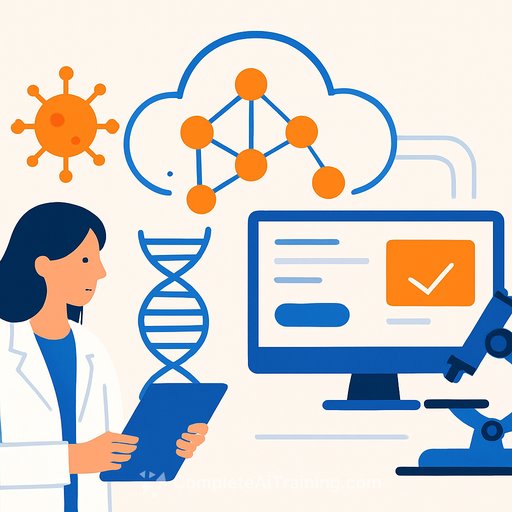
Biohub announced a new initiative that pairs frontier artificial intelligence with advanced biology to speed up progress against human disease. The organization has spent years building single-cell datasets, imaging platforms, and compute built for biology. Now it's channeling those assets into an integrated program focused on modeling cells, running virtual experiments, and engineering interventions.
The move comes with a clear signal on intent: go faster. "Accelerating science is the most positive impact we think we can make," said Co-Founder Mark Zuckerberg, noting the team is going all in on AI for biology.
Leadership and Team
EvolutionaryScale, an AI research lab focused on life sciences, will join Biohub. Its co-founder and chief scientist, Alex Rives, will serve as head of science, guiding a unified strategy across experimental biology, data, and AI. Rives is a core institute member at the Broad Institute and an assistant professor in MIT EECS, and will retain those affiliations.
Rives emphasized the near-term potential: AI systems that can reason about and engineer biology are starting to create new ways to work, from modeling function to designing experiments.
Infrastructure at Scale
Biohub is increasing its compute capacity tenfold to 10,000 GPUs by 2028. The organization is also committing more resources to data generation and experimental biology. The goal: build models that connect molecular and cellular mechanisms with measurable outcomes in tissues and organisms.
Four Scientific Grand Challenges
- Unified AI-based model of the cell to predict how cells behave in the human body.
- Next-generation imaging to visualize complex biological processes at new scales.
- Instrumentation to monitor and modulate inflammation in real time.
- AI-guided methods to reprogram the immune system for early detection, prevention, and treatment.
Early Milestones You Can Use
Biohub is launching the Virtual Immune System, a flagship effort to computationally model immune dynamics. The aim is to simulate therapies, reprogram dysfunctional cell states, and anticipate disease before symptoms emerge.
New models on the virtual cells platform:
- VariantFormer: translates personal genetic variation into tissue-specific gene activity patterns.
- CryoLens: an end-to-end, pre-trained, large-scale model for cryoET with unsupervised structural similarity analysis.
- scLDM: generates realistic single-cell data in silico at high fidelity.
Recent additions also include GREmLN (a graph-aware model for gene regulatory networks) and rBio (a conversational LLM focused on biological reasoning). Datasets and models will be shared freely to support open research.
What This Means for Research Teams
Virtual biology shifts a chunk of hypothesis testing into the compute layer. With high-fidelity digital representations of molecules, genomes, and cells, you can ask questions digitally, simulate outcomes, and narrow the search space before bench work.
Scientific AI that learns from and synthesizes global literature can surface non-obvious links across papers, datasets, and modalities. Expect more inference at query time, stronger priors for experiment design, and faster iteration cycles.
What to Watch Next
- Model releases and APIs that integrate with common analysis stacks for single-cell, imaging, and multimodal data.
- Datasets that tie sequence, structure, imaging, and perturbation data into unified training corpora.
- Benchmarks that measure predictive accuracy for cellular behavior, immune responses, and treatment simulations.
- Results from the Virtual Immune System and early demonstrations in inflammation monitoring.
From Clinic to Code
Co-Founder Priscilla Chan, a former pediatrician, described the need plainly: clinical cases often lacked a clear cellular explanation. The promise here is models that can map genetic changes to cell-type functions and point to actionable interventions much earlier in the process.
Bottom Line
Biohub is aligning compute, datasets, lab automation, and modeling under one mission: shorten the time from idea to insight to intervention. For scientists, that means more reliable priors, better tools for simulation, and wider access to models that make complex systems tractable.
If your team is leveling up AI fluency for lab or data workflows, this curated list of training resources may help: AI courses for technical professionals.
Your membership also unlocks: