AI Talent Act: A practical plan to build AI capacity across the federal government
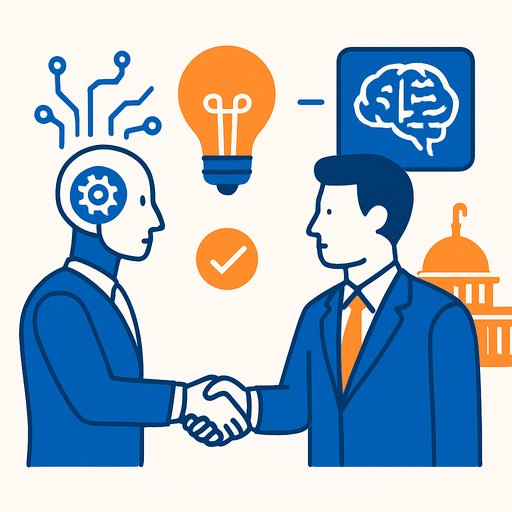
Congress is introducing the AI Talent Act, a bicameral, bipartisan bill that would set up specialized hiring teams inside agencies and at the Office of Personnel Management. The goal: recruit and retain AI and technical experts, and make it easier for agencies to apply these systems to real problems.
"We need people who understand how to apply these technologies, who also understand the risks and benefits," said Rep. Sara Jacobs, D-Calif., who is leading the effort. Rep. Jay Obernolte, R-Calif., added that the bill gives agencies tools to recruit experts with demonstrated skills to responsibly adopt AI and strengthen mission delivery.
What the bill does
- Creates AI-focused talent teams within agencies and a cross-agency team at OPM.
- Builds centralized resources and shared talent pools so agencies can find and share strong candidates faster.
- Emphasizes skills-based exams and certifications to evaluate real capability, not just resumes.
- Streamlines hiring for permanent roles and improves interagency coordination on technical hiring protocols.
Why this matters for your agency
Past efforts like the United States Digital Service and the U.S. Digital Corps seeded technical talent, but primarily through time-bound fellowships. This bill is structured to create durable AI talent pipelines, improve hiring speed, and keep expertise inside government long term.
That unlocks practical wins: stronger data pipelines, safer model deployment, better risk management, and faster delivery on mission priorities. It also reduces dependence on contractors for core AI decisions.
How it fits with existing initiatives
The Biden administration launched an AI talent surge in 2023, but those efforts were time-limited under AI.gov branding. Because the AI Talent Act is legislation rather than an executive action, it would be more durable across administrations.
- See background on skills-based hiring at OPM.
- For context on fellowship models, explore the U.S. Digital Corps.
The pay gap problem (and how to compete anyway)
Private-sector AI compensation will outpace federal salaries. That's not new. What agencies can compete on: mission, impact, stability, and the chance to ship systems that affect millions of people.
As Rep. Jacobs put it, government won't match tech salaries or office perks, but many experts want meaningful work. A cleaner, skills-based path into permanent roles makes that decision easier.
What hiring managers can do now
- Define the top 3 mission use cases for AI in your program (e.g., fraud detection, triage, summarization, document intake).
- Translate use cases into skill requirements: data engineering, model evaluation, prompt design, MLOps, model governance, secure deployment.
- Prepare skills-based assessments (practical exercises, work samples, code reviews) and structured interviews with subject-matter experts.
- Plan for clearances early and set realistic timelines; identify interim work candidates can do while awaiting adjudication.
- Use available flexibilities: special salary rates, retention incentives, direct hire authority where applicable, and remote/telework options.
- Create clear career paths: junior-to-senior IC tracks, technical leadership roles, and rotational assignments across programs.
- Stand up lightweight AI governance: data access rules, model documentation, bias testing, privacy reviews, and human-in-the-loop checkpoints.
- Coordinate with legal, privacy, and procurement to pre-clear tools, datasets, and secure environments so hires can be productive on day one.
How programs should prepare
- Inventory your data: sources, owners, quality, and access controls. Good data beats bigger models.
- Set evaluation criteria before pilots: accuracy thresholds, fairness metrics, auditability, uptime/latency targets, and rollback plans.
- Identify "AI-enabling" roles you'll need alongside researchers and engineers: product managers, UX writers, data librarians, security engineers.
- Plan change management: training for frontline staff, clear SOPs, and feedback loops to improve tools after launch.
How this differs from past efforts
USDS and the Digital Corps brought in strong technologists, largely on time-limited terms. The AI Talent Act zeroes in on AI roles, emphasizes skills-based evaluation, and focuses on permanent hires with shared talent pools and playbooks that agencies can reuse.
Bottom line
If enacted, the AI Talent Act would give agencies a clearer path to hiring people who can ship safe, useful AI systems. Start lining up roles, assessments, and governance now so you can move quickly when the hiring channels open.
Build team skills while you hire
If you're upskilling internal staff while recruiting, see curated AI training by job role for public-sector teams at Complete AI Training. A strong baseline across your existing workforce makes new AI hires far more effective.
Your membership also unlocks: