Bitcoin's "virtuous cycle" vs AI's "destructive loop": what executives should do now
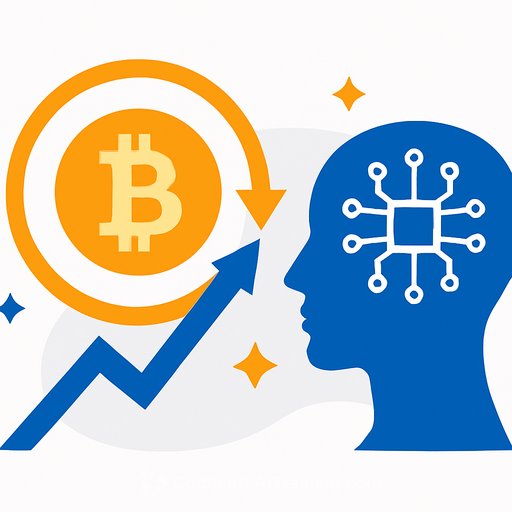
Strategy CEO Phong Le argued that AI accelerates a self-reinforcing destructive loop-eroding relationships, choice, and jobs-while Bitcoin drives a self-healing virtuous cycle that strengthens social and economic foundations. He believes civilization's progress has always been symbiotic with currency and capital, and the AI era will be no different-digital currency alongside digital intelligence.
Time context: 2026/02/27 05:17 - BTC +0.13%.
The claim, in brief
AI: "self-reinforcing destructive cycle." As AI gains ground, it pressures trust between people, the integrity of democratic choice, and the stability of employment. Left unchecked, scale compounds the downside.
Bitcoin: "self-healing virtuous cycle." As adoption grows, it can reinforce monetary rules, censorship resistance, and transparent settlement-potentially boosting institutional trust and individual agency.
Why this matters to executives
- Trust is a balance sheet item now. Deepfakes, content floods, and opaque models can tax brand equity and stakeholder confidence.
- Regulatory heat will rise. Expect scrutiny on AI accountability, model provenance, and consumer protection-alongside evolving crypto policy.
- Labor and cost structures will shift. Automation augments output but can spark morale, skills, and ethics issues if mishandled.
- Treasury and payment strategy is back on the table. Bitcoin's narrative-scarcity, neutrality, portability-may influence reserve and settlement conversations.
A two-track playbook: contain AI risk, clarify Bitcoin posture
AI governance and risk
- Set board-level AI oversight with a clear risk taxonomy and approval gates for high-impact use cases.
- Adopt a control baseline aligned to the NIST AI Risk Management Framework (model provenance, evaluation, monitoring, incident response).
- Mandate human-in-the-loop for decisions touching safety, rights, or material customer outcomes.
- Protect data. Enforce source documentation, consent, secure pipelines, and red-teaming for leakage and bias.
- Stand up a communications policy for synthetic media and brand impersonation; rehearse crisis playbooks.
- Prioritize augmentation over replacement. Tie automation to reskilling and clear productivity KPIs.
Bitcoin and digital asset posture
- Define your thesis. Is Bitcoin a treasury hedge, payments rail, strategic option, or out of scope? Write it down and get board sign-off.
- Run limited-scope pilots: B2B cross-border settlement, vendor payouts, or treasury sandboxing with strict risk limits.
- Build the control stack early: custody, key management, segregation of duties, and audit trails.
- Map regulatory exposure (KYC/AML, tax, reporting) across jurisdictions; align with counsel before scale.
- Stress-test scenarios: liquidity shocks, custody failure, price drawdowns, and operational outages.
Metrics to track
- AI: model incidents, content authenticity disputes, customer trust scores, productivity per FTE, and policy actions by major regulators.
- Bitcoin: on-chain settlement volume, institutional custody growth, hash rate trends, and treasury adoption signals.
90-day executive checklist
- Form an AI/crypto steering group reporting to the board risk committee.
- Inventory AI use across the enterprise; classify by impact and risk. Freeze or fix the top 10% riskiest workflows.
- Publish your synthetic media policy and launch a brand-protection watchlist for deepfakes.
- Draft a Bitcoin position paper with options (No-go, Observe, Pilot, Allocate) and tripwires for each.
- Select one AI augmentation pilot with measurable ROI and one low-risk Bitcoin settlement pilot; define success metrics up front.
Big picture: both AI and Bitcoin are feedback machines. One can spiral into distortion without governance; the other can reinforce trust if implemented with clear rules. Your job is to set the constraints so the loops work for you, not against you.
For a structured path on oversight, risk, and decision-making, see the AI Learning Path for CEOs.
Optional primer: Satoshi Nakamoto's original Bitcoin whitepaper for first principles on the protocol mechanics that drive the "virtuous cycle" narrative.
Disclaimer: The views summarized here reflect the perspective of the individual quoted and are provided for information only. This is not investment advice or a recommendation to buy or sell any asset.
Your membership also unlocks: