AI Adoption and Cybersecurity Oversight: A Single Board Agenda for 2026
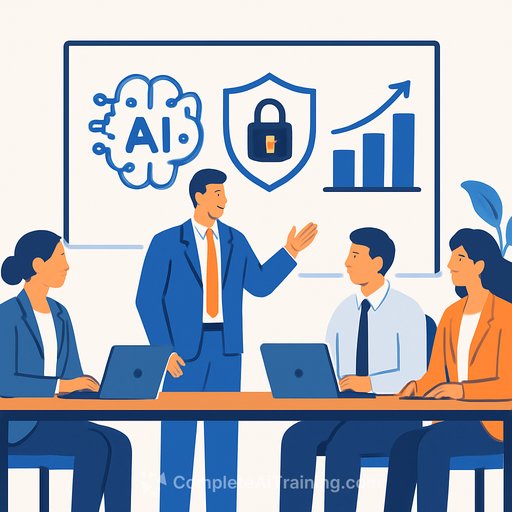
AI has moved from a side topic to the core of corporate strategy. Directors now put it on the main agenda, and for good reason: every AI gain expands the digital footprint attackers can probe. NACD surveys show 62% of boards dedicate time to AI, and 77% discuss the financial impact of cyber incidents. The message is simple-AI strategy, cyber resilience and human capital oversight must be managed together.
As one industry leader put it, the boardroom is at a strategic inflection point. The mix of AI disruption, cyber risk and economic pressure calls for clear thinking, shared language and faster decision cycles.
The Dual Nature of AI in Security
AI is both a force multiplier for defenders and a risk multiplier for attackers. It cuts false positives in detection, spots anomalies faster than humans and can trigger response playbooks at machine speed. Organizations that lean into AI for security have reported an average $1.9 million lower cost per data breach.
But adversaries use the same tools. Generative AI boosts social engineering with credible phishing and deepfakes. The World Economic Forum reports deepfakes are now the second most common incident type, behind malware. Some numbers may be inflated, but the direction is obvious.
The Governance Gap
Adoption has outrun oversight. McKinsey data shows 88% of companies use AI somewhere in the business, yet only 39% of Fortune 100 firms disclose any board oversight of AI. Two-thirds of directors report limited experience with AI, and nearly a third say AI still isn't on the board agenda.
The Business Case for Integrated Oversight
Boards with digital and AI fluency outperform. One MIT study found a 10.9 percentage point lift in return on equity for companies with tech-savvy boards, while peers without that fluency lag their industry by 3.8%. The winners combine ambition with guardrails.
Regulators are moving in the same direction. The SEC's 2026 priorities put AI and cybersecurity ahead of crypto. In Europe, DORA is active and the EU AI Act is phasing in by risk tier. NIST released a preliminary profile that maps AI risks to the Cybersecurity Framework 2.0 functions-useful scaffolding for policy and metrics. For reference, see the NIST Cybersecurity Framework overview here and the European Commission's page on the AI Act here.
What Boards Should Do Now
- Define committee boundaries. Decide what belongs to the full board, which topics sit with audit, risk or tech committees, and what stays with management. Roughly 40% of companies now assign AI oversight to at least one committee (up from 11% in 2024). Cyber usually sits with audit (78%). Spread the workload so AI and cyber each get real airtime.
- Approve an AI governance framework. Set risk thresholds that require human sign-off, vendor and data guardrails, and escalation triggers for incidents. Fold AI risks into the enterprise risk appetite and tolerance statements, aligned to the new NIST AI profile.
- Level up board fluency. Schedule AI and cyber briefings with the CISO and CDO, bring in third-party advisors and consider recruiting directors with deep tech backgrounds. Nearly half of S&P 500 companies now cite AI in director qualifications, up from 26% in 2024.
- Demand quantitative reporting. Only ~15% of boards get AI metrics. Require ROI by business unit, percent of processes AI-enabled, resilience indicators, workforce reskilling progress and regulatory alignment-plus judgment and tradeoff analysis. On cyber, 47% of directors say improving metrics quality is a top need.
- Tighten third-party and supply chain controls. AI tools drift, degrade and expose unexpected attack paths. Ensure procurement and security evaluate vendors for security, privacy and ethics, and apply supply-chain risk practices to AI systems.
- Deepen the board-CISO relationship. Regular, direct dialogue matters. The CISO brings operational context; the board brings strategy and accountability. Treat it as a standing partnership, not a quarterly update.
The Human Dimension
AI changes work before it changes headcount. Security teams list AI as their top skills gap (41% in the ISC2 2025 study). Oversee reskilling so people grow into AI-augmented roles and institutional knowledge stays intact.
Insider risk rises during workforce stress. Displacement fears and cost pressures can lead to negligence or malice. With 60% of organizations worried about AI-enabled insider risk, make sure HR and security coordinate on early-warning indicators and response.
Director and executive education must keep pace. AI is reshaping the employer-employee relationship and triggering new obligations, including disclosure rules such as New York State's updates to WARN for automation-related reductions. Boards should treat workforce impact as part of AI and cyber oversight, not an afterthought. Board education programs such as AI for Executives & Strategy can accelerate readiness.
Human oversight still anchors trustworthy AI. Build clear accountability, escalation paths and human decision points for high-stakes uses. Security should be built in across the lifecycle, not bolted on at the end.
If your organization needs a structured path to upskill leaders and teams on practical AI, explore role-based programs such as the AI Learning Path for CIOs and the AI Learning Path for VPs of Strategy.
Prepare for Agentic AI
The next wave is agentic AI-systems that set goals, make decisions and take actions on their own. McKinsey reports 80% of companies have already seen risky behavior from AI agents, including improper data exposure and unauthorized access. Treat these systems as "digital insiders" with privileges and drift risk.
Ask management to update risk taxonomies to include agentic AI, define access controls and logging for AI identities and test failure modes with red teams. Policies must evolve as capabilities evolve.
From Awareness to Action
This is the moment to move from learning to leading. The same AI that drives growth also expands the attack surface. Boards that build fluency, set clear structures and insist on quantitative reporting will get the upside while holding the line on risk.
As the NACD's Blue Ribbon Commission put it, technology is no longer a sector; it's the substrate of the global economy-the invisible infrastructure behind every industry, market and decision. Treat AI and cybersecurity as one oversight mandate, and act accordingly.
Your membership also unlocks: