AI Steps Into the Boardroom as Governance Tool
Boards at major corporations are no longer debating whether artificial intelligence belongs in strategic decision-making. They are actively testing how far it can go.
Directors are using AI tools to summarise board materials in seconds, benchmark competitor disclosures on demand, and run scenario analyses that once required weeks of work. About 35% of directors report their boards have already incorporated AI into oversight roles in some form, according to Harvard Law School's corporate governance forum.
The shift matters because boardrooms sit at the intersection of strategy, risk, and accountability. When the tools that shape information and risk assessments change, so does the balance of power inside the board.
How Boards Are Using AI Today
AI shows up in boardrooms in three main ways. First, as a co-pilot that distils thousands of pages of reports into queryable insights. Second, as a scenario engine that combines economic indicators with internal performance metrics to explore best-case, base-case, and worst-case outcomes. Third, as a governance assistant that drafts minutes, tracks action items, and aligns agendas with evolving risks.
The practical effect is that boards can interrogate management's assumptions more rigorously without crossing into day-to-day operations. When deployed well, AI helps directors ask better questions rather than replace management's role.
Board Composition Is Shifting
Nearly 20% of S&P 500 companies now disclose at least one director with AI expertise, up from 11% in 2022. Over 30% disclose some form of board oversight of AI, whether through dedicated committees, expert directors, or AI ethics bodies.
These directors bring varied backgrounds: leading AI growth initiatives, serving on AI-native company boards, or holding formal qualifications in AI ethics and governance. Boards are no longer content to learn AI on the job-they are recruiting expertise.
Nearly half of Fortune 100 companies now reference AI in their descriptions of director qualifications, a sharp increase from prior years.
Which Industries Are Moving Fastest
Adoption is uneven but follows a clear pattern. Financial services, technology, healthcare, and telecoms are leaning into AI-enhanced governance more quickly than low-margin or asset-heavy industries. These sectors have both the incentive and the capability to use AI for risk analytics, compliance, and strategy modelling.
Industrials, utilities, and some consumer sectors are moving more cautiously. In these environments, AI use often drifts into "shadow AI"-unapproved tools used for board-related work outside any formal policy.
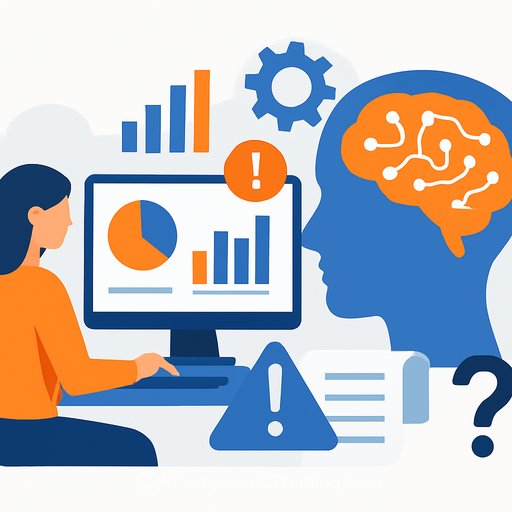
Shadow AI Creates Material Risk
Many directors and executives are already using public AI tools informally to draft materials, analyse markets, or stress-test ideas, often without governance frameworks or disclosure.
This practice carries distinct risks. Sensitive strategy details or board discussions could inadvertently reach external AI providers. Unvetted tools may introduce cyber vulnerabilities. And boards have no visibility into how external models are trained or how they handle submitted information.
AI-associated data breaches carry significantly higher costs than other breaches. Yet only a minority of organisations report having robust frameworks to manage shadow AI. For directors, this is a question of duty of care, not a technology side issue.
What Happens Next
Some boards are piloting AI as a non-voting "observer" that can listen, summarise, and surface questions in real time. Others use AI personas in simulations to test how a data-driven actor might interpret strategic options.
The critical line is likely to hold: AI can inform and augment board judgment, but fiduciary responsibility remains firmly human.
In the next phase, expect formal AI use policies defining where AI can and cannot be used in board work, and how outputs should be validated. Board charters and committee mandates will embed AI oversight alongside risk, audit, and strategy responsibilities. Proxy statements will include greater transparency around how boards oversee AI risks and leverage AI tools.
The Bigger Picture
AI in the boardroom is part of a broader shift in corporate power structures. Supply chains are being remapped. Regulatory regimes are racing to catch up with technology. Data has become a strategic asset that demands board-level fluency.
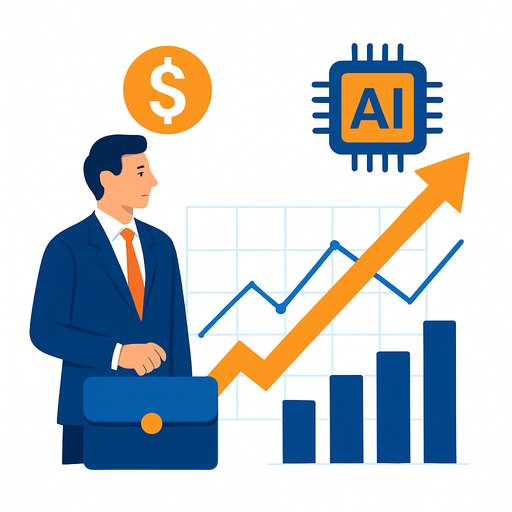
Boards that can interrogate strategy with AI-enhanced insight may reprice risk, reframe investment horizons, and reallocate capital differently. Better visibility into downside scenarios may make boards less tolerant of opaque AI deployments. Companies whose boards understand AI are better positioned to anticipate emerging regulation.
For investors, the presence of AI expertise and explicit AI oversight is becoming a proxy indicator of governance quality and long-term resilience.
Key Takeaways for Executives
- AI is moving from a back-office tool to a boardroom co-pilot, helping directors interrogate strategy and risk with greater speed and depth.
- Boards are rapidly adding AI expertise and oversight structures, turning AI literacy into a defining marker of governance quality.
- Shadow AI use by directors and executives creates material data, security, and compliance risks that demand explicit board-level policies.
- The next phase will blend human fiduciary judgment with structured AI assistance, reshaping how capital allocation and strategic decisions are made.
For executives and board members, the message is direct: AI in the boardroom is not a technology story. It is a story about who sets the rules of corporate decision-making in the next decade. Boards that learn to govern AI will also be the boards that learn to govern with AI.
Explore AI for Executives & Strategy to understand how to integrate AI into strategic decision-making, or review the AI Learning Path for CEOs to deepen your executive AI literacy.
Your membership also unlocks: