Minister Bonnici Backs Responsible AI For The Creative Sector
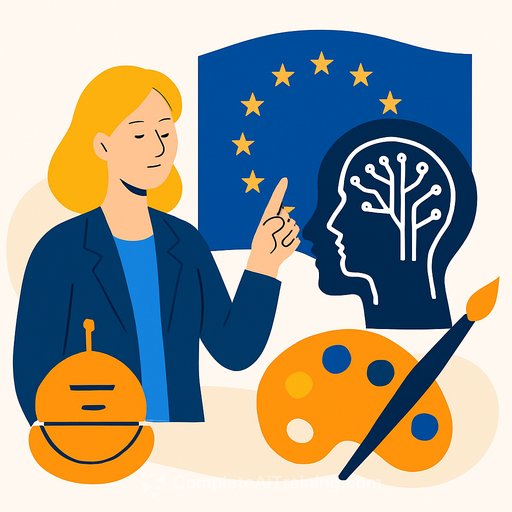
Malta has thrown its weight behind an EU-wide framework to guide the responsible and ethical use of AI in culture and the creative industries. Speaking in Brussels under the Danish EU Presidency, Minister for Culture, Arts and Local Government Owen Bonnici made it clear: AI should amplify an artist's potential, not replace it.
The message was balanced-embrace the upside of AI while setting standards that protect creatives and the public. The goal: strengthen culture, spark innovation across creative fields, and keep ethics non-negotiable.
What this means for creatives
- Expect clearer EU rules that set a level playing field across member states.
- Responsible AI use becomes a shared standard-good for trust, credits, and long-term careers.
- Training isn't optional. If you work in arts or culture, you'll need practical AI skills to stay competitive.
Key points from Bonnici
- AI can boost creative output, but only if used appropriately, ethically, and under a clear framework.
- An EU-wide approach would coordinate implementation and reassure both creatives and society.
- Regulation must be smart-set guardrails without suffocating innovation.
- Artists and cultural professionals should receive training in AI tools to reach their full potential.
- Culture must remain accessible daily, for everyone.
Practical steps you can take now
- Clarify permissions and credits: put consent, attribution, and disclosure clauses in your contracts when AI is involved.
- Track provenance: document sources, datasets, and model licenses for every AI-assisted work. Keep versioned files and notes.
- Add a human review layer: check outputs for bias, IP risk, and quality before publishing or delivering to clients.
- Standardize your workflow: create prompt templates, quality checklists, and file-naming conventions your team can follow.
- Upskill your team: secure time and budget for focused AI training relevant to your role.
If you're building skills now, you can browse role-based training and tool roundups here: AI courses by job and AI tools for generative art.
Cultural heritage and access
EU ministers also discussed protecting Cultural Heritage in Gaza. Bonnici called culture a pillar of peace and encouraged constructive dialogue for the future. "Malta is always ready to contribute to these efforts and to support any initiative to ensure that cultural heritage is preserved for today's and tomorrow's generations," he said.
He also backed the "Cultural Compass," led by Maltese Commissioner Glen Micallef, describing it as a strong step for cultural development and a practical way to expand access to culture for young people and communities.
What to watch next
Keep an eye on outcomes from the Council of EU Ministers for Education, Youth, Culture and Sport, where culture and AI are on the agenda. Background on the Council's work is here: EYCS Council.
For broader context on the EU's approach to AI, see: European approach to AI. As rules consolidate, expect clearer guidance on training data, attribution, transparency, and compliance phases.
Bottom line for creatives
The direction is clear: use AI to extend your craft, not replace it. Adopt ethical standards now, build a clean workflow, and invest in training-so you're ready as EU policy takes shape and clients ask tougher questions about how you create your work.
Your membership also unlocks: