
AI news ·
Book publishers sue Google for using copyrighted books to train artificial intelligence models
Authors and publishers sued Google for using millions of books to train Gemini. The lawsuit follows a $1.5 billion settlement in a similar AI case.
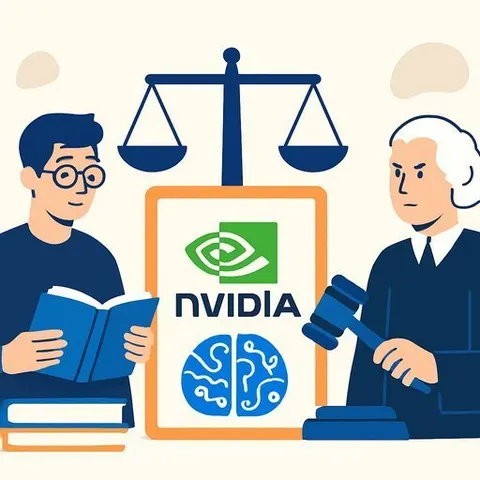
Hachette Book Group, Cengage Learning, Elsevier, and author Scott Turow sued Google in a New York federal court on Tuesday, accusing the company of using copyrighted books to train its Gemini AI model without permission. The lawsuit, which seeks class action status, argues that Google's AI now generates content that directly competes with the human authors whose work was allegedly taken.
What the lawsuit alleges
The publishers claim Google "secretly copied millions of works" that were submitted to Google Books and other services for what they describe as "limited purposes." That content, they argue, was then used to train Gemini. The lawsuit states that the AI model now produces book-length material that undercuts the market for original works.
"The scale and speed at which Gemini can create books and compete with human writers is unprecedented," the lawsuit says. It adds that "Gemini even tailors outputs to mimic the expressive elements and creative choices of specific authors." The plaintiffs are asking for an injunction and unspecified monetary damages.
A pattern of legal challenges
This is not the first case of its kind. In May, several of the same plaintiffs - including Hachette, Cengage, Elsevier, and Turow - filed a similar lawsuit against Meta in a New York court. That case also centers on the alleged use of copyrighted books to train AI models.
In September, a U.S. judge approved a $1.5 billion settlement between Anthropic and a group of authors who said the company copied their work to train its AI model, Claude. The ruling was a partial win for Anthropic: the judge found that using books to train Claude qualified as "fair use" under U.S. law, but that other uses of pirated materials did not. Meta also secured a partial victory last year when a San Francisco judge ruled its use of copyrighted materials was "fair use" in a case brought by comedian Sarah Silverman and author Ta-Nehisi Coates.
Why this matters for writers
The outcome of these lawsuits will shape how AI for Writers tools are developed and what training data they can legally use. For working authors, the central question is whether courts will treat AI training on copyrighted books as infringement or fair use. The answer will determine whether writers have a mechanism to control - and be compensated for - the use of their work in building generative AI systems.