Borouge advances industry-first AI autonomous operations at Ruwais
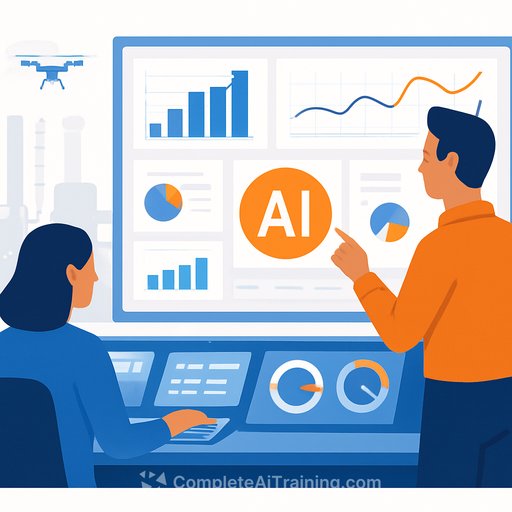
Borouge has completed a proof of concept for AI-powered autonomous operations at its Ruwais facility, working with Honeywell. Run in a live production environment, the trial shows meaningful gains across efficiency, reliability, and cost. It also supports ADNOC's push to become the most AI-enabled energy company.
What Borouge proved
Building on trials in 2025, the team demonstrated progress toward what could become the petrochemical industry's first AI-driven control room for full-scale, real-time operations. The technology ran alongside production, not in a sandbox, which matters for adoption and trust.
- Up to 20% efficiency improvement
- 20% reduction in downtime, boosting reliability
- Up to 15% lower operating costs
- Lower energy use and emissions, enhancing process safety
Why operations teams should care
The targets hit core plant KPIs: throughput, on-stream reliability, cost per ton, and energy intensity. Fewer trips and smoother runs reduce variability and maintenance churn while stabilizing margins. Autonomous assistance also lightens operator load and supports tighter alarm discipline.
- Stabilizes unit performance with smarter setpoint decisions
- Reduces unplanned downtime and maintenance firefighting
- Lowers energy per ton through tighter control and fewer deviations
- Improves safety by curbing human error in routine adjustments
Executive perspective
"This milestone reinforces Borouge's commitment to accelerating growth, enhancing shareholder value, and driving efficiency," said Hazeem Sultan Al Suwaidi, CEO of Borouge. "The initiative is a core component of Borouge's AIDT program, which targeted $575 million in value generation in 2025."
Jim Masso, President and CEO of Honeywell Process Automation, said, "Our collaboration with Borouge demonstrates how AI-enabled autonomous operations can be deployed safely and effectively in a live production environment."
What you can do next
- Pick one high-impact unit operation for a pilot (clear constraints, measurable KPIs).
- Audit data quality: historian tags, sensor health, and context tags (units, limits, states).
- Define guardrails: operating envelopes, MOC approvals, and human-in-the-loop rules.
- Align on KPIs upfront: uptime, variability, energy per ton, cost per ton, alarm rates.
- Plan the handoff: who supervises the AI, when to override, and how to escalate.
- Harden cybersecurity and access controls before expanding scope.
- Upskill control room teams on AI supervision and exception handling.
- Create a scale-out playbook once benefits are verified for one unit.
What's next at Ruwais
Following the successful proof of concept with Honeywell, Borouge will continue demonstrating autonomous operations and assess how to scale across Ruwais. The focus now shifts to repeatable deployments, robust governance, and sustained KPI impact.
Further reading
- AI for Operations
- AI for Executives & Strategy
- Honeywell Process Automation
- ADNOC
- AI courses by job role - Complete AI Training
Your membership also unlocks: