Boston Public Schools to Require AI Training for All High School Graduates
Boston will become the first major U.S. city to require all public high school graduates to be proficient in artificial intelligence. Mayor Michelle Wu announced the program Thursday, with implementation set to begin this September across Boston Public Schools.
The initiative aims to ensure students graduate with skills they can apply in college and the workforce. Wu said the program represents a partnership between city government, higher education, and industry.
"This will position Boston Public Schools as a leader in AI fluency," Wu said at Eliot K-8 Innovation Upper School in the North End.
How the Program Works
A $1 million seed grant from tech entrepreneur Paul English, co-founder of Kayak and a Boston Public Schools graduate, will fund the effort. The money will support training for one teacher from each of the city's roughly two dozen high schools.
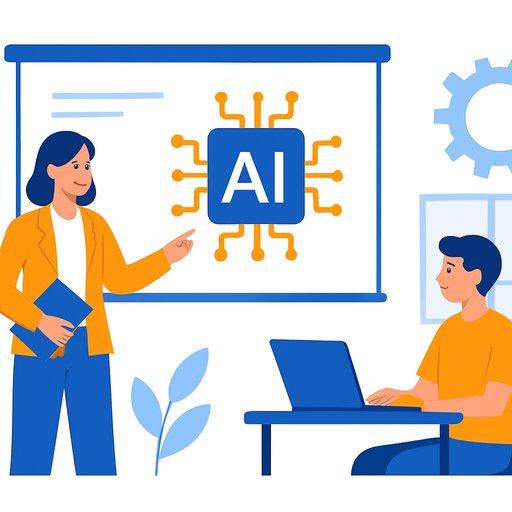
Teachers will undergo training this summer using a curriculum developed by the University of Massachusetts Boston and a local industry group. Some students will have the opportunity to take AI courses at UMass Boston, where English helped establish the Paul English Applied Artificial Intelligence Institute.
BPS Superintendent Mary Skipper said the program aligns with the district's commitment to preparing students academically, socially, and technologically to be "responsible leaders of the next generation."
Ethics and Critical Thinking at the Center
Wu emphasized that the curriculum will focus on ethical and critical engagement with AI rather than passive use of the technology.
"The curriculum is grounded in ethics and understanding how to maintain and develop creativity and leadership and enhance learning - not replace or substitute for it," Wu said.
A sixth-grade student from Eliot Innovation School, where AI is already being used in classes, said the technology helped her think more deeply about her work. "I still had to do the hard part, the brain work," she said. "I can see my writing improve every time I get new feedback."
Broader Impact on Families and Businesses
English said he expects Boston to become an "AI-forward city" with graduates prepared to help businesses adopt the technology effectively. He also noted that students could bring AI knowledge home to their families.
"Young people bring new technology in," English said. "I look forward to students teaching their parents how to use AI ethically - how to tell when AI is not accurate and how to use it critically."
Learn more about AI for Education or explore resources for AI for Teachers.
Your membership also unlocks: