
AI news ·
Brands shift content budgets to AI visibility instead of buying AI search ads
AI search ad spending is forecast to be the fastest growing channel, but brands are routing budgets to organic visibility strategies while paid placement ROI remains unclear.
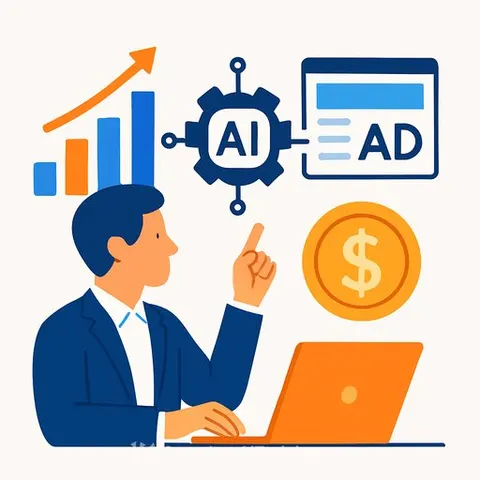
The AI search boom is pushing marketing dollars toward content and creators, not yet toward paid AI search ads. WPP forecasts AI search advertising will become the industry's fastest growing channel, but most brands are currently routing budgets to organic visibility strategies - hiring agencies, funding creator partnerships, and retooling content for large language models - while they wait for clearer ROI metrics on paid placements.
David Dweck, president at Go Fish Digital, said the shift is "more of a shift from organic to organic than from paid." Brands are repurposing money that previously funded website improvements and content production to ensure that material is better geared toward LLMs. Dweck said some clients are spending marginally more on these efforts, but not carving out massive percentages of paid media budgets.
Brands test the waters with mixed approaches
Butterball hired agency Carmichael Lynch this year partly for its AI visibility capabilities. Kyle Lock, vp of marketing at Butterball, said the brand's relatively small team made that capability "a critical success factor for choosing a partner in the space." Butterball is also testing Google AI Max for summer recipe and grilling terms to boost visibility in Google's AI Overviews and AI Mode.
Priceline is betting on influencers and content creators to offer authentic storytelling that may enhance AI discoverability. Lesley Klein, svp of strategy and brand marketing, said the online travel agency has increased social spend across TikTok, Meta, Pinterest and other platforms. The increase isn't solely for AI visibility, she said, but "it certainly plays a role." Priceline has also set aside some budget for a ChatGPT ads pilot as part of a broader effort to understand LLMs and the new consumer shopping journey, according to Toby Korner, svp of digital marketing and pricing.
Organic playbooks get dusted off
Agency executives remain cautious about dedicated AI visibility budgets. Joseph Levi, CEO and co-founder of Noise Media Group, pointed to persistent attribution challenges. "At the moment, it's very much focused on the organic side," Levi said. "Across all agencies, across all software, attribution is difficult because AI is an answer, whereas search is a click."
Dweck recommends brands invest in organic strategies now "and then be ready to turn on the spigot once the ads are widely adopted and available and functioning the right way." The approach echoes older organic marketing playbooks, adapted for a moment when AI-generated answers are cannibalizing website traffic, clicks, and conversions - but paid AI search inventory remains nascent.
For marketing professionals building skills in this shifting environment, the AI Learning Path for Marketing Managers covers how to adapt strategies as AI search reshapes discovery and attribution. Broader resources on AI for Marketing also address the practical steps teams are taking to influence how brands appear in LLM-generated answers.
Why this matters for marketers
The window for organic AI visibility is open now, and it won't stay free forever. Brands that invest in high-quality, human-generated content structured for LLMs can build presence inside AI-generated answers before paid placements become the default. Once ad inventory matures and attribution improves, the cost of entry will rise. The brands that did the organic work early will have both the visibility and the data to decide when to turn on paid spend.