Where energy challenges meet AI solutions - bridging innovation and market
The energy sector has shifted. Data volume is up, assets are more distributed, and teams need AI they can trust in production - not just in a demo.
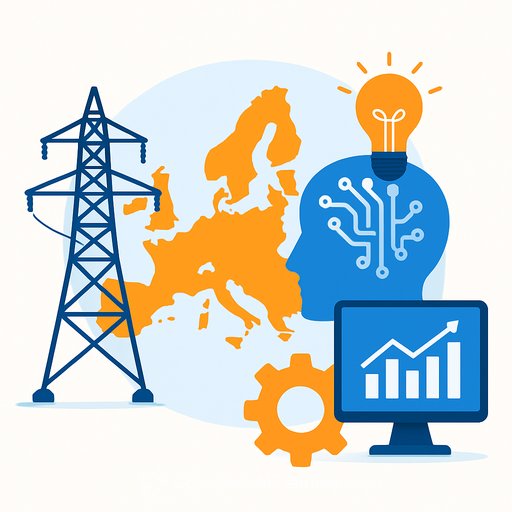
EnerTEF is a pan-European testing and experimentation facility built to close that gap. It provides a Data Space-compliant, central marketplace where energy stakeholders and AI experts can meet, co-create, and validate services under clear governance.
What the EnerTEF central platform does
Think of it as a one-stop shop for building and proving AI services that the energy market will actually adopt. Stakeholders post service needs and list the physical and digital assets available for experimentation.
AI providers get access to an AI Workbench and high-performance computing through federated nodes to design, run, and evaluate experiments. Data moves through a dedicated Data Space to ensure secure, transparent exchange and clear rules for usage and accountability.
- Publish service needs with datasets and assets for testing
- Run experiments using HPC and an integrated AI Workbench
- Validate results against shared metrics and compare options
- Formalise collaborations and transactions inside the marketplace
If you want the policy context, this approach aligns with the EU's Testing and Experimentation Facilities for AI. Learn more via the European Commission's overview: AI TEFs. For Data Spaces, see the Data Spaces Support Centre.
Phased rollout and structure
EnerTEF starts with an initial network to prove the model in real conditions. Those results fuel a broader commercial rollout and the onboarding of new participants.
The platform is organised into nodes and satellites focused on specific energy domains. Here's how each contributes.
TEF RES (Renewables) - Greece and Portugal
This node uses datasets from hydropower, PV, onshore wind, offshore assets, and wave energy. Asset owners post needs that data teams can tackle and compare.
- Generation forecasting and time series analytics
- Predictive maintenance and fault detection
- Monitoring and operational optimisation
Existing tools from prior EU projects are integrated into the marketplace to speed up experimentation and benchmarking.
TEF EV - Luxembourg
Built on an energy community with a live EV charger network. The setup also includes PV, wind, and battery storage for integrated scenarios.
- EV flexibility and smart charging vs local renewables and battery capacity
- AI-enhanced multi-agent systems for Vehicle-to-Grid (V2G)
- EV-driven demand forecasting
TEF TSO - Slovenia
Hosted by the ELES Diagnostics and Analytics Centre, combining big data capabilities, advanced analytics, and domain expertise. ELES and Elektro Gorenjska act as end users, representing TSO and DSO needs.
- Power management at transmission level
- Fault detection and identification
- Grid stability assessment
TEF DSO - Germany
Focuses on distribution grid services using a real-time digital simulation environment. High-quality synthetic data makes it easier to test when field data access is limited.
- Grid state estimation and anomaly detection
- Fault localisation and predictive maintenance
- Operational optimisation in a controlled, repeatable setup
TEF BUILD - Greece
Supports the Municipality of Athens with building data, energy profiles, PV systems, and EV chargers. The goal: smarter operations and measurable energy and cost savings.
- AI-driven building consumption optimisation
- Monitoring and fault detection
- Predictive maintenance and self-consumption maximisation
Satellite nodes - Hydrogen, Industry, District Heating
- Hydrogen (France): Energy management, control, and predictive maintenance with a focus on fuel cell hybrid electric vehicles and hydrogen-enabled microgrids.
- Industry (Greece): Process planning optimisation, sustainable supply chains, improved production scheduling, and manufacturing process modelling.
- District Heating and Cooling (Spain): Demand forecasting, energy consumption optimisation, and operational decision support using live infrastructure and digital twins.
Why this matters for IT and development teams
Most energy AI fails at deployment: data access is unclear, domain constraints are hard, and validation isn't trusted. EnerTEF closes those gaps with shared infrastructure, transparent governance, and testbeds tied to real assets.
- Shorter path from prototype to validated service
- Common data and security frameworks via the Data Space
- Cross-border interoperability so solutions can scale
How to engage
- If you're an energy stakeholder: define service needs, attach datasets or simulators, and set KPIs for validation.
- If you're an AI provider: request access to the Workbench and HPC resources, run experiments, and submit results for comparison and acceptance.
Looking to upskill your team on AI workflows before plugging into initiatives like this? Explore practical training by job role: AI Learning Path for Data Scientists, AI Learning Path for Plant Managers, and AI Learning Path for Production Planners.
Impact
EnerTEF converts real needs into validated AI services that can be deployed faster and scaled across the energy value chain. It strengthens interoperability and cybersecurity while enabling collaboration across borders.
As new stakeholders and nodes join, the marketplace grows - and with it, a repeatable path to bring market-ready AI into core energy operations.
Your membership also unlocks: