World Faces Critical AI Access Gap, Urgent Global Action Required
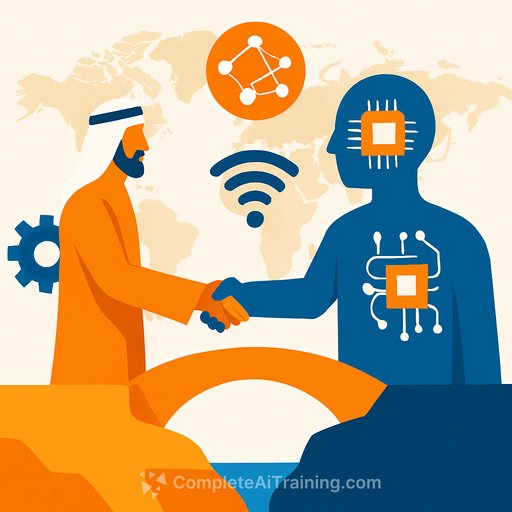
At the 160th anniversary of the International Telecommunication Union (ITU) in Geneva, Saudi Arabia’s Minister of Communications and IT, Abdullah Al-Swaha, issued a strong call for international collaboration to tackle the uneven access to artificial intelligence (AI) technologies worldwide.
He highlighted a widening “existential gap” caused by the concentration of computing resources in a few regions and the lack of AI infrastructure in many countries, particularly in the Global South. This disparity threatens to leave entire nations behind during this pivotal era of technological development.
Lessons From Past Technological Transformations
Al-Swaha compared the current AI divide to previous connectivity challenges. The analog era took over 100 years to connect 800 million people, while the digital era connected 5.5 billion in just 50 years—though 2.6 billion remain offline. This history underscores the urgency to address the AI access gap before it widens further.
Saudi Arabia’s Leadership in Bridging AI Divides
Saudi Arabia has positioned itself as a key player in AI development, driven by initiatives under King Salman and Crown Prince Mohammed bin Salman. The Kingdom is focusing on closing gaps in computing infrastructure, data availability, and algorithm development that are critical for AI progress.
Efforts include digital empowerment programs that have increased women’s participation in IT to about 35%, alongside achieving top global rankings in digital competitiveness for two consecutive years.
Research excellence is also a priority, with scientists at King Abdullah University of Science and Technology (KAUST) ranking among the top 1% globally by scientific citations, supporting AI innovation and development.
Regulatory Progress and Inclusive AI Development
Saudi Arabia has advanced data protection laws and is developing language models aimed at expanding technology access across diverse communities. The HUMAIN project, launched by Crown Prince Mohammed bin Salman, seeks to build comprehensive AI capabilities—from advanced processors to attracting top talent—positioning the Kingdom as a global AI pioneer.
Call for Multinational Partnerships
Minister Al-Swaha emphasized the next decade as a critical window to bridge technological divides. He urged multilateral cooperation under the ITU’s framework to create a fair, safe, and inclusive AI ecosystem that supports sustainable development and human well-being.
Closing these gaps will require coordinated efforts to expand infrastructure, share knowledge, and develop governance policies that ensure equitable AI access worldwide.
For IT and development professionals seeking to stay informed and skilled in AI technologies, resources such as Complete AI Training’s latest courses offer practical pathways to deepen expertise and contribute to bridging these divides.
Your membership also unlocks: