Computer Science Graduates Awarded Vector Scholarship in Artificial Intelligence
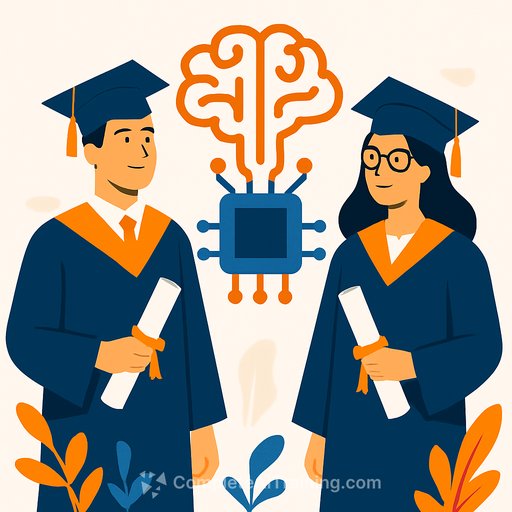
Tyler McDonald and Sangmitra Madhusudan, recent Computer Science graduates from Brock University (BSc '25), have been awarded the Vector Scholarship in Artificial Intelligence. This prestigious scholarship supports Ontario students entering AI-related master’s programs, providing $17,500 in merit-based funding along with access to a network of expert researchers, startups, and industry leaders.
Both graduates celebrated their achievements during Brock’s 117th Convocation on June 12 and will continue their graduate studies at Brock, focusing on responsible AI development in Canada.
From Collaboration to Scholarship Success
McDonald and Madhusudan have collaborated on internationally recognized research involving large language models. Their teamwork and mutual support played a key role in securing the Vector Scholarship.
Tyler McDonald reflects on the opportunity: “Applying together and having two names from Brock selected feels like the work we put in really paid off. The scholarship eases financial concerns and connects us to a valuable community of AI experts.”
Sangmitra Madhusudan credits her lab group and faculty mentors for their support. “This honour wouldn’t have been possible without my lab group and professors Yifeng Li, Renata Dividino, and Ali Emami. We worked as a team, so this award means a lot to all of us.”
Research Focus: Ethical and Cultural Dimensions of AI
Madhusudan’s master’s thesis will examine the cognitive and translation capabilities of large language models, aiming to address representation gaps and enhance cultural alignment. She will explore how to equip companies with tools to develop AI that respects cultural diversity and ethical considerations.
As an international student from India, Madhusudan was drawn to Brock because of its inclusive community and supportive environment, which helped her thrive academically and personally.
McDonald’s research will investigate the creation of localized language models and the biases introduced during their development. He questions how combining these models might lead to multilingual AI systems that reduce bias and serve a global audience safely and effectively.
“AI has immense unexplored potential,” McDonald explains. “Our goal is to prevent harmful outcomes early, so AI can serve as a reliable source of guided knowledge accessible to everyone.”
Looking Ahead
Although their thesis projects differ, both graduates value the collaborative spirit that has defined their academic journey and look forward to future opportunities to work together.
“University is challenging — struggles are inevitable. But finding your community makes all the difference,” McDonald says. Their story is a reminder of the importance of support systems in research and education.
For professionals interested in advancing their own AI skills, exploring dedicated AI courses and certifications can be a practical next step. Resources like Complete AI Training’s latest AI courses offer structured learning paths to deepen knowledge in this field.
Your membership also unlocks: