The edge in AI investing is operational know-how
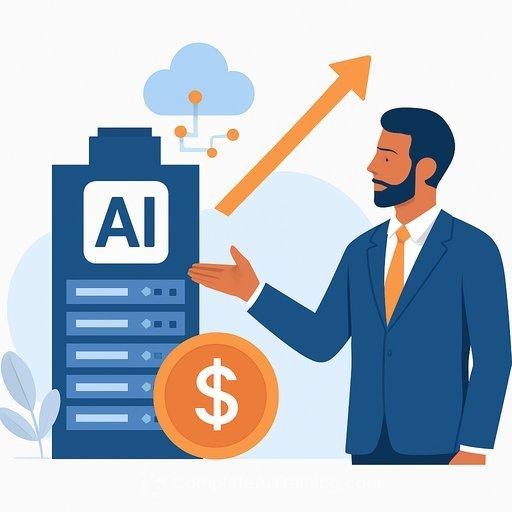
AI demand is forcing a surge in data, compute and energy infrastructure. The projects that win aren't just well-funded - they're well-run. Operational execution is the edge investors need.
That's the core message highlighted by Brookfield's Stewart Upson: private investors with deep operating experience are positioned to create durable value as this build-out scales.
Why operations is the advantage
- Infrastructure lead times, interconnect queues, and equipment scarcity make execution the main risk - and the main lever.
- Workloads are shifting to higher-density racks and liquid cooling; mistakes here bleed cash and time.
- Energy sourcing and reliability, not headline capacity, dictate uptime and customer retention.
Where the build-out is accelerating
- Data centers: GPU clusters, 60-100 kW per rack, liquid and hybrid cooling, and strict latency zones.
- Compute supply chain: GPUs, switches, optical transceivers, and specialty immersion gear on long lead times.
- Energy and interconnect: Grid upgrades, onsite generation, storage, and long-queue substations defining project timelines. See the IEA's view on data center electricity trends here.
Operational levers that move returns
- Site selection: Prioritize sites with near-term energization, fiber diversity, water availability, and favorable permitting. Avoid speculative sites without clear interconnect paths.
- Energy strategy: Blend long-term contracts, onsite generation, and storage. Design for curtailment and demand response to monetize flexibility.
- Thermal design: Standardize for high-density racks, liquid cooling loops, and heat reuse where viable. Build lab capacity to validate configs before rollout.
- Construction sequencing: Phased MW delivery beats monolithic go-lives. Lock long-lead items early; adopt modular components for repeatability.
- Supply chain: Dual-source critical SKUs (GPUs, PDUs, chillers, pumps). Keep buffer stock for items with volatile lead times.
- Reliability: Tier the redundancy where revenue risk is highest. Use incident post-mortems to harden SOPs and automate detection.
- Commercials: Sell capacity reservations and availability-based SLAs. Align pricing with density, cooling method, and energy sourcing.
Brownfield vs. greenfield
- Brownfield: Faster turn-up, cheaper interconnect, but constrained by legacy envelopes and cooling retrofits.
- Greenfield: Optimized layouts and higher density, but longer timelines and permitting risk.
Blend both: convert near-ready assets for cash flow while you mature larger campuses.
Key KPIs for operators and investors
- Time-to-energization and MW delivered per month
- Capex per MW and EBITDA per MW
- PUE/WUE and effective rack density (kW/rack). PUE basics: Uptime Institute
- Availability SLA, incident frequency, MTTR
- Capacity utilization and contracted vs. live load
Risk you can't outsource
- Interconnect delays: Build early utility relationships and place refundable queue deposits across multiple sites.
- Component scarcity: Aggregate demand across portfolio companies to negotiate allocation; prepay where it secures delivery.
- Regulatory change: Track water, emissions, and siting rules at state and municipal levels; model compliance capex.
- Counterparty concentration: Avoid single-tenant exposure; ladder contract terms and index escalators to energy inputs.
A 90-day operating plan
- Map your portfolio by energization date, interconnect status, and MW you can realistically bring online within 12, 24, and 36 months.
- Pre-negotiate multi-year energy contracts and firm interconnect milestones for top three sites.
- Stand up a liquid-cooling testbed; validate densities and maintenance playbooks before scale.
- Secure dual vendors for long-lead equipment; place framework orders with volume discounts.
- Hire for three roles immediately: energy procurement lead, thermal systems lead, and construction scheduler.
- Productize your offer: density-based pricing, availability tiers, and clear SLAs that legal and ops can actually deliver.
Why this favors operators
AI infrastructure looks like real assets on a spreadsheet, but behaves like live systems. Returns accrue to teams that shorten energization, hold uptime, and control input costs. That is operations.
Investors who embed operating talent early - from site diligence to commissioning and customer onboarding - will set the pace of this cycle.
Upskill your team
If your operations team is moving into AI workloads and automation, build a common baseline fast. Curated learning paths and certifications can help:
The opportunity is clear. The constraint is execution. Make operations your edge.
Your membership also unlocks: