The Seamless Link: What Budget 2026-27 Could Mean for India's Classrooms and Campuses
India's education spend has climbed steadily, reaching about ₹1.28 lakh crore in FY 2025-26 from ₹84,219 crore in FY21. The next Union Budget is expected to continue that momentum. The focus is clear: deliver on the National Education Policy (NEP) 2020 and close the gap between degrees and employability.
For educators, this is the moment to connect policy, pedagogy, and placement outcomes. Funding is the push. Execution is the lever.
The AI Imperative and the Employability Gap
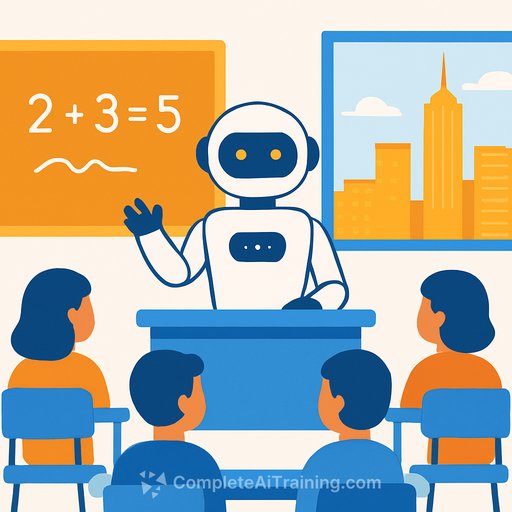
AI is now a core literacy. Schools will need baseline AI education; see the AI Learning Path for Primary School Teachers for classroom-ready progression. Universities must bring industry into the classroom. Expect backing for AI literacy in K-12, teacher training on AI-enabled teaching, and industry-linked university programs.
The reality check: less than half of graduates are considered job-ready. The gap is applied problem-solving, interdisciplinary thinking, and real project exposure. Policy talk around attracting global AI talent and giving universities the flexibility to update curricula signals practical change ahead.
- Introduce AI fundamentals by Grade 9; use safe, classroom-ready tools for projects.
- Upskill teachers on prompt writing, evaluation with AI, and academic integrity policies.
- Embed capstone projects with data, Coding, or design thinking across disciplines.
- Co-create modules with industry; align assessments to real task performance.
Review NEP 2020 for curriculum priorities and policy timelines.
Quality and Teacher Capacity Come First
Recent budgets have fueled Samagra Shiksha, PM-POSHAN, PM-SHRI Schools, and infrastructure upgrades for IITs and medical education. Gross Enrolment Ratios are strong at the primary and upper primary levels. But quality still hinges on teacher readiness, not just access.
The NEP target of 6% of GDP for education remains the benchmark. The National Council for Teacher Education is reworking teacher education with continuous professional development at the center. Expect budget lines for targeted training, curriculum refresh, and classroom practice upgrades - see the AI Learning Path for Training & Development Managers for role-focused CPD models.
- Make CPD time-bound and credit-bearing; prioritize classroom observation and coaching.
- Adopt structured lesson study, peer mentoring, and mastery-based teacher assessments.
- Use low-cost, high-frequency feedback tools to track learning outcomes every month.
- Equip classrooms with reliable connectivity and shared devices to support new pedagogy.
Track NCTE updates to align teacher training plans with the new standards.
Skills, Apprenticeships, and Work-Linked Learning
Policy is tilting toward skills that lead to jobs. The National Apprenticeship Training Scheme has seen higher allocations, and the budget is likely to push harder on apprenticeships, micro-credentials, and regional skill hubs.
The gap is still wide: only about 51% of youth are employable, and many higher education institutions lack industry readiness. Work-linked degrees, stronger industry partnerships, and better digital infrastructure can shift outcomes quickly if executed well.
- Sign MoUs with local employers for credit-bearing apprenticeships and capstones.
- Offer micro-credential "stacks" mapped to job roles; let students earn while they learn.
- Build regional skill hubs that share labs, mentors, and placement pipelines.
- Publish placement, internship, and skills attainment dashboards each semester.
What to Watch for in Budget 2026-27
- Dedicated funding for AI literacy in schools and AI-enabled teaching tools.
- State and central CPD budgets tied to measurable teacher performance gains.
- New higher education financing for labs, internships, and industry projects.
- Incentives for apprenticeships, micro-credentials, and regional skill hubs.
- Policy flexibility for universities to update curricula with industry each year.
90-Day Action Plan for School and University Leaders
- Audit curricula for applied projects, AI exposure, and assessment alignment.
- Form a core "AI-in-education" team; run short PD cycles with classroom trials.
- Pilot 2-3 employer-backed projects per department with clear rubrics.
- Pre-draft proposals for expected grants in AI, CPD, and apprenticeship programs.
- Set monthly learning outcome checkpoints and publish progress to stakeholders.
The budget can fund the push, but the pull has to come from classrooms. Tight loops between policy, teacher practice, and industry will decide whether spending turns into outcomes.
Your membership also unlocks: