Google Launches Agent Development Kit for TypeScript: A Code-First Approach to Building AI Agents
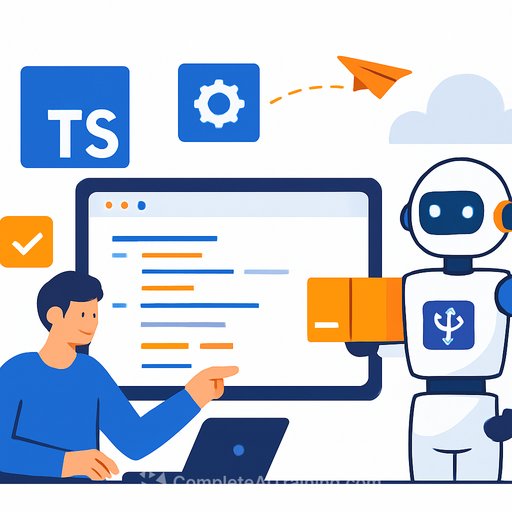
Building AI agents has felt like wrestling with prompts and bespoke workflows. Google's new Agent Development Kit (ADK) for TypeScript flips that script by letting you build autonomous agents with clean, testable code-no prompt gymnastics required. If you write TypeScript or JavaScript, you can ship agents using the same patterns you already trust.
Why this matters
AI is moving from single-use chatbots to multi-agent systems that coordinate complex work. The catch: most teams don't want to learn an entirely new development paradigm just to participate. ADK pulls agent development into standard software practice-version control, tests, CI/CD, and modular components-so you can build and scale agents like any other service.
How it works
ADK replaces prompt-heavy configs with modular TypeScript building blocks: Agents, Instructions, and Tools. You define behavior in code, keep concerns separated, and keep everything testable.
Example agent definition:
const writerAgent = new Agent({ name: "StoryTeller", model: "gemini-2.5-flash", instruction: "Write a short story based on the user prompt.", outputKey: "story" });
That's it-clear intent, minimal setup, and logic you can unit test. Your agents become code artifacts, not fragile prompt templates.
What developers get
- End-to-end type safety: Shared types across backend and frontend reduce runtime surprises and clarify contracts between agents.
- Modular composition: Build focused agents and compose them into larger systems without coupling.
- Familiar tooling: Stick with your TypeScript ecosystem-IDE hints, linters, test runners, and package managers.
- Deployment flexibility: Run locally, in containers, or on serverless platforms like Google Cloud Run.
Integration and compatibility
While ADK is optimized for Google's stack, it's model-agnostic and works with third-party tools. It supports Google's latest models, including Gemini 3 Pro and Gemini 3 Flash, so you can plug advanced capabilities straight into your agent graph.
For data access, ADK integrates with MCP Toolbox for Databases (now with native TypeScript support), which follows the MCP Model Context Protocol to connect agents to your data sources without duct-tape integrations.
If you're evaluating model options, start with the official docs for Gemini and Vertex AI.
Getting started
- Pull the ADK from GitHub, then explore the core framework repo plus the samples repo for ready-to-run patterns.
- Start small: define a single agent with a clear instruction and output contract, then add tools as needed.
- Write unit tests around instructions and tool interfaces to lock behavior before scaling to multi-agent flows.
- Wire agents into your existing CI/CD and observability stack to treat them like any other service.
Quote worth noting
"TypeScript adding to ADK's support of Java, Go, and Python expands its reach into the core developer community," said Mitch Ashley, VP and practice lead, software lifecycle engineering, The Futurum Group. "TypeScript support in the ADK is important because it is an increasingly mandated programming language due to its support for frameworks like React, Node.js, and Angular, popular IDEs, and TypeScript's improved runtime protections."
What this means for DevOps teams
Treat AI agents like standard app components. Version them, test them, and ship them via your existing pipelines. No parallel process for "AI stuff," no special-casing deployments. That consistency lowers risk and keeps delivery predictable as agent counts grow.
The open source advantage
ADK is open source, which means you get transparency, community extensions, and faster iteration based on real-world usage. You're not locked into a black box, and you can adapt the framework to fit your stack.
Looking ahead
As multi-agent systems become more common, the teams that win will keep their workflows simple and their contracts explicit. ADK for TypeScript pushes agent development into that lane-code-first, testable, and production-ready. The next wave isn't about clever prompts; it's about maintainable systems that ship.
Helpful resources
- Curated training for developers building with modern AI stacks: Latest AI Courses
Your membership also unlocks: