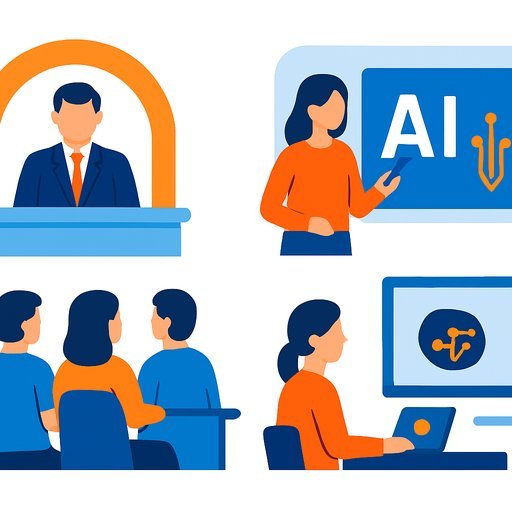
AI in Australian Schools: Build the Safety Net, Then Build the Future
AI has moved into Australian classrooms whether we opened the door or not. Teachers use it to cut planning time and personalise learning. Students lean on it for explanations, drafts and shortcuts. Leaders see a way to reduce admin drag and redirect effort to where it counts.
The pace is relentless. Capabilities change weekly, while policies and practice lag. The opportunity is huge. So is the exposure. The real question is simple: who drives innovation, and who carries the risk when something breaks?
The opportunity: an extra pair of hands for every teacher
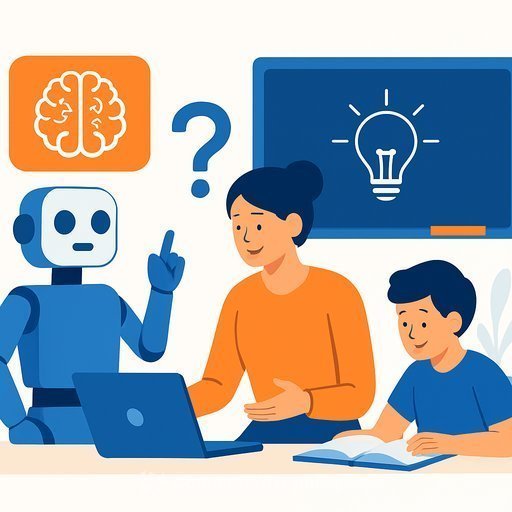
Early trials suggest staff can reclaim hours each week. Think of AI as a tireless assistant that supports (not replaces) professional judgement.
- Turn a single syllabus point into a differentiated lesson sequence
- Generate exemplars, rubrics and targeted feedback on demand
- Adapt readings for additional needs and language levels
- Streamline parent comms, reports and admin tasks
- Summarise behaviour records or wellbeing trends into something usable
For students, AI can be a tutor after hours. It breaks down tough ideas, offers practice questions, and simulates real-world scenarios. Used well, it lets teachers respond to the complexity of mixed-ability classrooms faster and with more precision.
The risk: safety, integrity and trust on the line
The flip side is real. Schools are grappling with academic integrity, misinformation, and students becoming dependent on tools they don't fully understand. Add concerns over privacy, data storage, deepfakes, content accuracy, and bias. Hallucinations and misuse aren't hypotheticals anymore.
Students are also using AI in ways that don't fit neat "teaching" or "IT systems" boxes. Many are experimenting with AI companions. That has implications for wellbeing, duty of care and consent.
Leaders admit they lack clear policies, trained staff and governance that keeps pace. A recent ASBA snapshot suggested only a quarter of governing bodies had been formally briefed on AI. With regulation tightening, schools will need far better oversight and documentation.
From uncertainty to action: a two-stage response
A practical two-stage approach is helping schools regain control. The intent isn't to slow innovation. It's to give it a safer runway and a clear destination.
Stage 1: Build the Safety Net Before You Build the Future
"Setting the Foundations" tackles the worries keeping leaders up at night: fuzzy decisions, inconsistent practice, and unknown exposure.
- Leadership alignment: brief boards and executives on both promise and risk. Surface what's already happening on the ground.
- Establish context: audit staff usage, student behaviours, systems and risk appetite. Set a baseline you can act on.
- Appoint an AI Lead and cross-functional team: include governance, teaching and learning, wellbeing, ICT, compliance and data.
- Set strategy and update policies: define acceptable use, transparency, disclosure, assessment shifts and parental comms.
- Deliver staff training: safe prompts, bias checks, verification habits, and AI-aware assessment design.
- Tighten data and security: review data flows, vendor contracts and cybersecurity controls.
- Engage stakeholders: bring staff, student leaders and parents into the process early.
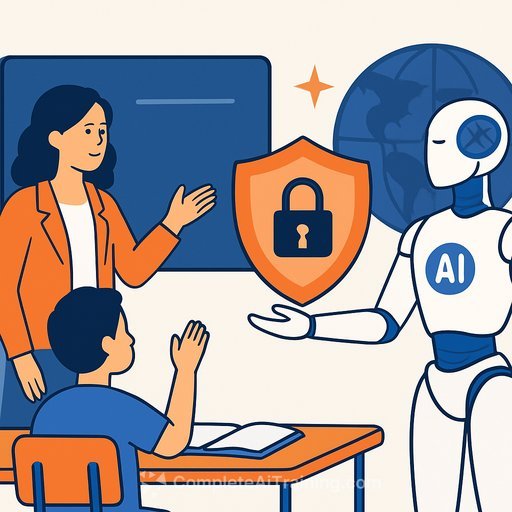
These pieces form an AI Safety Capsule - a protective core that stabilises practice and clarifies accountability. Once leaders can see the risks, name the owners and point to guardrails, the fear drops and momentum returns.
Helpful references for policy and safety work:
- Office of the Australian Information Commissioner: Privacy
- eSafety Commissioner: Deepfakes and synthetic media
Stage 2: Adopt AI with eyes wide open
With foundations in place, move from "hanging on" to "intentional adoption." Focus on targeted pilots, not blanket rollouts.
- Pick high-leverage use cases: workload relief, feedback quality, early wellbeing alerts, or admin workflows.
- Run controlled trials: e.g., Year 9 English feedback assistant; wellbeing early-alert triage; office automation for reporting.
- Monitor tightly: impact, safety, accuracy, staff workload, student agency, and values alignment.
- Scale what works: expand only when a use case is safe, effective and inside your risk tolerance.
- Create a deployment roadmap: who uses what, when, with which training and controls.
- Close the loop: evaluate, document, improve. Make wins repeatable and auditable.
Practical starting points this term
- Brief the board and executive. Name an AI Lead and a cross-functional working group.
- Map current AI use by staff and students. Identify top 3 risks and top 3 opportunities.
- Publish a simple acceptable-use statement and student disclosure expectations.
- Run one pilot for teaching and one for operations. Measure time saved and learning impact.
- Adopt a "verify then trust" habit: source checking, bias testing and human sign-off.
- Communicate with parents: what you're trying, why, and how you're keeping students safe.
A turning point for schools
AI isn't an enemy or a saviour. It's a new layer of school life that deserves the same governance and professional judgement as curriculum, assessment and finance. The risks are significant. So are the gains for learning and workload.
Start by stabilising. Then adopt with intent. Schools taking this path are protecting students, empowering teachers, building parent trust and getting ready for tougher regulation - while improving learning now.
If you want structured, role-specific upskilling for staff, explore these resources:
Your membership also unlocks: