
AI news ·
Building Korea’s AI Education Ecosystem for Sustainable Growth
The 3rd Korea Reboot Forum highlighted building a practical AI education ecosystem over expanding elite universities. Experts urged strategic investment and private sector-led AI growth.
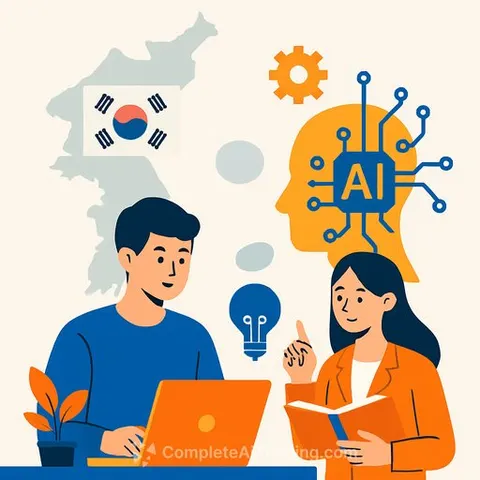
The 3rd Korea Reboot Forum: Tackling the AI Education Ecosystem
The 3rd Korea Reboot Forum, held at the Maekyung Media Center in Seoul, spotlighted the urgent need to rethink how AI education and industry connect. Instead of simply increasing the number of elite universities like Seoul National University, experts emphasized building a practical AI education ecosystem that fuels growth and innovation.
Participants included leaders from various sectors: Son Hyun-duk, CEO of Maeil Business Newspaper; Lee Ki-won, head of Seoul National University's food technology department; Kim Soo-min, CEO of UCK Partners; Lim Yoo-chul, chairman of the PEF Management Association; and others from public administration, engineering, and media.
AI Changes the Training Timeline
A striking point raised was the shift in training needs. While developing a skilled software developer traditionally took five years, AI allows for meaningful skills acquisition within just 30 days. This shift signals that AI can surpass human capabilities in certain areas, posing a challenge to existing industrial structures.
Seok Chang-gyu, chairman of Webcash Group, shared that his company didn’t hire any developers last year for the first time in 26 years. The reason? Many tasks like design, publishing, and planning have become automated through AI, requiring fewer human inputs.
Designing AI Policies with Purpose
Experts stressed that simply allocating budgets isn’t enough. Kim Soo-min of UCK Partners pointed out that without a well-designed ecosystem—covering environment, regulations, and incentives—companies won't effectively adopt AI.
Hwang Chul-joo, chairman of Jusung Engineering, called AI "a long-term, essential investment like education." He warned that scattering resources without direction could waste 100 trillion won, but strategic investment could make AI a growth engine for Korea. He urged the government to lay foundations like data centers, GPU support, and AI vouchers, while leaving implementation to the private sector.
Rethinking Industrial and Cultural Strategies
Reorganizing semiconductor strategies is also critical as AI leads industrial transformation. Lee Ki-won stressed that AI competitiveness hinges on culture as much as technology. Korea’s strong language-based cultural content consumption offers an advantage, with brands like Bibigo and Samyang helping Korean culture reach global markets.
Kim Soo-min highlighted opportunities in the food industry, where small and medium businesses successfully combine food technology with exports, showing potential for high value-added growth.
Systemic Reforms for Sustainable Growth
Lim Yoo-chul noted that political perspectives on capital need to shift. Currently, capital gains are often seen as unearned income, which makes tax-based investment unsustainable. Reforming this mindset is key for long-term investment in AI and related industries.
Lee Ki-won also proposed redesigning the university system. Instead of replicating Seoul National University multiple times, the focus should be on creating an educational ecosystem linked to local industries, involving institutions like KAIST Graduate School of AI and regional universities.
Moving from Ideas to Action
Participants agreed that the moment calls for execution over declarations. Hwang Chul-joo reminded attendees that imitation only goes so far—true innovation requires original design and creation from the ground up.
The consensus is clear: the private sector should lead AI development, with government support focused on enabling practical implementation. By closely connecting technology, industry, education, and capital through a cohesive policy ecosystem, Korea can secure a strong position in the AI era.
For education professionals looking to stay ahead in AI, exploring practical AI courses can offer valuable skills to align with this evolving ecosystem. Visit Complete AI Training for a range of courses designed to meet industry needs.